
Last updated August 25, 2026
Free on-site gate assessment - hinges, posts, and your LiftMaster or Nice gate operator checked before anything is quoted
The assessment is free and the quote is the invoice.
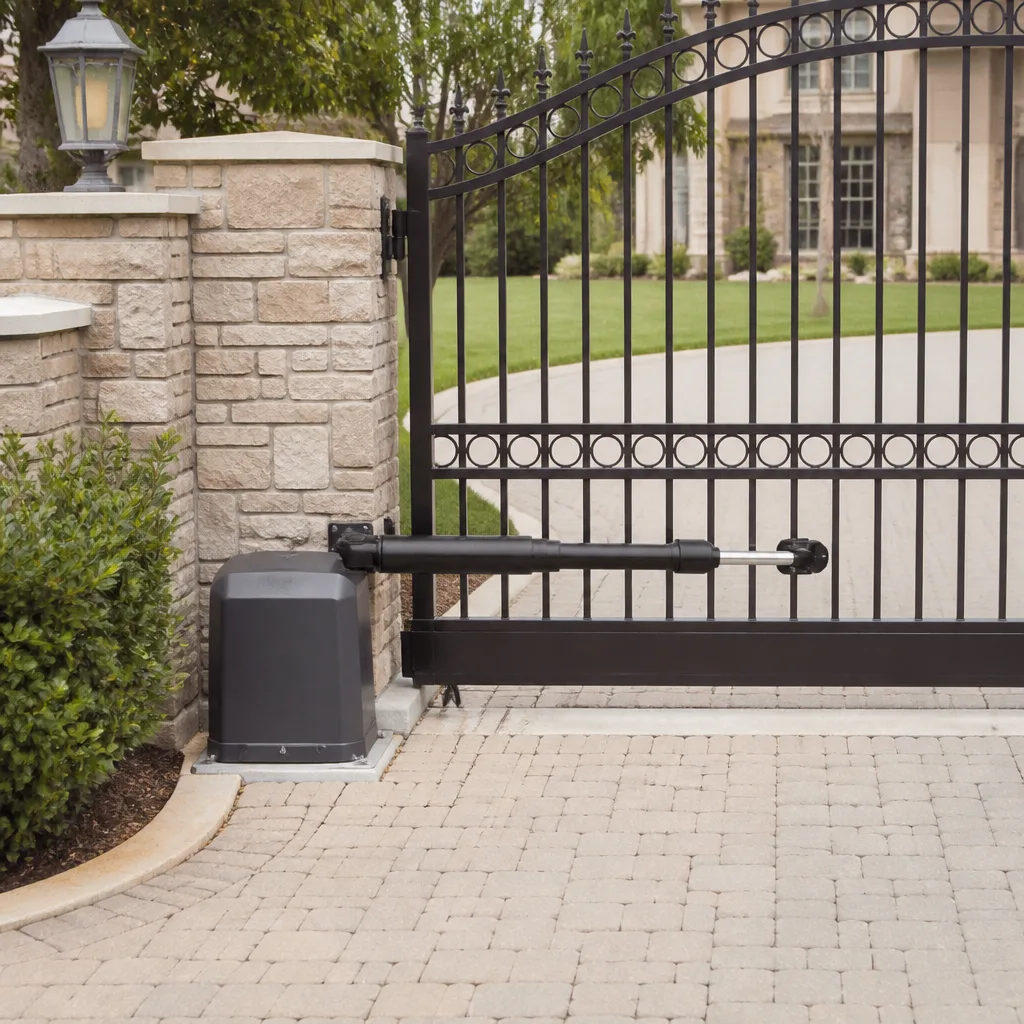
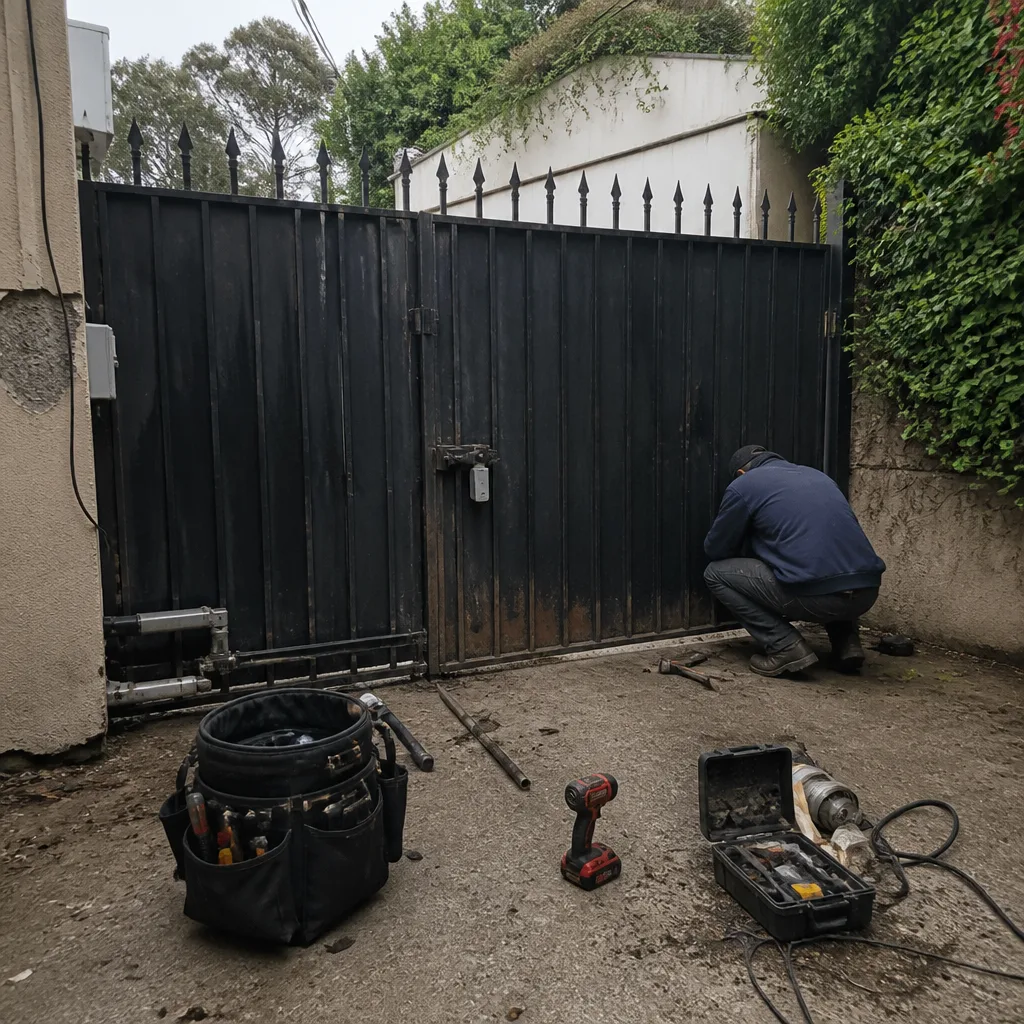 Before
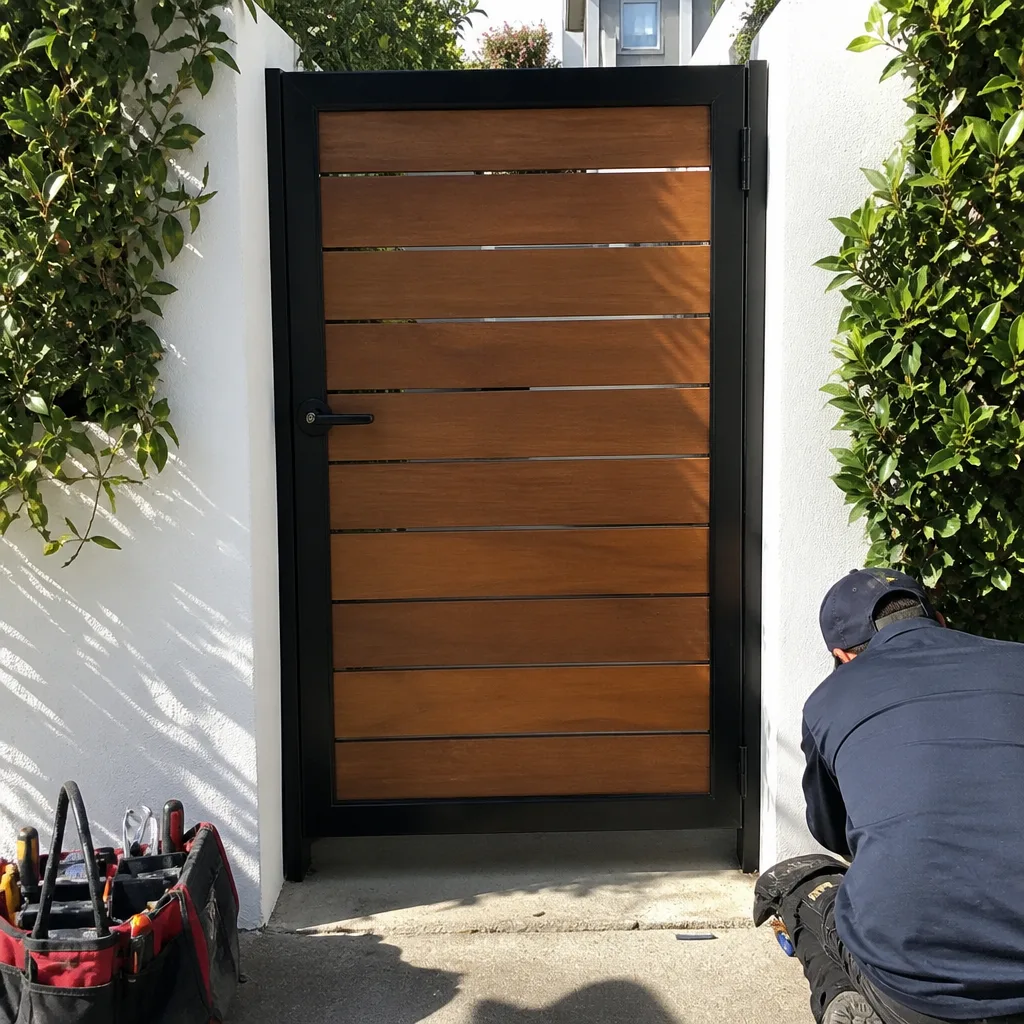 After
After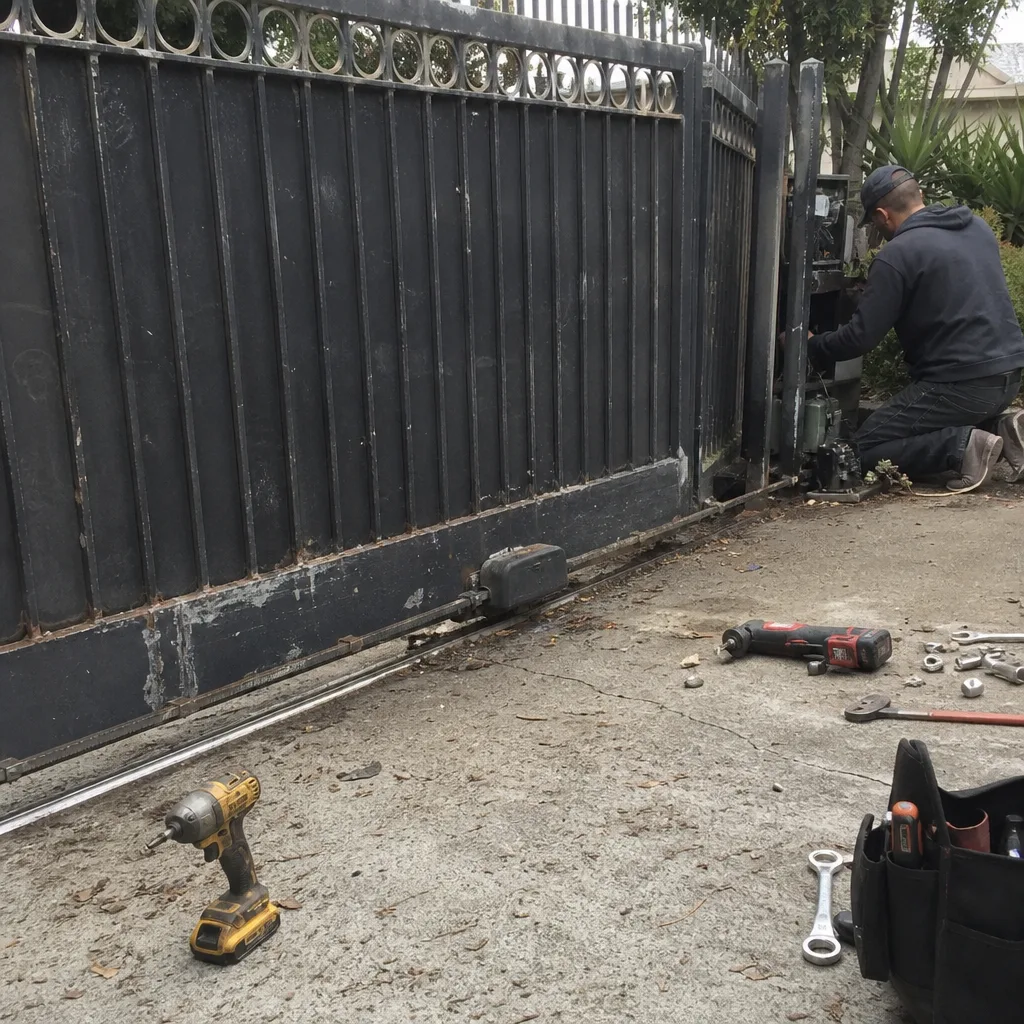 Before
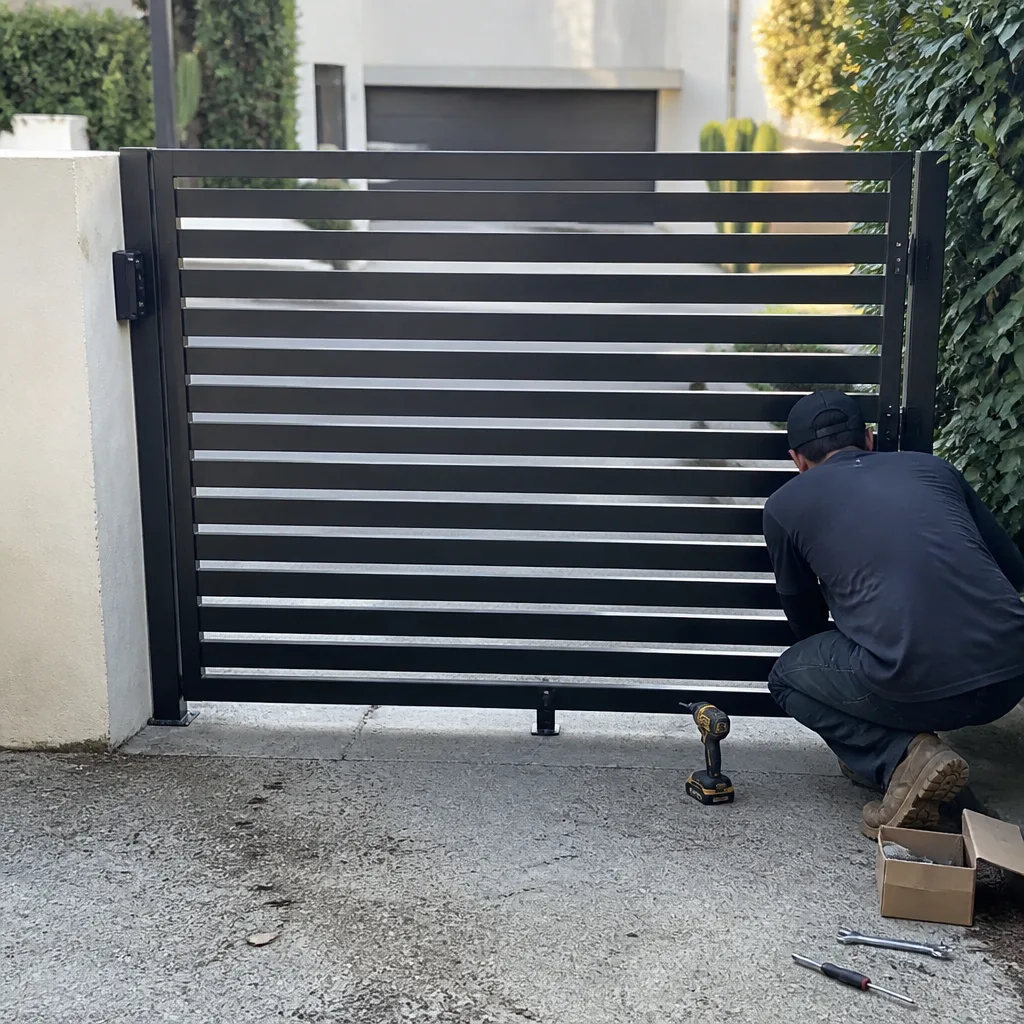 After
After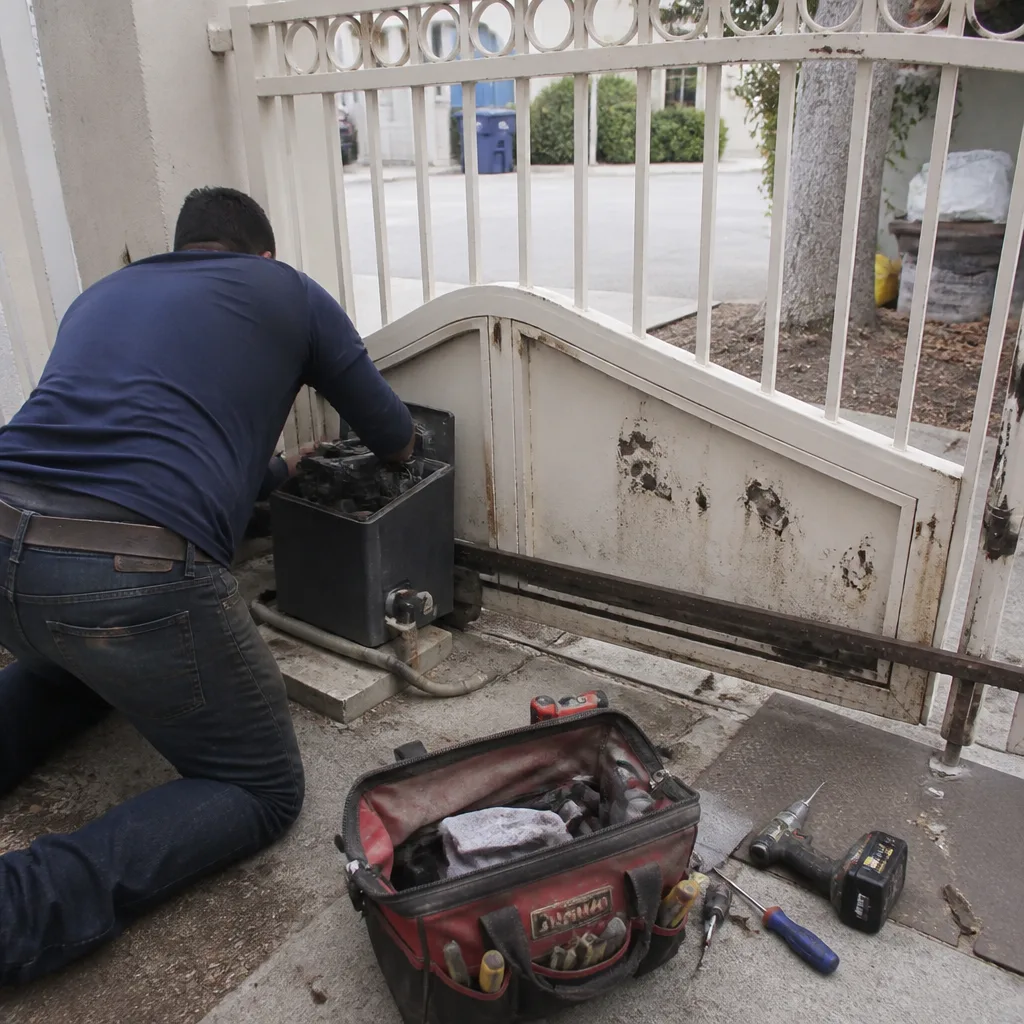 Before
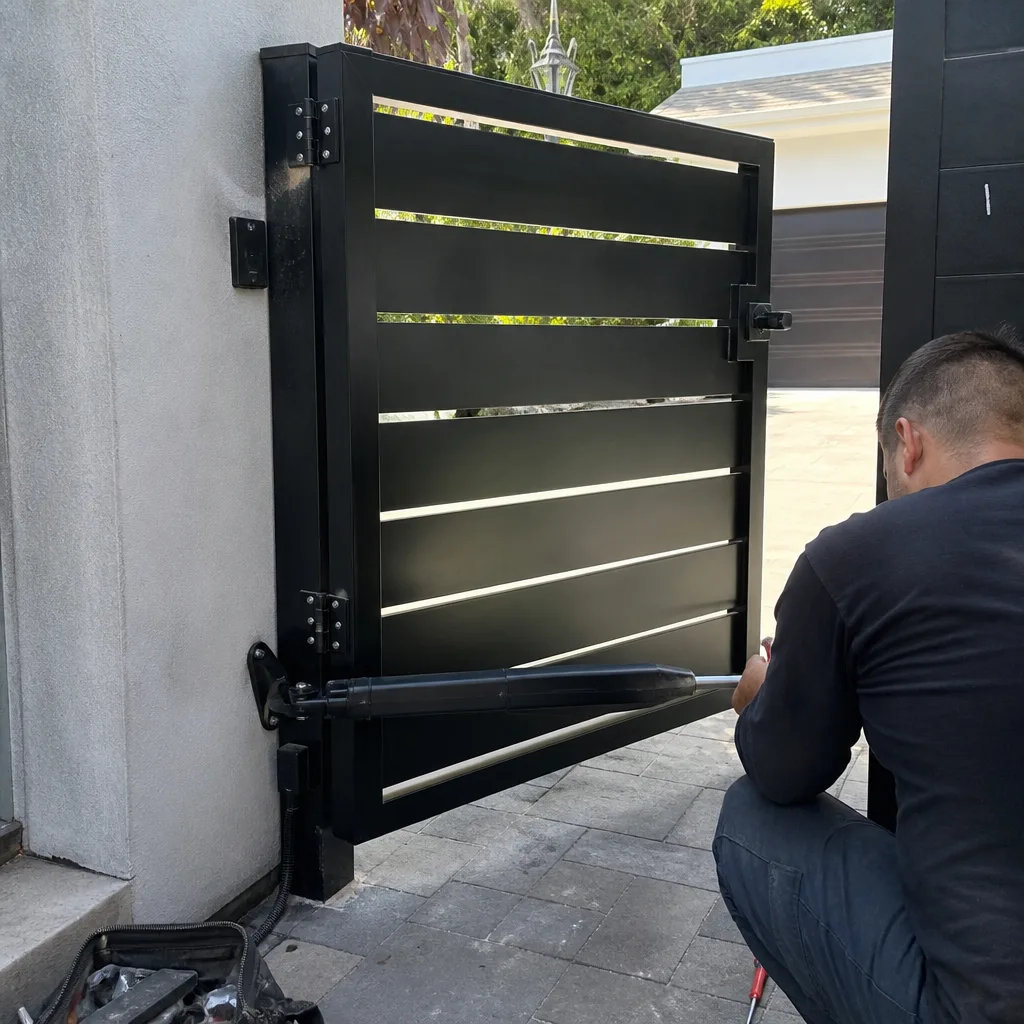 After
AfterGate Repair Warning Signs: A West Hollywood Homeowner’s Reference Guide
A gate that still opens and closes can still be failing. That’s the part most homeowners learn the expensive way. In our 42 years working on driveway gates across West Hollywood, the repairs that cost the most were almost always preceded by months of smaller warnings: a half-second hesitation, a new squeak, a gate that closed a little harder than it used to. This guide walks you through every warning sign we know to look for, what each one means, and when it’s time to pick up the phone. You’ll finish this page knowing more about your gate than most contractors do.
Quick Answer
The most common warning signs that a gate needs repair are: slow or jerky movement, grinding or scraping sounds, sagging or misalignment, a motor that runs but doesn’t move the gate, and remote or keypad failures. Any one of these, left alone, typically turns a $200 hinge repair into a $1,400 opener replacement within 12 to 18 months. If your gate is doing anything it didn’t do when it was new, that’s the gate telling you something.
Table of Contents
- How Your Gate Actually Works: The Two Systems Every West Hollywood Homeowner Should Know
- Movement Warning Signs: Hesitation, Jerking, and Speed Changes
- Sound Warning Signs: Grinding, Squealing, and Clicking You Shouldn’t Ignore
- Structural Warning Signs: Sagging, Rust, and Misalignment
- Automation Warning Signs: Motor, Remote, and Keypad Failures
- Weather, Salt Air, and West Hollywood: What the Local Climate Does to Gates
- What Gate Repairs Cost in West Hollywood
- Common Mistakes to Avoid
- When to Call a Professional
- Frequently Asked Questions
- The Bottom Line
How Your Gate Actually Works: The Two Systems Every West Hollywood Homeowner Should Know
Every automatic gate on a West Hollywood property is two machines wearing one coat. The first is the mechanical system: hinges, wheels, track, and the physical weight of the gate itself. The second is the electrical system: the motor, control board, safety sensors, and the accessories like remotes and keypads. Most gate failures happen when one system forces the other to work harder than it was designed to.
The mechanical side does the heavy lifting, literally. A sliding gate can weigh 600 to 1,400 pounds depending on length and material. A swinging gate puts all of its weight on two or three hinges, and every pound of that weight has leverage against the motor. When a hinge wears or a wheel seizes, the gate doesn’t just move poorly: it drags, it binds, and the motor strains to compensate. Motors are not designed to push through resistance. They’re designed to move a balanced, properly lubricated gate.
The electrical side is equally unforgiving. Control boards sit inside a metal box, often in direct sun for six or more hours a day in the summer. West Hollywood regularly sees temperatures in the mid-80s to low 90s from July through October, and the surface temperature of a dark gate motor housing in August can exceed 140 degrees. Heat is the slow killer of capacitors, solder joints, and battery backups. We replace more control boards in September and October than any other time of year, and it’s almost never a coincidence.
Here’s the sequence we see most often in West Hollywood homes: a mechanical part starts to wear, the motor compensates, the motor draws more current, the board overheats, and the whole system fails. The warning signs in the next sections are in order of how that sequence usually plays out, which means the earlier you catch it, the smaller the repair.
Movement Warning Signs: Hesitation, Jerking, and Speed Changes
The first thing to watch is how the gate moves. Not whether it moves, but how it moves. A healthy gate accelerates smoothly, travels at a consistent speed, and decelerates evenly before it stops. Any change to that rhythm is a warning sign. In our experience, movement changes appear three to six months before a full mechanical failure, which gives you a real window to act.
Hesitation at Start
When you press the remote and the gate pauses for a half-second before it begins moving, the motor is working against something. Common causes include a low battery in the operator’s backup system, a capacitor that’s losing its charge, or early-stage resistance at the hinges or wheels. A gate should begin moving immediately when the signal arrives. If it’s thinking about it first, something is wrong.
Jerky or Stuttering Movement
A gate that moves in fits and starts is usually fighting a mechanical problem. On sliding gates, the most common culprit is a roller or track issue: a flat-spotted wheel, debris packed into the track, or a section of track that’s shifted out of alignment. On swing gates, jerking movement typically points to a hinge that’s binding or a motor arm that’s out of adjustment. Both problems put uneven load on the motor, and both get worse each week they’re ignored.
Slower Than It Used to Be
Most gate motors are set to open at roughly 12 to 15 seconds for a standard driveway. If your gate now takes 20 or 25 seconds, the motor is under strain. This is one of the most reliable early warnings we see. Homeowners get used to the slower speed and forget what the gate felt like when it was new, but the motor hasn’t forgotten. Sluggish movement means the draw on the motor has increased, and increased draw means increased heat, and increased heat means a shorter motor life.
- Watch for a delay between pressing the remote and the gate starting to move.
- Note whether the gate moves smoothly or stutters at any point in its travel.
- Time the gate from closed to fully open and compare it to what it was when installed.
- Listen for a change in the motor’s pitch while the gate is moving.
- If any of these have changed in the last three months, schedule an inspection before the gate stops moving entirely.
None of these signs mean your gate is about to fail tomorrow. What they mean is that a part is wearing, and wearing parts don’t heal themselves. The repair that fixes a stuttering gate today may cost a few hundred dollars. The repair that fixes a seized motor in six months may cost four times that.
Sound Warning Signs: Grinding, Squealing, and Clicking You Shouldn’t Ignore
Gates make noise. That’s normal. But there’s a difference between the steady hum of a healthy motor and the sounds a gate makes when a mechanical part is failing. The difference matters because sound is often the earliest warning you’ll get, and it’s the easiest to dismiss.
Grinding from the Wheels or Track
A grinding sound on a sliding gate almost always means a wheel bearing is failing or the track has debris or damage. The sound is caused by metal dragging against metal instead of rolling smoothly. On the driveways of West Hollywood’s hillside streets, from the Bird Streets up through the Norma Triangle, gates sit on slopes where drainage runs directly through the track. Gravel, dirt, and leaves accumulate, and a wheel that runs over packed debris every day wears unevenly. The fix at this stage is typically a wheel replacement and a track cleaning. The repair if you wait is a warped track and a bent wheel bracket.
Squealing or High-Pitched Whine
A high-pitched squeal during gate movement usually indicates a dry or failing bearing. On swing gates, it’s often the hinge pin. On sliding gates, it’s the roller bearing or the motor’s internal drive mechanism. A single application of the right grease sometimes resolves it; more often, the bearing is already scored and lubrication will only buy a few weeks. The safe rule is this: if lubrication quiets the sound and it stays quiet, you caught it early. If the squeal returns within a month, the part needs replacement.
Rapid Clicking When You Press the Remote
If you hear a quick click-click-click from the operator box when you activate the remote, and the gate doesn’t move, that’s usually the relay firing without enough current to engage the motor. Common causes include a failed capacitor, a dying battery, or a burned connection on the control board. This sound is specific and consistent, and it tells you the remote is working but the operator is not. It’s a sign that the electrical side of the system needs attention before the mechanical side gets dragged into the failure.
Some sounds are completely normal: a low hum while the motor runs, a soft thunk when the gate reaches its stop, a brief beep on some models when the cycle begins. The sounds to act on are the ones that didn’t exist when the gate was new, or the ones that have gotten progressively louder over weeks or months.
Structural Warning Signs: Sagging, Rust, and Misalignment
The mechanical structure of a gate is where most long-term damage begins, and it’s also where most homeowners never look. The motor gets all the attention because it’s the part that costs the most to replace, but nine times out of ten, the motor is the victim, not the cause. The cause is structural.
Sagging at the Free End
On a swing gate, the side farthest from the hinge post should sit level with the hinge side. If you can see daylight under one end and the other end scrapes the driveway, the gate is sagging. This happens when a hinge wears, when a hinge weld fails, or when the post itself starts to lean. A sagging gate puts enormous strain on the motor because the motor has to lift the gate’s weight as well as swing it. We’ve seen gates on older West Hollywood properties, especially 1960s-era homes in the flats south of Santa Monica Boulevard, where a sagging gate destroyed a two-year-old opener because the homeowner kept replacing the motor without fixing the hinge that caused the problem.
Rust at Joints and Welds
West Hollywood gets less rain than most of the country, but gates here still rust. The culprit is not rainfall; it’s the combination of morning marine layer from the coast, irrigation overspray from landscaping, and twenty years of exposure. Rust forms fastest at welds, bolt holes, and any place water can sit. Surface rust is cosmetic and treatable. Rust that flakes, scales, or penetrates through the metal is structural, and it weakens the gate at exactly the points where stress concentrates. A weld that’s rusted through can fail without warning, and a failed weld on a heavy gate is a serious safety event.
Gap Changes and Misalignment
Walk out to your gate and look at the gaps: between the gate and the post, between the gate and the ground, between the two leaves of a double gate. These gaps should be consistent. If the gap is wider at the top than the bottom, or wider on one side than the other, something has shifted. It might be a hinge, it might be a wheel bracket, or it might be the post itself moving in the soil. On West Hollywood hillside lots, we see post movement more often than homeowners expect, particularly after the winter rains loosen the ground around shallow-set posts. Misalignment is not cosmetic. A gate that’s out of alignment rubs, binds, and eventually stops.
- Look at the gap between gate and ground along the full length of the gate.
- Check for rust at every hinge, weld, and bolt head.
- Stand back and sight down the top rail: it should be straight, not bowed.
- Open the gate halfway and try to lift the free end. Any vertical movement means hinge wear.
- Inspect gate posts for leaning or cracks in the surrounding concrete or soil.
Structural problems are the slowest to develop and the most expensive to ignore. They’re also the easiest to spot if you’re looking with fresh eyes. A gate that’s structurally sound will outlast two or three motors over its life. A gate that’s structurally compromised will eat motors every few years until the underlying problem is fixed.
Automation Warning Signs: Motor, Remote, and Keypad Failures
The automation side of your gate includes the operator, the control board, the remote transmitters, the keypad, the safety sensors, and the wiring that connects all of it. When one of these components fails, the symptom is usually obvious: the gate doesn’t respond, or it behaves erratically. What’s less obvious is that automation failures often start small and intermittent, and intermittent problems are the ones homeowners learn to work around.
Remote Works Sometimes, or Only at Close Range
If your remote only works when you’re ten feet from the gate, or it works in the morning but not the afternoon, don’t assume the remote is dying. Sometimes it is, and replacing the battery or the remote itself is a cheap fix. But range problems can also indicate a failing receiver on the control board, interference from nearby electronics, or a weak signal caused by corrosion on the antenna. If a fresh battery doesn’t restore full range, the problem is probably in the operator, not the remote.
Gate Reverses Before Fully Closing
A gate that starts closing and then immediately reverses usually means the safety sensors are misaligned or blocked. This is a designed safety feature, not a malfunction, and it’s doing its job. But if the sensors are clean, aligned, and clear of obstruction, and the gate still reverses, the issue could be a failing sensor, a wiring problem, or a control board that’s misreading the sensor input. On gates with Ironworks Gate Co. home service records showing LiftMaster and LiftMaster-compatible boards, we see this failure pattern most often on units that are ten years or older.
Keypad Works Intermittently or Not at All
Keypads live outside, exposed to sun, rain, and the occasional sprinkler overspray. They fail more often than any other gate accessory, and they usually fail gradually: buttons stop responding one at a time, the backlight flickers, or the code only works on the second or third entry. A keypad that’s failing is a security concern as much as a convenience issue, since visitors, delivery drivers, and service people depend on it. Replacement is typically straightforward, and modern keypads from Mighty Mule and FAAC are designed for direct retrofit in most cases.
Motor Runs But Gate Doesn’t Move
This is the warning sign most likely to be fatal if ignored. When the motor runs and the gate doesn’t move, the mechanical system and the electrical system are no longer connected. On chain-drive operators, the chain may have jumped a sprocket or stretched. On belt-drive units, the belt may be slipping. On swing gates, the motor arm or piston may have detached. Whatever the cause, this symptom means the motor is working against zero load, which can burn out the operator quickly if the gate is left running. If you hear the motor running and the gate stands still, cut power to the operator immediately and call for service.
One note on brand coverage: not all gate companies work on all automation brands. If your gate has a LiftMaster, FAAC, BFT, or Mighty Mule operator, make sure the company you call has actually worked on that specific brand before. The right diagnostic on a BFT board is different from the right diagnostic on a Mighty Mule, and a tech who’s guessing will cost you time and money in parts that don’t fix the problem.
Weather, Salt Air, and West Hollywood: What the Local Climate Does to Gates
West Hollywood sits about eight miles from the Pacific, close enough that the morning marine layer rolls in most days between May and August. That damp air, combined with the city’s concentrated planting and irrigation, creates a microclimate that’s harder on metal than most homeowners expect. Gates in West Hollywood rust more than gates in the Valley, even though the Valley gets more rain, because the moisture here comes daily and sits on the metal until the afternoon sun burns it off.
The bigger factor is the sun. A black or dark-finished gate on a south-facing West Hollywood driveway can reach surface temperatures above 150 degrees in July and August. That heat radiates directly into the operator housing, which is usually mounted within a foot of the gate. Operators are rated for ambient temperatures up to roughly 140 degrees Fahrenheit, and many spend entire afternoons above that threshold in the summer. The components that fail first are capacitors and electrolytic components on the control board, which have a finite lifespan at high temperature.
There’s also the question of hillside drainage. West Hollywood’s streets rise quickly into the hills north of Sunset, and many driveways are sloped. A sliding gate on a slope catches every drop of water that runs down the driveway, and that water carries silt, leaves, and whatever the rain picked up along the way. Tracked gates in the hills need their tracks and drainage channels cleaned more often than gates on flat lots just a mile south.
Here’s what this means in practice:
- Gates within two miles of the coast should have their metal inspected for rust annually, even if no rust is visible from ten feet away.
- Operator housings on south-facing driveways benefit from a shade structure or at minimum a light-colored housing rather than black.
- Sloped driveways with sliding gates should have track drainage checked before and after the rainy season.
- Spring is the best time to schedule maintenance in West Hollywood: after the winter moisture and before the summer heat.
None of this requires a specialist. Most of it is observation: look at your gate in the morning when the marine layer is in, look at it at noon in July, and look at the track after a rain. The gate will tell you what it needs.
What Gate Repairs Cost in West Hollywood
Gate repair pricing in West Hollywood runs higher than in the Valley or the Inland Empire, and the reasons are honest: local labor rates, the age of the housing stock, and the number of custom gates that need fabricated parts instead of off-the-shelf replacements. A 1960s custom iron gate in the West Hollywood West neighborhood doesn’t accept parts from a big-box store; the hinge needs to be cut, welded, and fitted to match what’s there.
Here are realistic ranges for common gate repairs in the West Hollywood market, based on what we and other reputable local companies currently charge:
- Hinge replacement (single swing gate): $220 to $450, depending on hinge size and whether welding is required
- Wheel or roller replacement (sliding gate): $180 to $380, including track cleaning and adjustment
- Control board replacement: $350 to $700, depending on brand and board type
- Capacitor replacement: $120 to $220, including diagnosis
- Keypad replacement: $180 to $320, including programming
- Remote transmitter replacement: $65 to $150 per remote, depending on brand
- Full motor/operator replacement: $900 to $2,400, depending on brand, gate weight, and access
- Track repair or realignment: $250 to $600, depending on damage extent
- Welded repair to a cracked gate frame: $200 to $500, depending on the size and location of the crack
These are honest market numbers for West Hollywood, not national averages. National numbers understate what local service actually costs because they include lower-cost markets like rural Texas and the Midwest. If a quote comes in dramatically lower than these ranges, ask what’s included, because something is being left out.
Every repair we quote at Ironworks Gate Co. follows the same rule: the price is quoted and agreed before any work starts, and that’s the price on the invoice. No surprises on the bill, ever. The company that makes a 40-year-old gate close like the day it was hung earns its reputation one honest quote at a time.
Common Mistakes to Avoid
- Lubricating without cleaning first. Spraying grease over dirt and metal shavings grinds the debris deeper into the bearing and accelerates wear. Clean the part, then lubricate. Better yet, have a pro do both.
- Replacing the motor without fixing the underlying cause. A new opener on a gate with shot hinges will fail the same way the old one did, just a year or two later. Fix the mechanical issue first.
- Ignoring intermittent remote problems. A remote that works “most of the time” is a remote that fails when you’re late, when it’s raining, or when you have a delivery waiting at the gate. Intermittent means failing.
- Treating rust as cosmetic. Surface rust can usually be cleaned and treated. Rust that flakes or penetrates is structural and needs a welded repair. Painting over it makes the gate look better while the metal continues to weaken underneath.
- Attempting spring or cable repairs without training. Some gates use tension springs or cable systems under high load. These components can release suddenly and cause serious injury. This is not a DIY job, and any gate professional will tell you the same.
- Buying parts online and matching them by sight. Control boards, capacitors, and sensors are specific to the brand, model, and revision of your operator. A board that looks identical may have different firmware or voltage specs, and installing the wrong part can damage a working motor.
- Waiting until the gate stops entirely. Every repair is cheaper before the gate fails completely. A failing component strains the components around it, and a gate left dead for weeks develops additional problems from sitting unused.
When to Call a Professional
Call a gate professional the day you notice any of the warning signs in this guide. That’s the short answer. The slightly longer answer is that some situations deserve same-day attention: a gate that won’t close leaves your property exposed, and a gate that won’t open traps your car in the driveway. Both are urgent. But even the slow-moving signs, the squeak that’s been there for three months, the gate that’s a little slower than last year, those deserve a call this week, not this quarter. Ironworks Gate Co. offers free estimates in West Hollywood. Call (442) 255-3886 and a live person answers, day or night. We’ll be there when we say.
Frequently Asked Questions
Gate repair in West Hollywood typically costs between $180 and $700 for most common fixes, with full operator replacement running $900 to $2,400. The specific price depends on what’s failed, the brand of your operator, and whether any welding or fabrication is needed. Call (442) 255-3886 for an exact quote; estimates are free and the price is agreed before any work starts.
Yes, and that’s the standard for gate repairs at Ironworks Gate Co. A live person answers the phone 24 hours a day, 7 days a week, and most repairs are completed in a single visit. If your gate won’t close or won’t open, call (442) 255-3886 and we’ll get someone out to you.
The most common problem we see in West Hollywood is hinge and wheel wear, usually on gates that are ten to twenty years old and have never had their mechanical parts serviced. The motors often still work fine on these gates; it’s the metal that’s tired. That’s good news, because hinge and wheel replacement is significantly less expensive than operator replacement.
We service nine major gate automation brands including LiftMaster, FAAC, BFT, and Mighty Mule. Whatever is on your driveway, our technicians are trained and equipped to diagnose and repair it correctly on the first visit. If your brand isn’t one we see every day, we’ll tell you honestly before you pay for a service call.
A well-built gate in West Hollywood should last 25 to 40 years with proper maintenance, though the operator will typically need replacement every 10 to 15 years. The metal structure outlives the electronics, which is why structural maintenance matters: keep the metal right and the mechanical parts right, and you’ll replace far fewer motors over the life of the gate.
Most older gates in West Hollywood are worth repairing, especially custom gates. A 40-year-old iron gate is often better metal than anything you can buy new today. The decision comes down to the condition of the frame and posts. If the metal is structurally sound, repair and automation upgrades are almost always the better investment. Call (442) 255-3886 for an honest assessment; we’ll tell you if replacement is the smarter move, and we’ll show you why.
The Bottom Line
Your gate warns you before it fails. Hesitation, jerking, grinding, sagging, rust, intermittent remotes: these are all messages, and they’re all cheaper to answer early than late. West Hollywood’s coastal air and summer heat punish gates that are already struggling, and a $200 hinge repair now prevents a $1,500 operator replacement in a year. Watch the movement, listen to the sounds, look at the structure, and call a professional the day something changes. Done right, and backed in writing, a gate repair should be the last time you think about it for another fifteen years.
Written by Victor Salinas, Owner at Ironworks Gate Co., serving West Hollywood since 2013.