
Last updated August 25, 2026
Free on-site gate assessment - hinges, posts, and your LiftMaster or Nice gate operator checked before anything is quoted
The assessment is free and the quote is the invoice.
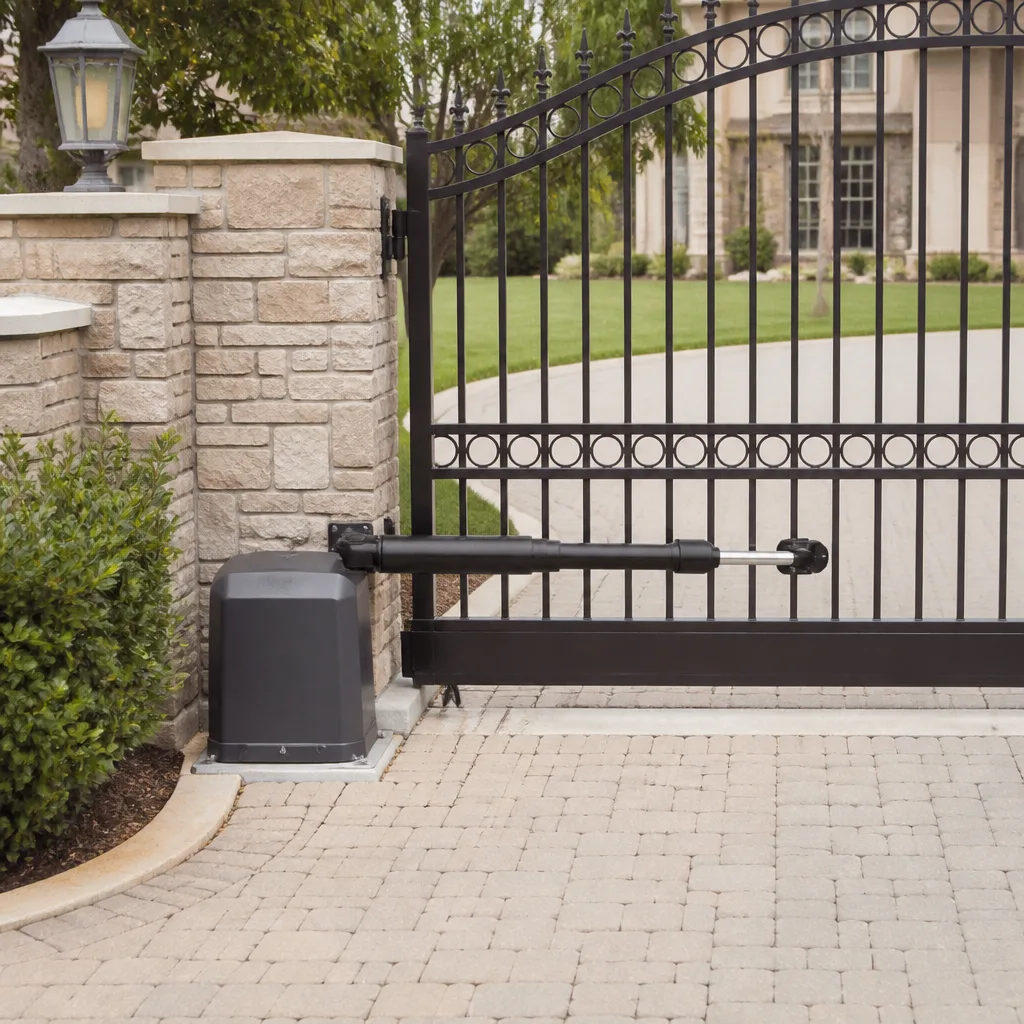
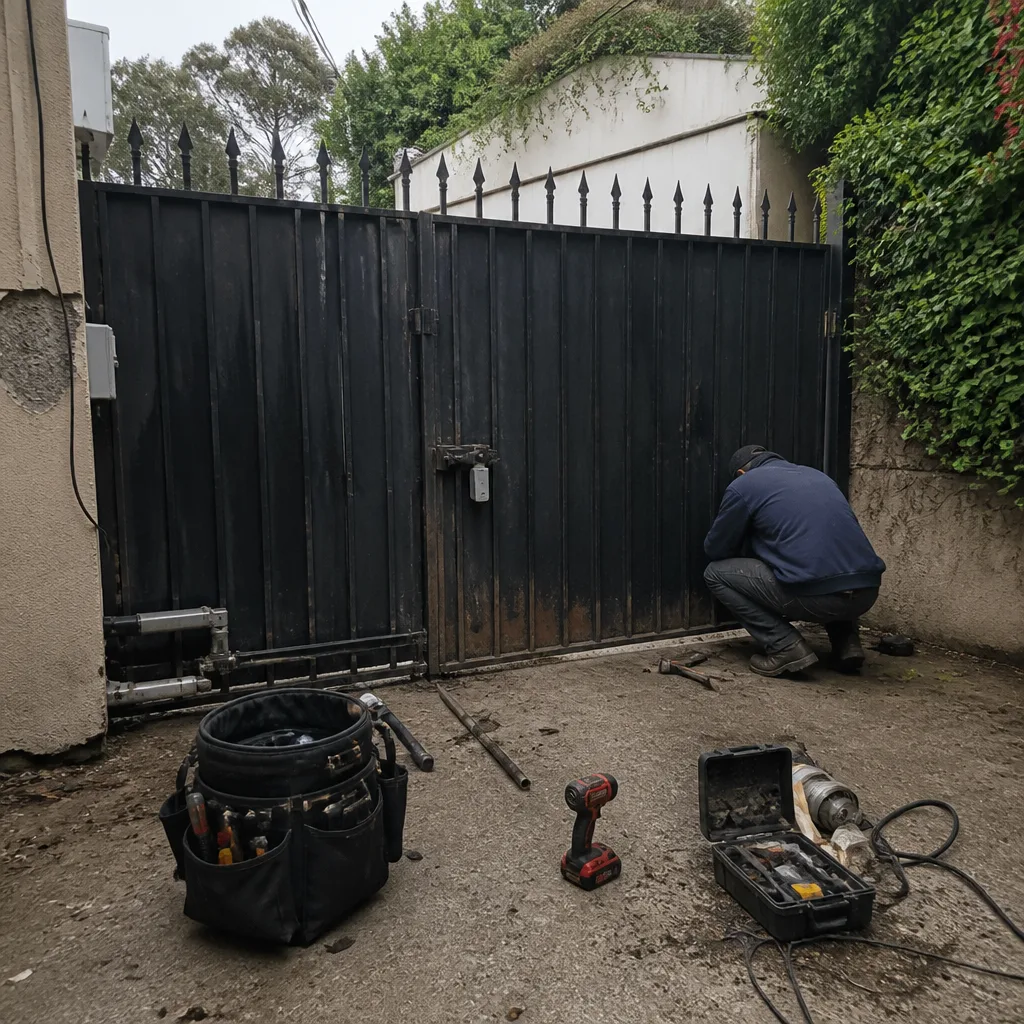 Before
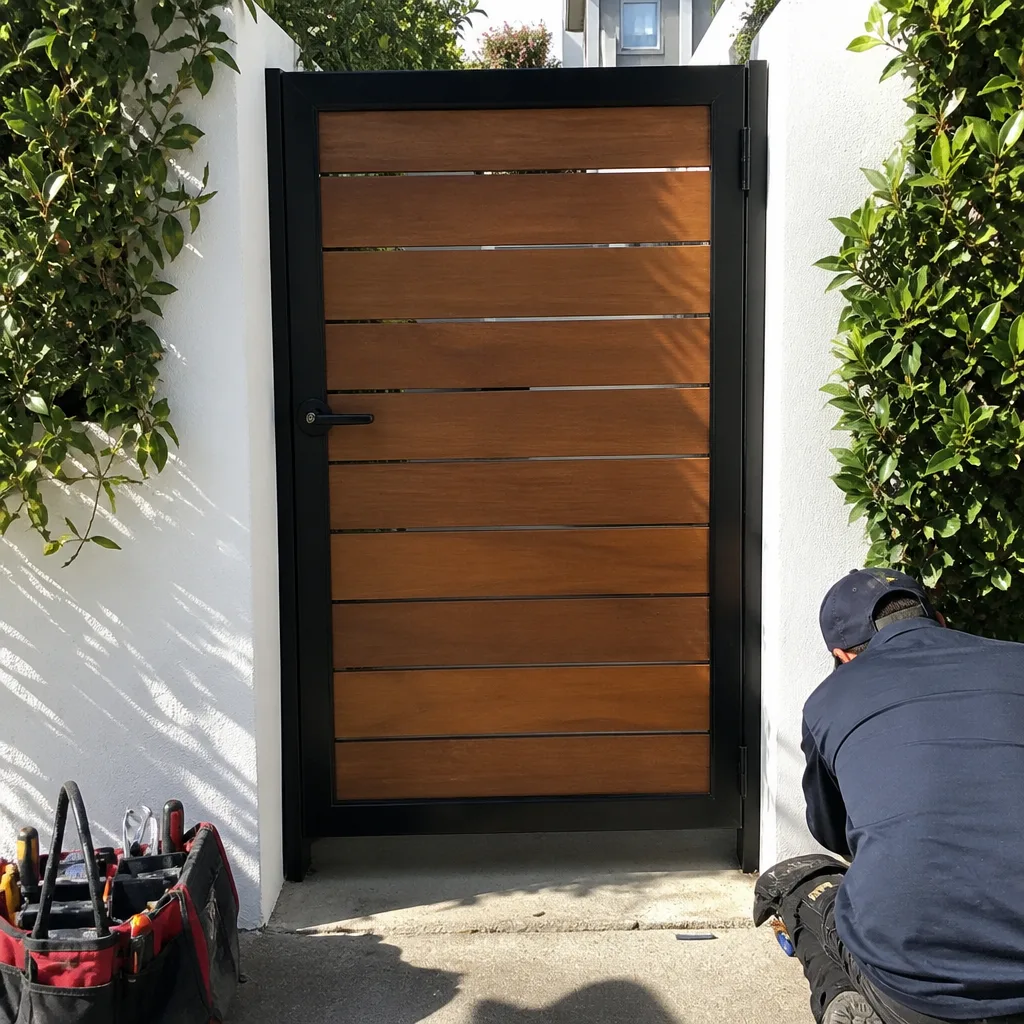 After
After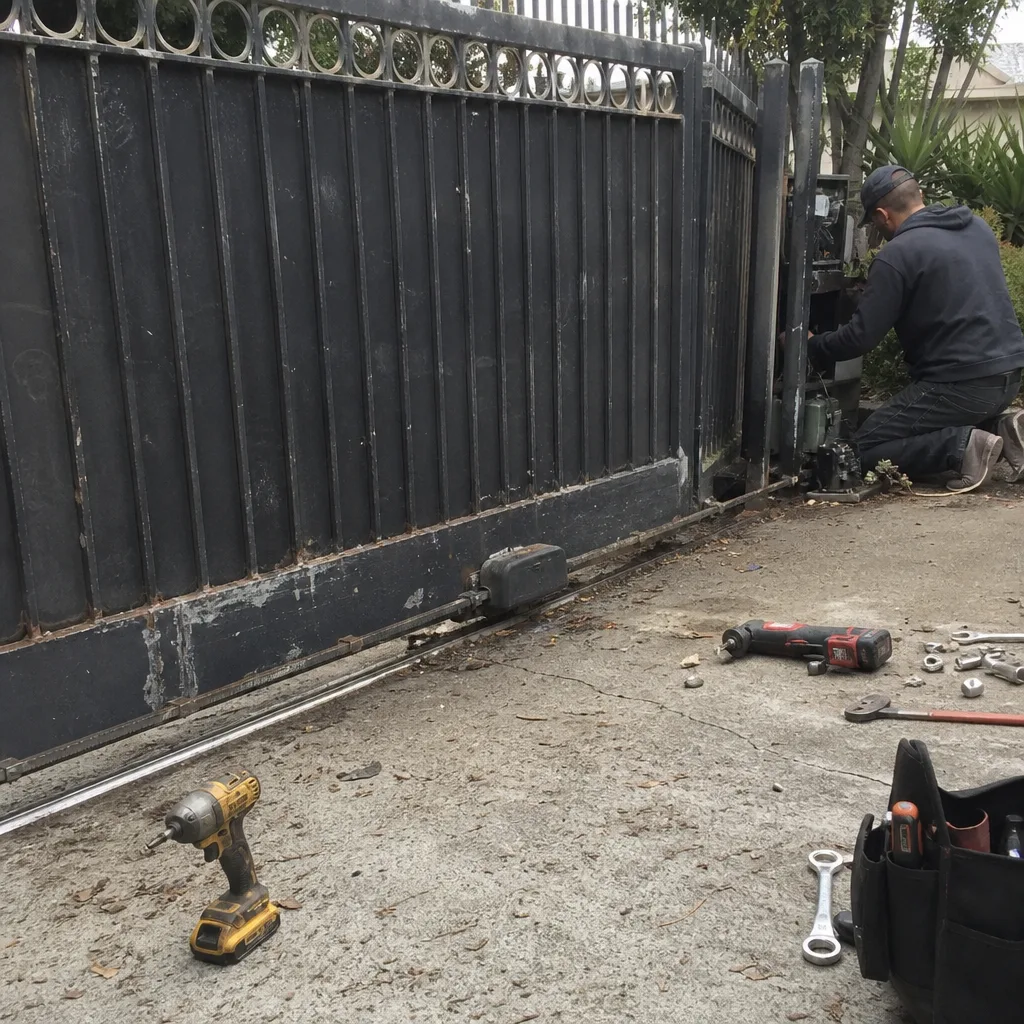 Before
 After
After Before
 After
AfterGate Repair Permits, Codes & Inspections in CA: What You Need to Know
Here’s a number most California homeowners never hear until it’s too late: a gate installed without the right permits can trigger a stop-work order, a fine, or a lien when you go to sell the house. In West Hollywood, we’ve seen a 20-year-old electric gate force a sale into escrow limbo because the original opener was never permitted and the city flagged it during the buyer’s inspection. This guide walks you through what actually requires a permit, which codes apply to driveway gates in California, what an inspector looks for, and how to stay on the right side of the paperwork without turning a simple repair into a month-long bureaucratic headache.
Quick Answer
In California, most driveway gate repairs that replace existing components like hinges, motors, or circuit boards with like-for-like parts do NOT require a permit. However, new gate installations, structural modifications to posts or columns, adding an automatic opener for the first time, or any electrical work that runs new power to the gate typically DO require a permit, and automatic gates must comply with UL 325 safety standards and ASTM F2200 construction standards. When in doubt, call your local building department; in West Hollywood, the Community Development Department handles gate permits and can confirm your specific situation in one phone call.
Table of Contents
- When Do You Actually Need a Permit for a Gate in California?
- The California Codes That Govern Gates: UL 325 and ASTM F2200
- The West Hollywood Permit Process, Step by Step
- What a Gate Inspection Actually Checks
- What Gate Permits Cost in West Hollywood and Los Angeles County
- Repairs vs. Replacements: Where the Line Is
- HOA Rules on Top of City Codes: What We See Locally
- Safety Sensors, Entrapment Zones, and Why Inspectors Care
When Do You Actually Need a Permit for a Gate in California?
The short rule: you need a permit when you’re adding something new to the property, changing something structural, or introducing electrical work that wasn’t there before. Replacing what’s already there, with something equivalent, generally doesn’t trigger a permit. Here’s how that plays out in practice, based on what we handle across West Hollywood, Beverly Hills, and the Fairfax District every week.
Repairs that do NOT require a permit include replacing a worn hinge, swapping out a failed gate motor for a comparable model, changing a damaged wheel or roller, re-welding a cracked joint on an existing steel gate frame, replacing a keypad or remote receiver, and rewiring a photo-eye sensor using the existing conduit. These are maintenance and repair actions. The gate was already there. The opener was already there. You’re restoring function, not creating anything new.
Work that DOES require a permit includes building a new driveway gate where none existed, adding an automatic opener to a gate that was previously manual, installing new electrical conduit or a dedicated circuit from the panel to the gate, moving or rebuilding gate posts, and changing a sliding gate to a swing gate or vice versa. If you’re pouring new concrete footings for posts, that’s structural. If you’re pulling wire, that’s electrical. Either one means a permit in most California jurisdictions.
There’s a gray zone worth naming: when a “repair” becomes extensive enough that the building official considers it a new installation. We’ve seen inspectors in West Hollywood treat a full gate replacement, new posts, new frame, new everything, as new construction even if a gate stood in that spot for decades. That’s why we recommend a quick call to the city before any job that involves posts, concrete, or new wiring. It costs nothing to ask, and it saves a lot down the line.
The California Codes That Govern Gates: UL 325 and ASTM F2200
California building codes don’t set out a special “gate code” chapter, but two standards carry the weight of law for anyone installing or automating a gate. These are the ones you’ll see on plans, on inspection checklists, and in the fine print of your gate opener’s manual. You don’t need to memorize them, but knowing they exist, and that your gate complies, will save you from failed inspections and liability exposure.
UL 325 is the safety standard for automatic gate openers. It was written after a series of accidents involving entrapment, and it’s now mandatory for every automatic gate operator sold or installed in the United States. UL 325 requires two independent entrapment protection devices on every automatic gate. In practice, that means a set of photo-eye sensors that reverse the gate when the beam is broken, plus either an adjustable pressure sensor built into the motor, an audible alarm, or an edge sensor on the leading edge of the gate leaf. We install and service operators from Mighty Mule, LiftMaster, FAAC, and BFT, and every one of these brands ships with UL 325-compliant safety inputs. The standard matters because a gate that lacks working entrapment protection is not just non-compliant, it’s genuinely dangerous. A sliding gate can exert enough force to seriously injure a person or pet.
ASTM F2200 governs the construction of the gate itself. It sets minimums for gate leaf thickness, frame strength, the type of screen or pickets allowed, and the maximum gaps between pickets. The most important provision for a homeowner is the picket spacing rule: a gate can’t have an opening large enough for a child to get a head or limb through. It also requires gates to be built so that they don’t sag, twist, or bind as they cycle. A gate that meets ASTM F2200 has been engineered to move cleanly through its entire arc of travel, season after season.
There’s also a 2024 California Electrical Code requirement that any new outlet or circuit serving a gate opener be GFCI protected. If you’re running a new line from the house to the gate, your electrician needs to pull a permit for that, and the city will inspect it. In West Hollywood, we regularly coordinate with licensed electricians on new gate installations so the electrical inspection and the gate inspection happen in the same window.
The West Hollywood Permit Process, Step by Step
West Hollywood runs its own building department through its Community Development Department, separate from Los Angeles County. That’s good news: the process is small enough that you can talk to a human being, but it still follows the same sequence as every California city. Here’s the step-by-step path for a new gate or automatic opener in West Hollywood.
- Confirm you need a permit. Call the West Hollywood Community Development Department or visit the permit counter at City Hall. Describe the project in plain language. Ask directly: “Is a permit required for this?” Get the name of the person you spoke with and note the date. This protects you if there’s ever a dispute.
- Submit a plot plan and gate drawings. For new construction, the city wants to see where the gate sits on your property, the setback from the sidewalk or property line, the gate’s dimensions, the post locations and footing depth, and the type of opener you’re installing. A professional gate company can prepare these drawings. A hand-drawn sketch on graph paper works if it’s legible and dimensioned.
- Pay the permit fee. Fees vary by project valuation. We cover typical costs in the section below.
- Complete the work. The gate goes in, the conduit is run, the opener is installed and programmed, and the safety devices are adjusted.
- Schedule the inspection. Call or submit the request online. West Hollywood typically schedules residential inspections within 1-3 business days. The inspector comes out, checks the gate against the approved plans and against UL 325 / ASTM F2200 requirements, and either signs off or issues a correction list.
- Pass the final and keep the paperwork. Once the inspector signs off, the permit is closed. Keep the final approval with your house records. You’ll need it when you sell.
One thing we’ve learned from years of doing this in West Hollywood: the city is responsive when the plans are clean and the work is done by someone who knows gates. The inspections that drag on are usually the ones where the homeowner tried to shortcut the drawings or the safety check failed because the photo-eyes weren’t wired correctly.
What a Gate Inspection Actually Checks
If you’re having a gate inspected by the City of West Hollywood or any California jurisdiction, here’s exactly what the inspector will walk through. Knowing this list ahead of time lets you fix problems before the inspector points them out.
- Entrapment protection. The inspector will block the photo-eye beam and make sure the gate reverses. They’ll test the pressure sensor by obstructing the gate’s path. If either test fails, the inspection fails.
- Gate travel and stops. The gate must open and close fully without slamming into its stops, chattering at the end of travel, or stalling midway. A gate that binds or sags will get flagged.
- Picket spacing. For a new gate, the inspector checks that no opening between pickets is large enough to trap a child’s head or limb. This comes straight from ASTM F2200.
- Footings and posts. Posts must be set below grade, secured with concrete, and plumb. A wobbly post is a structural failure.
- Electrical. The inspector verifies the circuit is GFCI protected, the wiring is in conduit where required, and any exposed connections are in weatherproof boxes.
- Vehicle loop or edge sensors. If you have a vehicle detection loop cut into the driveway or a safety edge on the gate leaf, the inspector will test it.
- Manual release. Every automatic gate must be operable by hand in a power failure. The inspector will confirm the disconnect works.
Most of the gates we install in West Hollywood pass on the first visit. The ones that don’t usually miss on one of the two safety tests, or on an electrical detail. A little preparation before the inspector arrives goes a long way.
What Gate Permits Cost in West Hollywood and Los Angeles County
Permit fees in California are based on the valuation of the work, not on the type of gate. A simple manual gate replacement might fall under a flat building permit fee. An automatic gate with new electrical work gets priced on a sliding scale. Here are realistic ranges based on recent projects across West Hollywood, Beverly Hills, and surrounding L.A. County cities.
| Project Scope | Typical Permit Fee Range |
|---|---|
| Manual gate replacement, no electrical | $150-$400 |
| Automatic gate opener added to existing gate | $200-$500 |
| New gate with automation and new electrical circuit | $400-$1,200 |
| Major structural work: new posts, grade change, retaining wall | $800-$2,500+ |
These are ballpark figures, not quotes. The West Hollywood Community Development Department publishes its current fee schedule on the city’s website, and the actual fee depends on the declared project value. One practical tip: don’t under-declare the project value to save on fees. If the inspector flags the valuation as unrealistic, they can reassess it, and you’ll pay the difference plus a delay.
Repairs vs. Replacements: Where the Line Is
This is the question we answer most often from homeowners in West Hollywood and the surrounding neighborhoods: “I need my gate fixed. Am I supposed to pull a permit for this?” Usually not. Here’s how to think about it.
A repair restores the gate to its original condition. The post is still the original post. The gate leaf is still the original leaf. You’re replacing a part that wore out or a component that failed. Replacing a LiftMaster circuit board with a new LiftMaster circuit board is a repair. Swapping a bent hinge for a matching hinge is a repair. Even replacing a burned-out motor with a comparable motor, no new wiring, same conduit, same mounting, is generally a repair. You don’t need a permit, and you won’t have an issue with the city.
A replacement introduces something new. If you’re replacing a manual gate with an automatic one, that’s a change of use, and it needs a permit. If you’re replacing the entire gate, frame, posts, and concrete footings, the city is likely to call that new construction. If your “repair” involves running a new electrical line, digging a trench, or setting new posts, permit territory.
When in doubt, we always recommend the same thing: call the city. In West Hollywood, the permit counter staff are straightforward. Describe what you’re planning in one or two sentences. They’ll tell you whether you need to file. If you’d rather not make the call yourself, a reputable gate company will do it for you and tell you honestly where your project lands.
HOA Rules on Top of City Codes: What We See Locally
West Hollywood has a lot of single-family homes with no HOA at all, but drive ten minutes into the hills, into areas like the Bird Streets or parts of Benedict Canyon, and you see a different landscape: HOAs with architectural review committees, gate design standards, and sometimes stricter rules than the city itself.
The city permit and the HOA approval are two separate things. You can have a city permit in hand and still be in violation of your HOA’s governing documents. Most HOAs require written approval before you change a gate’s design, color, height, or automation. Some set maximum gate heights. Some require that driveway gates match the community’s approved materials list. Some prohibit certain opener types if the motor is visible above the gate line.
We’ve handled situations where a homeowner in a West Hollywood-adjacent HOA replaced a wood gate with a steel gate, matching the house perfectly, and then got a violation letter because the community required wood for all street-facing gates. The gate was installed correctly, passed inspection, and still had to come down. The HOA process is part of the job. Before we start any gate installation in an HOA-governed community, we ask for the approval letter. It protects the homeowner and makes the project run cleanly.
Safety Sensors, Entrapment Zones, and Why Inspectors Care
If there’s one part of a gate system that California inspectors scrutinize more than any other, it’s the entrapment protection. That’s because automatic gates have caused serious injuries and deaths in this state, and every one of those accidents traces back to a missing, bypassed, or misaligned safety device.
An entrapment zone is any point where the gate’s motion could pinch, crush, or trap a person. On a sliding gate, the primary entrapment zones are the gap between the gate and the fence line, and the space between the gate and its end post. On a swing gate, the danger points are the hinge side, the latch side, and the area swept by the gate leaf as it opens and closes.
California enforces UL 325, which requires two independent entrapment protection devices. Most automatic gates we work on in West Hollywood use photo-eye sensors mounted at the gate opening, plus a built-in pressure sensor in the motor. The photo-eye stops and reverses the gate when anything breaks the beam. The pressure sensor stops and reverses the motor when it encounters resistance, like a car bumper or a person in the gate’s path. Newer systems add an audible alarm that sounds when the gate reverses twice in a row, which is a sign that something is repeatedly obstructing the gate travel.
If you have an automatic gate and you don’t know whether the entrapment protection is working, that’s a safety problem and a compliance problem. Here’s a simple test any homeowner can run: with the gate open, place a cardboard box in the gate’s path and close the gate. The gate should reverse when it contacts the box. Then block the photo-eye beam with your hand and try to close the gate again. It shouldn’t move, or it should reverse immediately. If either test fails, stop using the gate and call a professional. A gate that doesn’t reverse on contact is dangerous. We’ve seen the aftermath of a gate that failed this test, and it’s not something any homeowner wants on their conscience. Reputable openers from LiftMaster, FAAC, BFT, and Mighty Mule include these safety systems, but they only work if they’re wired and aligned correctly.
Key Takeaways: Gate Permits and Codes in California
- Repairs to existing gates and openers usually don’t need a permit; new installations, new automation, and new electrical work usually do.
- UL 325 and ASTM F2200 are the two standards every California gate inspection checks against.
- West Hollywood has its own building department, and calling ahead to confirm permit requirements costs nothing and prevents expensive surprises.
- Entrapment protection is the inspector’s top focus. Test your gate’s photo-eyes and pressure sensor regularly.
- HOA rules can be stricter than city rules. In HOA communities, get the approval letter before the gate goes in.
Common Mistakes to Avoid
- Skipping the permit for a new automatic opener. Adding automation to a manual gate is a change of use. If you sell the house, the unpermitted work can surface during escrow and cost you the deal or a significant credit to the buyer.
- Assuming the HOA doesn’t matter. City approval and HOA approval are separate. A gate that passes inspection can still violate community rules.
- Disabling the photo-eyes because the gate kept reversing. A gate that reverses constantly has an alignment or wiring problem. Bypassing the safety system fixes the symptom and creates a serious danger. We’ve corrected this on gates all over West Hollywood.
- Mounting a new opener on old posts without checking the structure. A motor takes the load that an old wooden post may not be built to carry. The gate will shake, the opener will burn out early, and the post could fail.
- Using interior-grade electrical components outdoors. Gate wiring gets wet, hot, and dirty. Every junction box, splice, and connector must be rated for wet locations and UV exposure.
- Not keeping the final inspection paperwork. When you sell, the buyer’s inspector may ask about the gate. Having the signed-off permit in your file turns a potential objection into a non-issue.
- Declaring less on the permit to pay a smaller fee. If the city reassesses the valuation, the savings disappear and the project stalls.
When to Call a Professional
There’s a point where experienced judgment beats a permit guide, and that’s exactly when a professional is worth the call. If your gate is showing signs of structural trouble, sagging, dragging, cracked welds, or posts leaning out of plumb, don’t wait until it fails and pins a car in the driveway. If your opener has suddenly started reversing for no reason, or the photo-eyes are throwing error codes, or the gate is slowing down, those are safety system problems, not inconveniences. And if you’re planning new automation, an electrical run from the panel to the gate, or a full gate replacement in West Hollywood, you want someone who knows the local permit process and the code requirements before the first hole is dug. Ironworks Gate Co. offers free estimates in West Hollywood, and we will walk you through the permit question, the code compliance, and the cost before any work begins. Call (442) 255-3886 to schedule yours.
Frequently Asked Questions
No, a like-for-like opener replacement does not require a permit in West Hollywood, as long as you’re not running new electrical wiring or changing the gate from manual to automatic. Swapping a worn-out LiftMaster or Mighty Mule opener for a comparable model is a repair, not new construction. To confirm your specific case, call the West Hollywood Community Development Department, or ask us to check for you. If you’re in doubt, call (442) 255-3886 and we’ll walk you through it.
Gate permit fees in California typically range from $150 for a simple manual gate replacement to $1,200 or more for a new automated gate with electrical work, depending on the project valuation and the city. In West Hollywood, the fee is calculated from the declared value of the work, so larger projects pay more. The city publishes its fee schedule online, and a quick call to the permit counter will give you a firm number. Estimates for gate work are free, and we’ll help you factor the permit into your budget before you commit.
If West Hollywood or any California city discovers unpermitted gate work, you can face a stop-work order, a notice of violation, a fine, and a requirement to submit plans and pay the permit fee after the fact, often at double the original amount. When you go to sell, an unpermitted gate can also surface in the buyer’s inspection and delay or derail the sale. The fix is usually simple: file the permit, get the inspection, and close out the violation, but it costs more and takes longer than doing it right the first time. Call us before you start, and we’ll help you avoid the whole mess.
Yes, every automatic gate in California must comply with UL 325, which requires two independent entrapment protection devices such as photo-eye sensors and a motor pressure sensor, and new gates must meet ASTM F2200 construction standards for strength and picket spacing. These standards exist because automatic gates have caused serious injuries, and inspectors check for compliance on every new installation. If your gate won’t reverse when it encounters an obstacle, call a professional immediately. That’s not a minor adjustment; it’s a safety failure. Call (442) 255-3886 for an inspection.
You can, but it’s rarely a good idea. Automatic gate openers involve line-voltage wiring, GFCI-protected circuits, and entrapment protection calibration, and if you’re adding an opener to a gate that was previously manual, the city requires a permit for the change of use. A homeowner who’s comfortable with electrical work can handle a basic like-for-like replacement, but new automation is a different job. We train our technicians on LiftMaster, FAAC, BFT, and Mighty Mule systems, and we see a lot of DIY installs that pass the visual check but fail the safety test. If you go the DIY route, check your work against the UL 325 checklist before you call for inspection.
If your home is in an HOA-governed community in or around West Hollywood, your HOA likely requires written approval before you change your gate’s design, height, material, color, or automation, and HOA approval is separate from any city permit. Read your governing documents or call your HOA management company before you order the gate. We’ve seen gates come down over a color mismatch, so we always ask for the approval letter before we start. If you’re not sure whether your HOA has gate rules, start with the management company; they’ll tell you the process.
The Bottom Line
The California gate permit landscape isn’t as tangled as it looks once you know where the lines are. Repairs to what you already have, like-for-like, generally don’t need a permit. New construction, new automation, and new electrical work generally do. The standards that matter are UL 325 for operator safety and ASTM F2200 for gate construction, and the inspector’s top priority is entrapment protection. In West Hollywood, the city runs its own permit desk, and a five-minute phone call answers the question before it becomes a problem. Do the paperwork right, test your safety systems, and keep the final approval in your records. Do those three things, and your gate will outlast most of the contractors who might have built it.
If you’re planning gate work in West Hollywood or anywhere in the Los Angeles area, call Ironworks Gate Co. at (442) 255-3886 for a free estimate. We’ll answer the permit question, quote the job honestly, and stand behind the work. That’s the way it should be, and that’s the way we’ve done it for over 42 years.
Written by Victor Salinas, Owner at Ironworks Gate Co., serving West Hollywood since 2013.