
Last updated August 25, 2026
Free on-site gate assessment - hinges, posts, and your LiftMaster or Nice gate operator checked before anything is quoted
The assessment is free and the quote is the invoice.
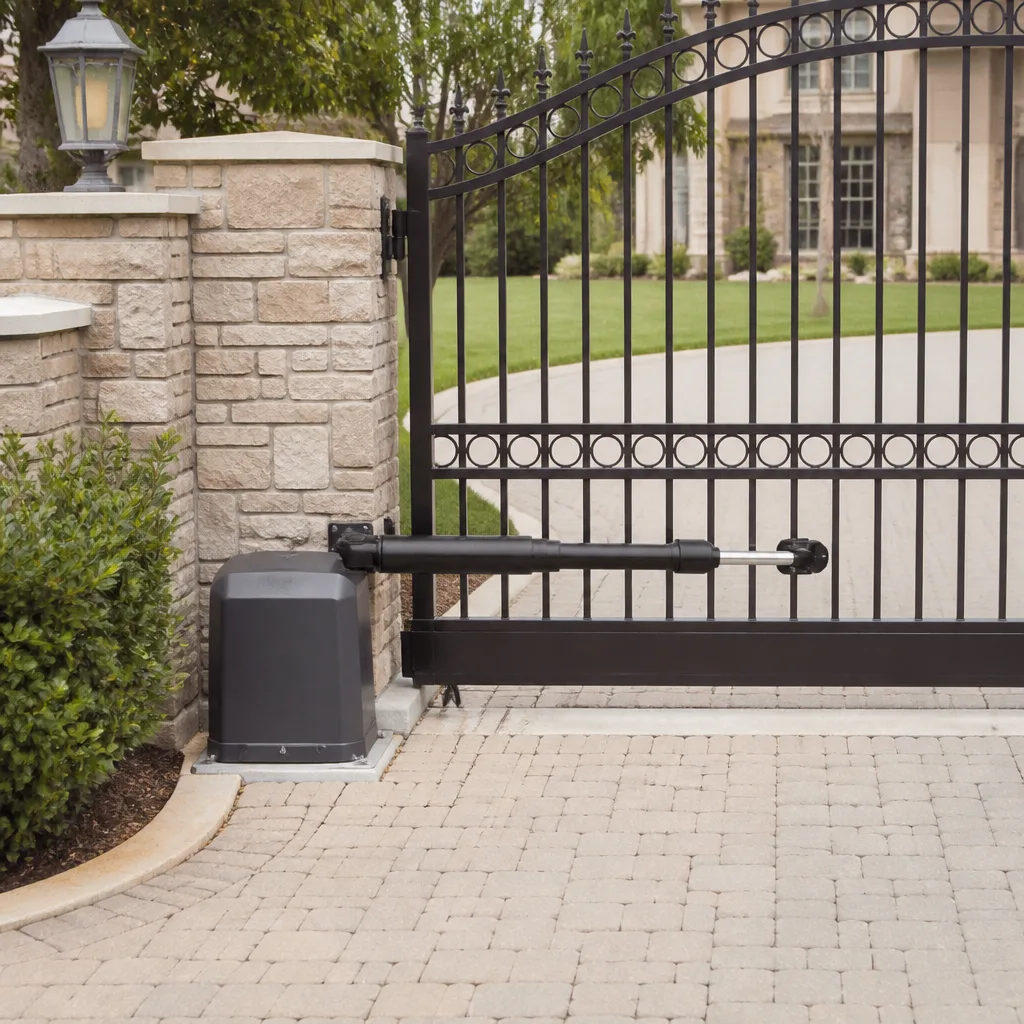
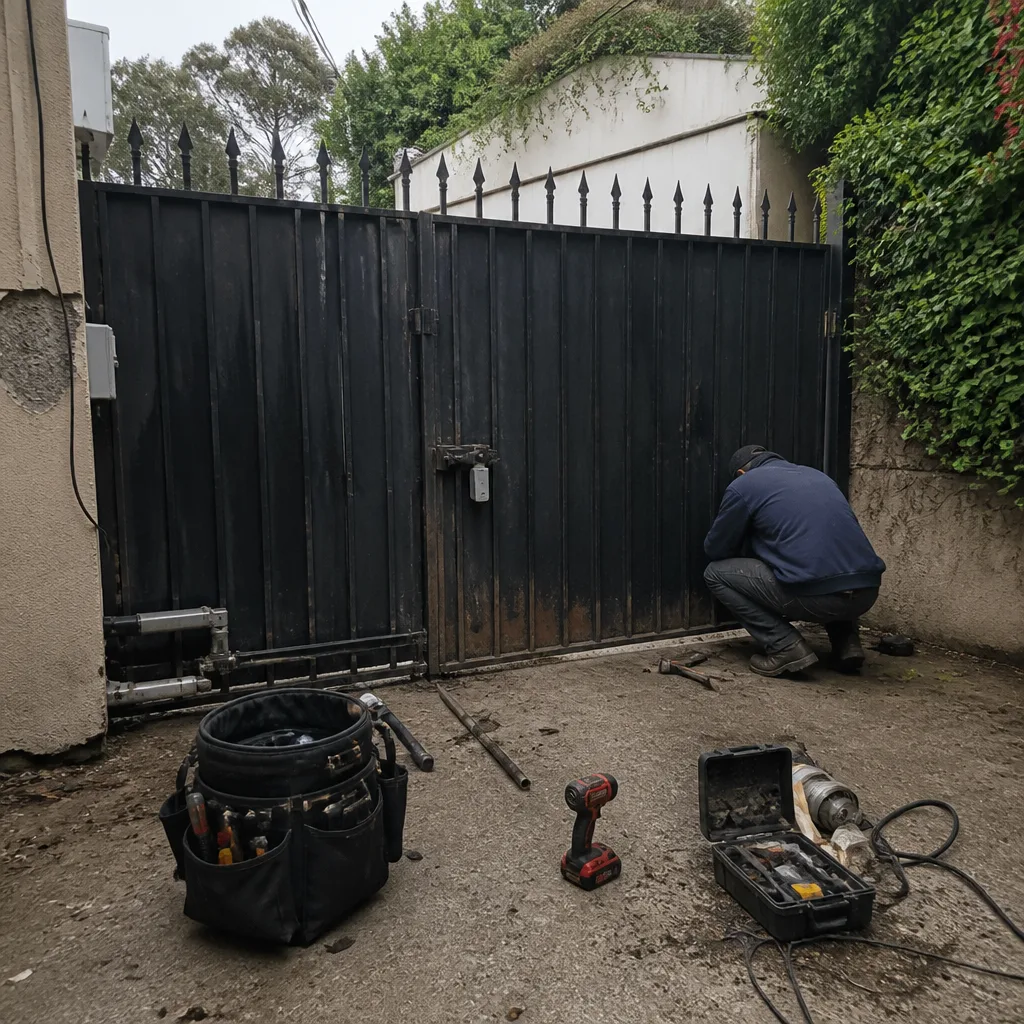 Before
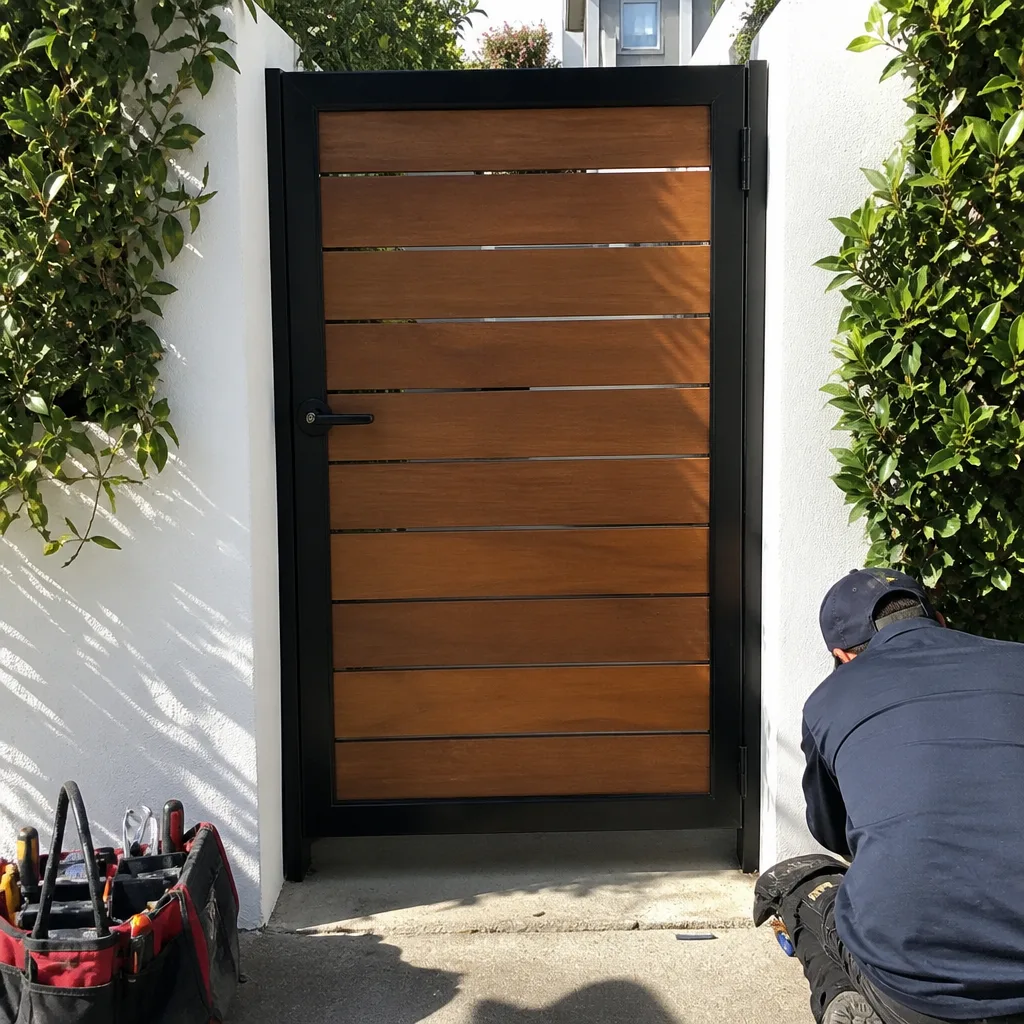 After
After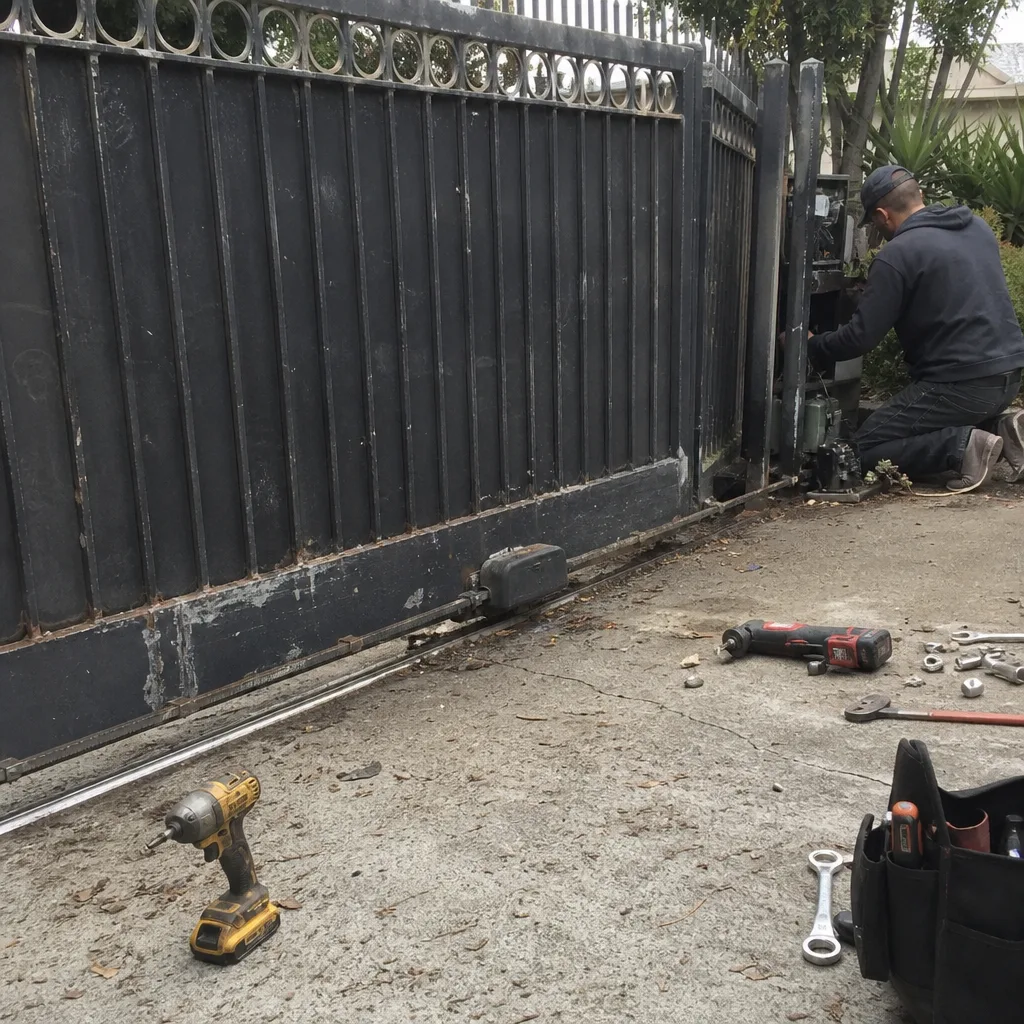 Before
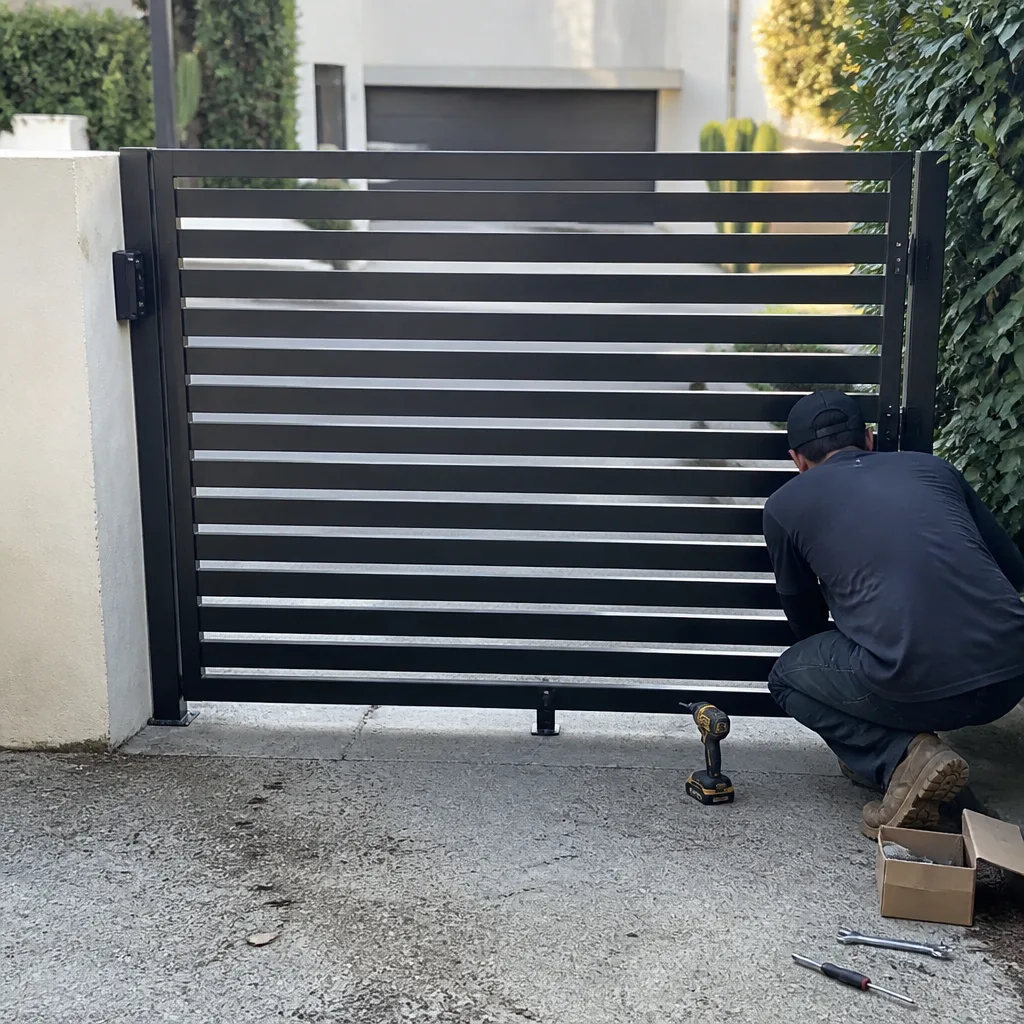 After
After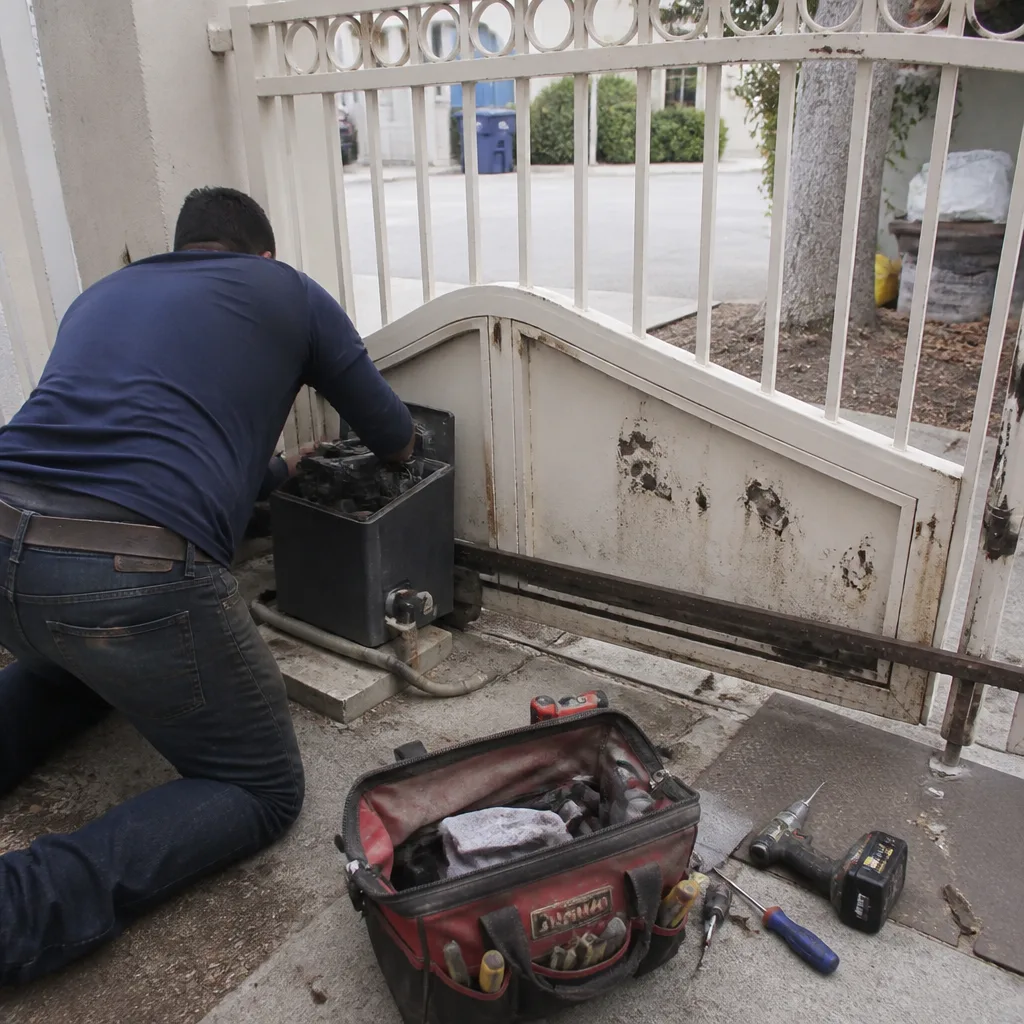 Before
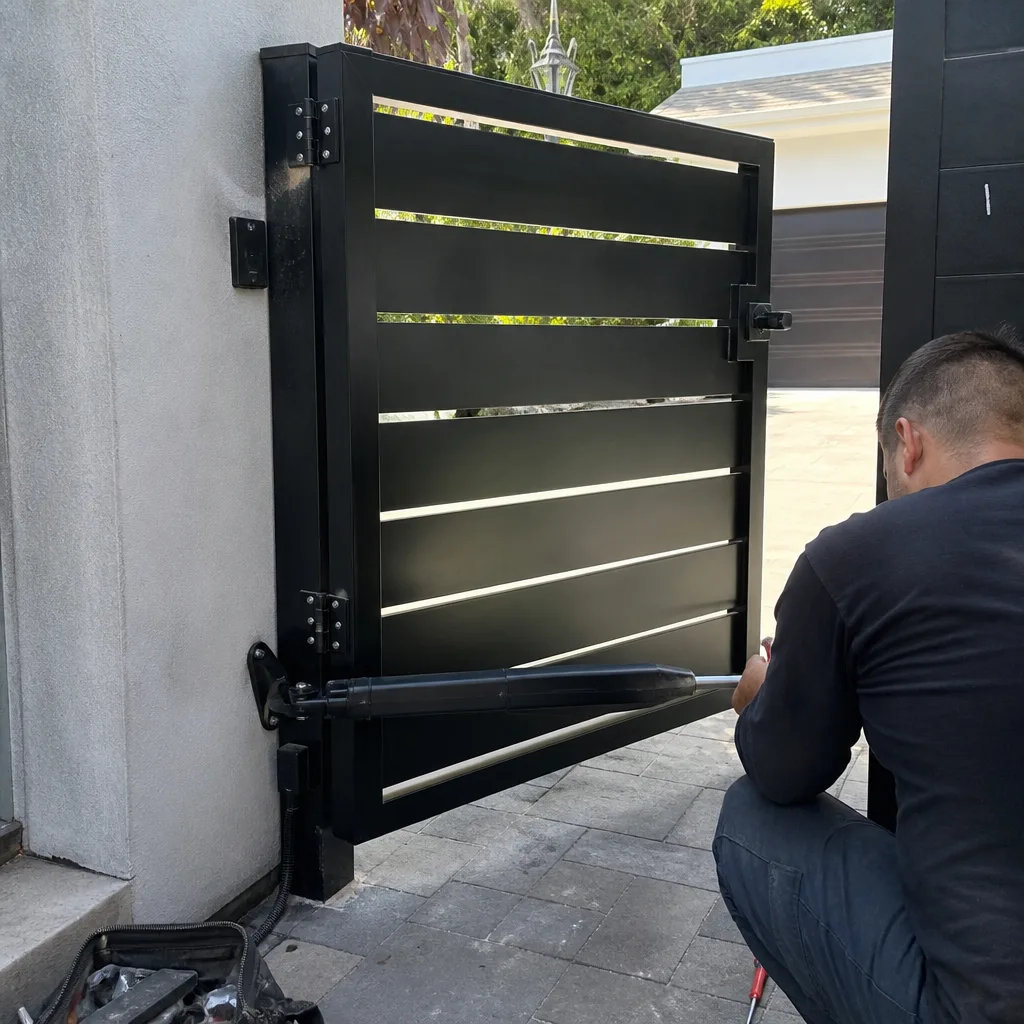 After
AfterGate Repair Maintenance Checklist for West Hollywood Homeowners
Most gate failures in West Hollywood don’t start with a dramatic snap or a smoking motor. They start with a quarter-inch of sag you didn’t notice, a hinge that dried out six months ago, and a sensor that’s been blinking at you since spring. By the time a gate refuses to open on a Tuesday morning, the root cause has usually been developing for months. This guide walks you through a complete maintenance checklist specific to West Hollywood’s climate, building conditions, and the way gates actually get used here. You’ll learn what to check monthly, what to leave alone, what things cost, and when to pick up the phone.
Quick Answer
A proper West Hollywood gate maintenance routine comes down to four things: lubricate the hinges and rollers every 90 days, test the safety sensors and auto-reverse monthly, inspect the welds and mounting hardware after any heavy rain or wind, and service the motor and limit switches once a year. Budget $89 for a seasonal tune-up or spend 20 focused minutes a month doing the basics yourself.
Table of Contents
- Why West Hollywood Gates Fail Differently
- The 20-Minute Monthly Checklist
- Seasonal Maintenance for West Hollywood’s Two Real Seasons
- Gate Hardware: Hinges, Rollers, and Welds
- Gate Automation: Motors, Sensors, and Keypads
- Wood vs. Iron vs. Steel: What Your Gate Needs
- Common Mistakes to Avoid
- When to Call a Professional
- Frequently Asked Questions
Why West Hollywood Gates Fail Differently
West Hollywood sits in a coastal-influenced climate zone that most gate hardware was never designed for. We don’t get the extreme rust of beachfront cities, but we get something sneakier: fine dust, morning marine layer moisture, and long dry stretches that bake grease out of hinges. Add to that the fact that many homes in the Norma Triangle, the Avenues, and WeHo’s hillside streets have gates that are 15 to 40 years old, and you get a predictable pattern of failures.
In our experience, the three most common issues we see on West Hollywood gates are worn hinge bushings on swing gates, misaligned photo-eye sensors on slide gates, and corroded limit-switch connectors inside operator boxes. None of these happen overnight. The hinge wears because a gate was never re-greased after three summers of Santa Ana wind dust. The sensor misaligns because a landscape crew bumped the post. The connector corrodes because the operator box wasn’t sealed properly after the last service call. All of them are preventable with a consistent habit of looking at what’s under and around the gate, not just listening for the motor when it opens.
What makes West Hollywood different from, say, the Valley, is the density. Gates here sit closer to the street, closer to neighbors, and often closer to mature ficus trees that drop fine debris into the tracks. Slide gates on WeHo properties are notorious for track buildup, because the combination of drought years and heavy irrigation on small lots means soil ends up where it shouldn’t be. If your gate has been running for more than a decade, it is running on borrowed time unless someone has been maintaining it.
The 20-Minute Monthly Checklist
You don’t need to be a welder or an electrician to catch most gate problems early. You need twenty focused minutes and a willingness to actually look at the parts of your gate that don’t get looked at. Here is the exact routine we recommend to our West Hollywood customers, and it’s the same one our technicians follow on every service visit.
- Stand at the gate and watch one full open-and-close cycle. Listen for grinding, scraping, or hesitation. A healthy gate moves smoothly and closes with one decisive motion, not a stutter.
- Look at the hinges while someone else cycles the gate. If you’re solo, cycle it and watch in two passes. You’re looking for any up-and-down wiggle at the pivot point. A sixteenth of an inch of play today becomes a dragging gate in six months.
- Check the gap at the latch side. For a swing gate, the gap between the gate leaf and the post should be even top to bottom. A wider gap at the top means the hinges are sagging. A wider gap at the bottom means the post has shifted.
- Clear the track on a slide gate. Remove leaves, soil, gravel, and anything else that doesn’t belong in the channel. Pay attention to the roller wheels. If a wheel isn’t turning, it is wearing a flat spot.
- Test the auto-reverse. Place a cardboard box in the gate’s path and close it. The gate should reverse immediately on contact. If it pushes the box, the force setting is dangerous and needs correction this week, not next month.
- Visually inspect the keypad and intercom housing. Look for cracked plastic, rust on the screws, or clouded display glass. In West Hollywood’s sun exposure these plastics bake and become brittle within a few years.
- Wipe down the photo-eye lenses. They collect dust and irrigation overspray. A clean lens is the difference between a gate that works every time and one that intermittently refuses to close.
That’s the whole routine. Twenty minutes, once a month, and it will catch the vast majority of problems before they leave you standing in the driveway pressing the remote like it owes you money.
Seasonal Maintenance for West Hollywood’s Two Real Seasons
West Hollywood doesn’t have four seasons. It has a long dry stretch that runs roughly April through October, and a mild wet stretch that runs November through March. Both create different problems for gates, and a smart maintenance schedule responds to the actual conditions rather than the calendar.
The Dry Season: Heat, Dust, and Hard Ground
During the dry months, the primary threats are heat expansion, dried-out lubricant, and ground movement. Clay-heavy soil in parts of West Hollywood contracts when it dries, which can shift gate posts just enough to throw a gate out of alignment. If your gate binds or rubs in September but was fine in May, check the post footings before you adjust anything else. Adjusting hinges to compensate for a shifting post trades one problem for a bigger one.
- Re-grease hinges and bearings every 90 days during dry season, not annually. The heat cooks lubricant fast.
- Check the gate’s clearances at the latch and along the ground on the hottest day of the month. Heat expansion narrows gaps.
- Inspect the operator’s cooling vents and make sure they aren’t clogged with dust or spider webs.
- Look for fine cracks in any painted or powder-coated surface. Touch them up quickly; once the marine layer returns, moisture gets into the crack and rust follows.
The Wet Season: Marine Layer, Rain, and Drainage
West Hollywood’s wet season is mild by most standards, but it brings consistent moisture and the occasional heavy downpour. The marine layer sits on coastal-facing hillsides at night, leaving surfaces damp for hours. That’s enough to activate corrosion on any exposed steel that has lost its coating.
- Stand at the gate during the next real rain and watch where water flows. If water pools at the operator box or runs down the gate into the motor housing, that’s a drainage problem, not a gate problem. Fix the drainage.
- Inspect every weld point. Weld joints, especially on older steel gates, are the first places rust gets a toehold. Wire-brush any surface rust and treat it before it spreads.
- Check the weather stripping or bottom seal on the gate and replace if torn. Water that gets into the gate’s internal structure works like rot in a tooth.
- Run the gate through a full cycle once a week even if you’re not using it daily. Lubricant settles, and a gate that sits for weeks during the wet months is more likely to bind when you need it.
If you want to skip the guesswork, our $89 seasonal tune-up covers this exact inspection and adjustment twice a year. A technician shows up, goes through the checklist, re-greases what needs it, and tells you honestly what doesn’t need to be touched. For most West Hollywood homeowners, that’s the most practical way to keep a gate healthy without making it a hobby.
Gate Hardware: Hinges, Rollers, and Welds
The hardware is the part of the gate that fails most often and gets noticed least. It’s not exciting. There’s no remote to press, no app to open. But every single day your gate opens and closes, the full weight of it is carried by a few pounds of steel and a handful of bolts. When hardware fails, the gate doesn’t just stop. It drops, drags, or swings out of control. That is how gates end up damaging cars, fences, and people.
Hinges. On a swing gate, the hinges are the most important component. A gate leaves the factory balanced, but every cycle adds tiny amounts of wear to the hinge pins and bushings. The fix for worn hinges is never to lift the gate and tighten the bottom hinge; it is to replace the hinge with one that matches or exceeds the original rating. Using an undersized replacement hinge on a heavy gate is a decision you will regret the next time the gate sags. We replace hinges with welded or bolted assemblies rated for the specific gate weight, not whatever the hardware store had on the shelf.
Rollers. On a slide gate, the rollers carry the gate along the track. West Hollywood slide gates run through more fine grit than gates in most neighborhoods, because of the combination of street dust, landscape mulch, and construction debris from constant renovation. Rollers wear down, the bearings inside them fail, and the gate starts to drag. A dragging slide gate puts extra load on the motor, which shortens its life by years. The fix is to replace rollers in sets, not one at a time. If one has worn out, the others are close behind.
Welds. Welds are the silent failure point on every steel gate. A weld can crack through from fatigue without the gate ever being hit by anything. You’ll usually see it first as a hairline crack in the paint near a joint. On a black gate it shows up as a rust line. Left alone, a cracked weld propagates and the gate eventually tears. The repair is to grind out the old weld, re-weld the joint, and re-coat the area. Patching over a cracked weld with more weld, without grinding out the bad material, is the kind of repair that gets a gate back out of alignment within months. We see it all the time and it is exactly the kind of work we end up fixing properly after the fact.
In West Hollywood, the replacement parts that matter are the ones rated for the actual weight and duty cycle of your gate, not whatever the big-box store has in stock. A gate is a moving structure. The hardware is load-bearing. Buy it accordingly.
Gate Automation: Motors, Sensors, and Keypads
The motor is the part every homeowner worries about first, but in our experience the motor itself is rarely the original problem. What fails first is almost always something the motor is connected to: the limit switches, the photo-eye sensors, the wiring connections, or the control board. Here’s what you should know about each.
The Operator and Limit Switches
Your gate operator has limit switches that tell it when to stop opening and when to stop closing. These are mechanical or magnetic switches inside the motor housing or along the gate track. Over time they drift, corrode, or fill with dust. When a limit switch fails, the gate does strange things: it opens fine but won’t close, it closes too far and slams the post, or it reverses direction at random. The repair usually involves replacing or recalibrating the switch, which is a straightforward job for a technician who knows the specific operator model.
We service nine major automation brands: LiftMaster, FAAC, BFT, Linear, Viking, Ghost Controls, DoorKing, Elite, and Mighty Mule. That matters because no two of them calibrate the same way. A LiftMaster operator sets limits differently than a FAAC, and a Mighty Mule has its own personality altogether. A technician who knows one brand and guesses at another is how West Hollywood homeowners end up with a gate that has been “fixed” three times and still won’t close right.
The Safety Sensors
Every automatic gate in West Hollywood is required to have a safety system that prevents it from closing on a person, a vehicle, or a pet. In most residential installations that means photo-eye sensors: a pair of small lenses mounted low on the gate track that project an invisible beam between them. When the beam breaks, the gate stops and reverses.
The most common problem with photo-eyes is misalignment. A gate that starts closing and then reverses for no apparent reason is usually a sensor alignment issue, not a motor problem. The fix is to realign the lenses so they see each other again, then test the auto-reverse with an obstruction to confirm the system works. Sensors that are old, water-damaged, or sun-baked need replacement rather than adjustment. We carry sensors for all nine brands we service, so on most calls in West Hollywood the needed part is on the truck.
The Keypad and Entry System
West Hollywood homeowners use keypads constantly: for cleaning crews, dog walkers, delivery drivers, and house sitters. A keypad that lives on a sun-exposed gate post in West Hollywood takes a beating. The plastic housing cracks, the membrane buttons wear out, and moisture gets in. When a keypad fails, it usually happens gradually. Buttons become less responsive, the display goes dim, or the code has to be entered twice. Replacing a keypad before it fails completely is cheaper than an emergency call when a contractor can’t get in and you’re in Palm Springs. We see exactly that scenario several times a year.
One note on access control and automation work: this is not the place for aggressive DIY. A gate motor is a powerful piece of equipment and the electrical work involved is regulated. If your gate is doing something you can’t explain, call a professional. A repair is cheaper than a hospital bill or a vehicle repair bill from an improperly adjusted closing force.
Wood vs. Iron vs. Steel: What Your Gate Needs
West Hollywood has a split between two very different types of residential gates: the older Spanish-style wrought iron and steel gates, and the solid wood gates that came later with the modern and Mediterranean builds. They fail differently and need different care.
Iron and Steel Gates
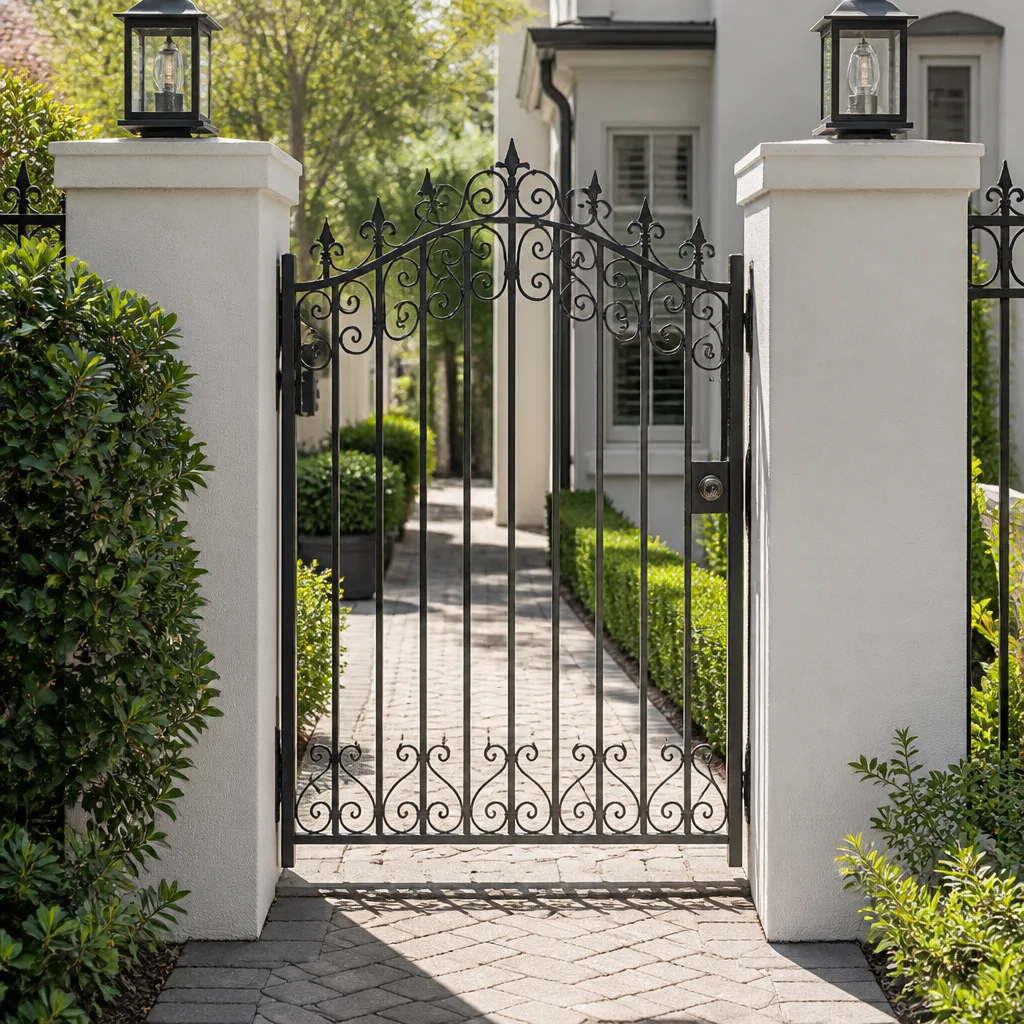
Iron and steel gates are structurally strong but surface-vulnerable. The metal does not care about the sun, but the finish does. In West Hollywood, an iron gate with a good powder coat or quality paint job will last decades if the coating is touched up when it chips. Once bare metal is exposed to our night moisture, rust starts within weeks. The structural points to watch are the welds at the hinge-side stiles and the latch points. Wrought iron gates from the 1970s and 1980s, common in the older sections of West Hollywood, are worth maintaining properly because new replacements with that same hand-forged character are expensive. The repair usually involves re-welding and refinishing, which is bread-and-butter work for us.
Wood Gates
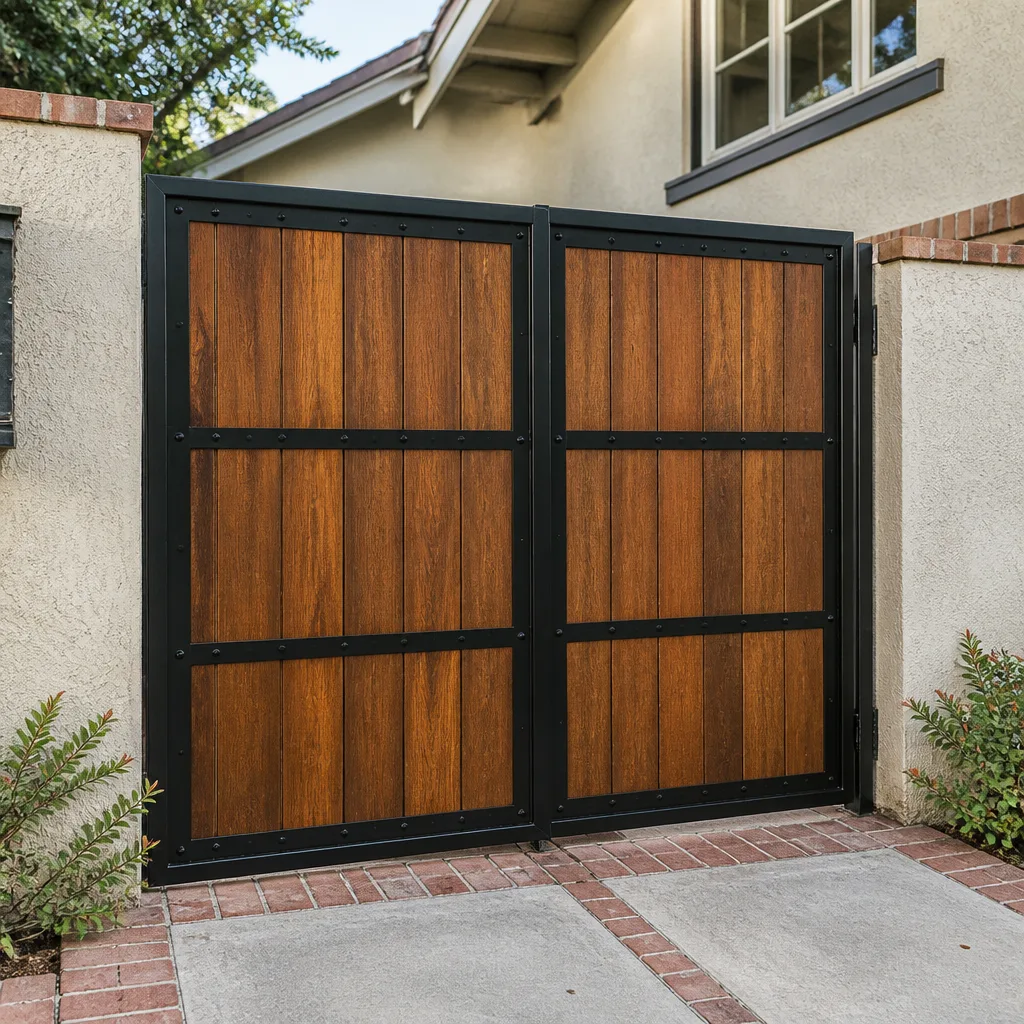
Wood gates fail directly. They absorb moisture in the wet season, dry out in the dry season, and the joints work loose. A wood gate that was fine for ten years can start sagging badly after one wet winter followed by a hot summer, because the cycle loosens the fasteners and opens the joints. The most common wood gate problems we see are loose diagonal bracing, rotted bottom rails from standing water, and hinge screws pulling out of the wood.
The maintenance that matters most for wood gates is simple: keep the bottom rail off the ground, reseal or repaint every two to three years, and check that the diagonal brace runs from the top of the hinge side to the bottom of the latch side. If the brace is installed backward, the gate will sag no matter how often you tighten the hinges. We have replaced more than a few of those in West Hollywood.
Steel Gates
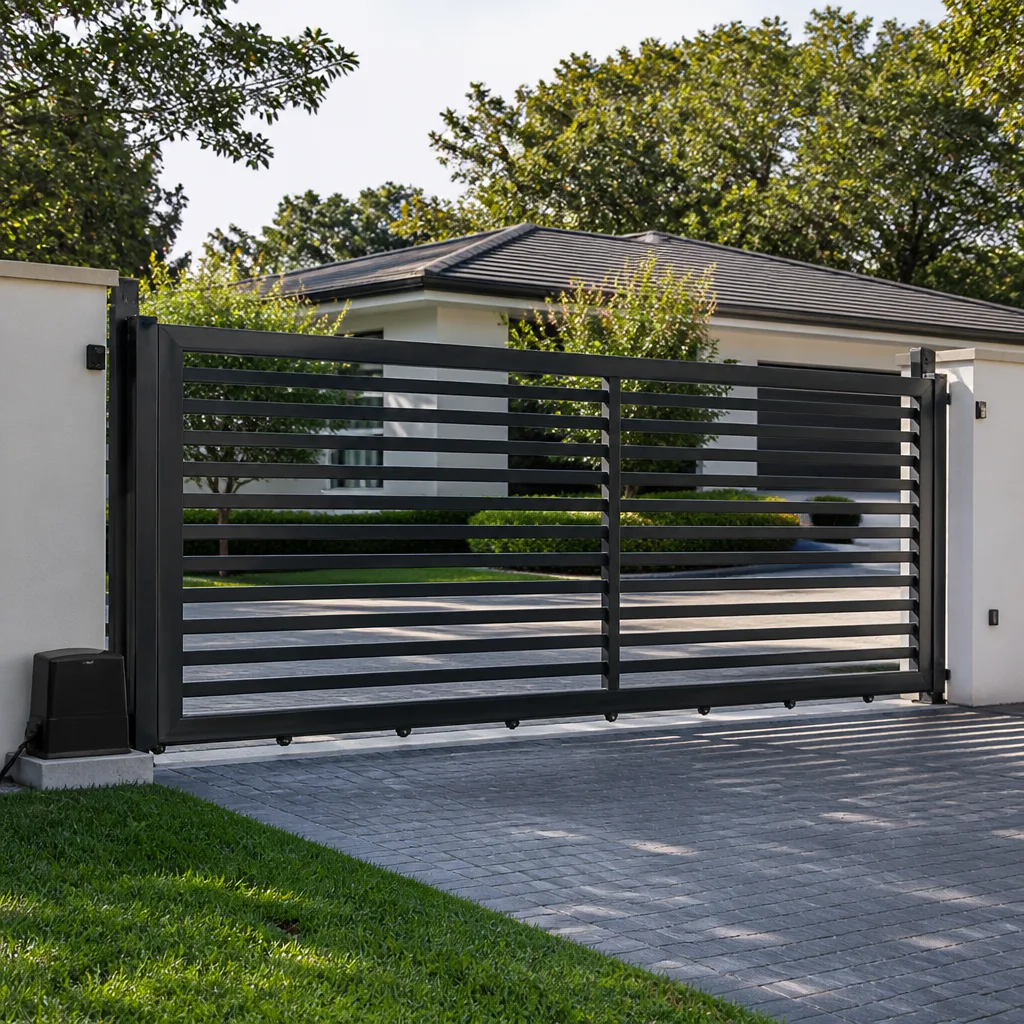
Modern steel gates, usually powder-coated, are the lowest-maintenance option for West Hollywood’s climate, but they are not maintenance-free. The powder coat is tough, but any scratch that reaches bare steel will rust. The moving parts are the same as on iron gates: hinges, rollers, latch, and the automation. Treat the structure with respect and the steel will outlast the house.
No matter what material your gate is made of, the single most important maintenance decision you can make is to address small problems when they are small. A hinge that gets re-greased on schedule costs nothing. A hinge that gets replaced because it was ignored for two years costs real money and can take the gate out of service while the repair is done.
Common Mistakes to Avoid
- Lubricating the track on a slide gate. The track should be clean and dry so the rollers grip it properly. Greasing the track turns it into a dirt magnet and causes the gate to slip and stall.
- Using WD-40 on gate hinges. It’s a solvent, not a lubricant. It will flush out whatever grease is still in there and then evaporate, leaving the hinge dry. Use a proper grease or white lithium.
- Forcing a gate that won’t move. If the gate is stuck, the operator is pushing against something. Forcing it with the manual release and then shoving it is how chain drives break and how fingers get hurt. Figure out why it’s stuck first.
- Adjusting the closing force to fix a sensor problem. If the gate reverses on closing, do not crank up the force adjustment to push through the problem. That’s how gates end up closing on cars and people. Fix the sensor.
- Replacing only one roller or one hinge at a time. When one side of a set wears out, the other is at the end of its service life too. Replacing them in sets is cheaper in the long run because you’re not paying for repeat labor in six months.
- Ignoring a gate that works “most of the time.” In West Hollywood, an intermittent gate failure is usually a sensor or limit switch that’s telling you it needs replacement. The day it fails completely is never a convenient day.
- Hiring someone who isn’t a gate specialist. Gates involve welding, electrical work, and automation programming. A general handyman can adjust a hinge and that’s about it. When the motor or the sensors are the problem, call someone who works on gates specifically.
When to Call a Professional
There are gate problems that a careful homeowner can reasonably handle, and there are gate problems that require a specialist. You can wipe down photo-eyes, clear a track, and re-grease a hinge. The line is crossed when the problem involves the motor, the wiring, the closing force, or structural work on the gate itself. A gate that falls off its track can badly injure someone. A gate that closes with too much force can crush a child or a pet. In those situations the competent move is to call a professional before someone gets hurt.
Here are specific situations that warrant a call rather than a DIY attempt: any spark, burning smell, or buzzing sound from the operator; a gate that fails to reverse on obstruction; a sagging gate that scrapes the ground; any visible crack in a weld; a keypad or intercom that has stopped responding entirely; or any gate that has come off its track or fallen over. These are not maintenance items. These are repair calls.
Ironworks Gate Co. offers free estimates in West Hollywood. We’ll tell you what’s wrong, what it costs to fix, and what can wait. Call (442) 255-3886. A live person answers, day or night, and we will schedule a time and show up when we say we will.
Frequently Asked Questions
Most gate repairs in West Hollywood fall between $250 and $800, depending on whether the problem is hardware (hinges, rollers, welds) or automation (sensors, limit switches, control boards). A hinge replacement might run $250 to $450. A sensor replacement typically runs $180 to $350. A new circuit board can run $350 to $800 depending on the brand. Call (442) 255-3886 for an exact quote. Estimates are free.
Lubricate gate hinges every 90 days during the dry season and at the start of the wet season. West Hollywood’s heat cooks lubricant faster than cooler climates, and the marine layer adds a moisture variable. If the gate starts to squeak between intervals, re-grease it sooner.
Yes. We answer the phone 24 hours a day, 7 days a week, and we schedule emergency gate repairs in West Hollywood as quickly as possible. If your gate is stuck open or stuck closed, call (442) 255-3886 and a live person will take the call.
Our seasonal tune-up includes a full inspection of the gate structure, hinges, rollers, and welds; a check of the motor, limit switches, and safety sensors; re-greasing of all moving parts; and adjustment of anything that needs it. It’s a maintenance appointment designed for West Hollywood homeowners who want their gate checked by a specialist twice a year without paying repair-call rates.
We service LiftMaster, FAAC, BFT, Linear, Viking, Ghost Controls, DoorKing, Elite, and Mighty Mule. If your opener is one of those nine brands, we have the training and the parts on the truck to fix it correctly on the first visit.
Yes. Gate motor installation, wiring, and automation work are all part of the job. We handle the full scope, from the operator and the sensors to the keypad and access control. The electrical work is done by technicians who understand low-voltage gate systems, not by a general handyman who’s figuring it out in your driveway.
The Bottom Line
Gate maintenance in West Hollywood is not complicated, but it is necessary. A gate that gets twenty minutes of attention a month and a professional tune-up twice a year will give you decades of quiet, reliable service. A gate that gets ignored will fail at the worst possible time and cost more to fix than it would have cost to maintain. Know your gate. Look at the hinges, the rollers, the welds, and the sensors. Fix small problems when they’re small. And when the problem is beyond your comfort level, call someone who does this work every day. Done right, a gate should be one of the most reliable things on your property. That’s the standard we hold ourselves to on every job in West Hollywood.
Ready to get your gate sorted? Call Ironworks Gate Co. at (442) 255-3886 for a free estimate. We serve West Hollywood and the surrounding communities, we answer the phone day and night, and every job we complete is backed by our written 90-Day Done Right Promise. See our Ironworks Gate Co. home page to learn more about how we work.
Written by Victor Salinas, Owner at Ironworks Gate Co., serving West Hollywood since 2013.