
Last updated August 25, 2026
Free on-site gate assessment - hinges, posts, and your LiftMaster or Nice gate operator checked before anything is quoted
The assessment is free and the quote is the invoice.
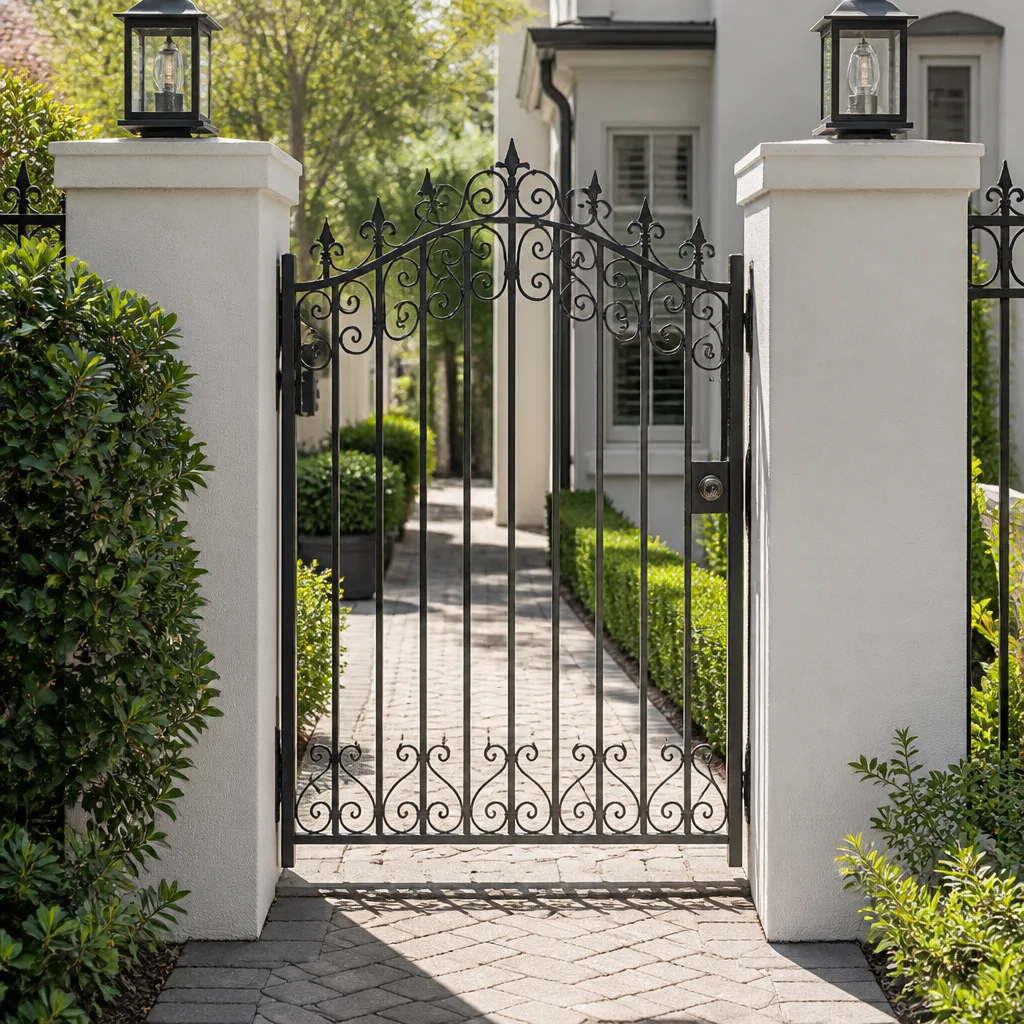
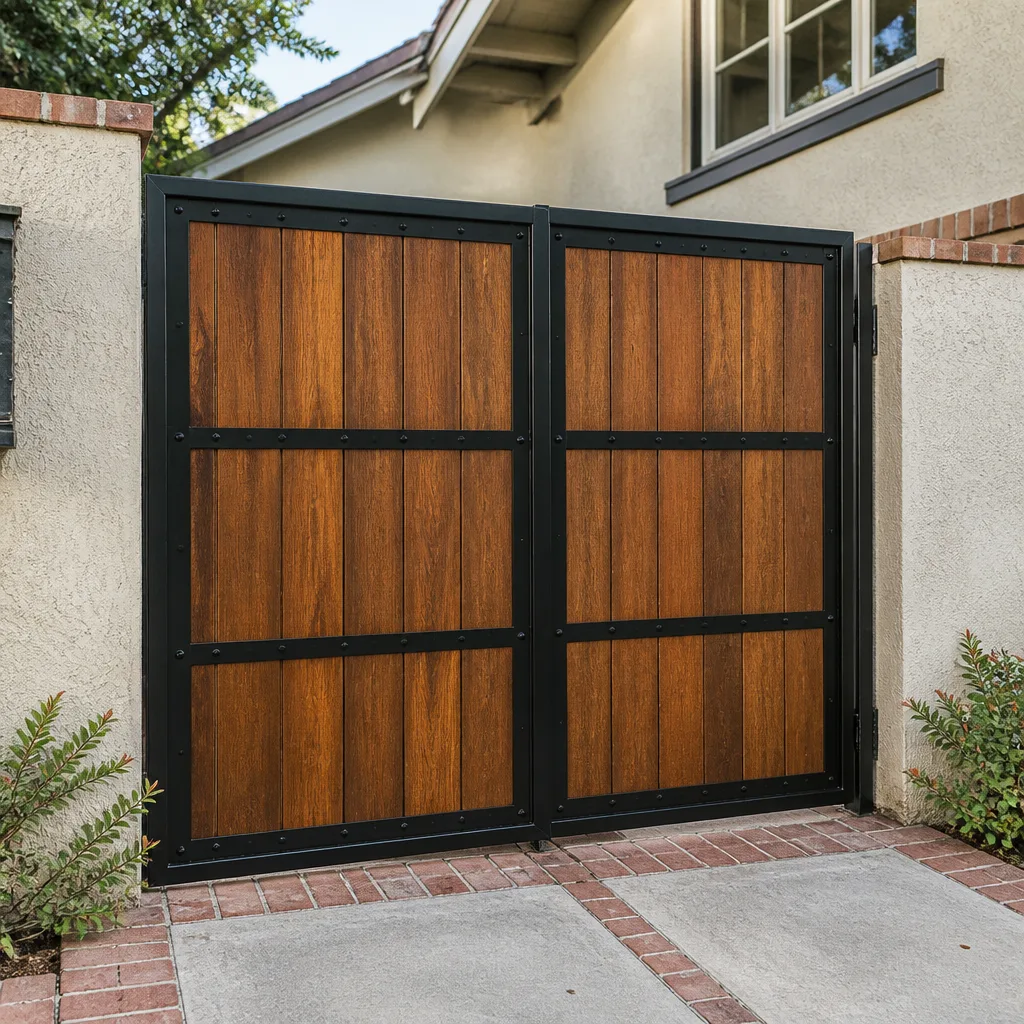
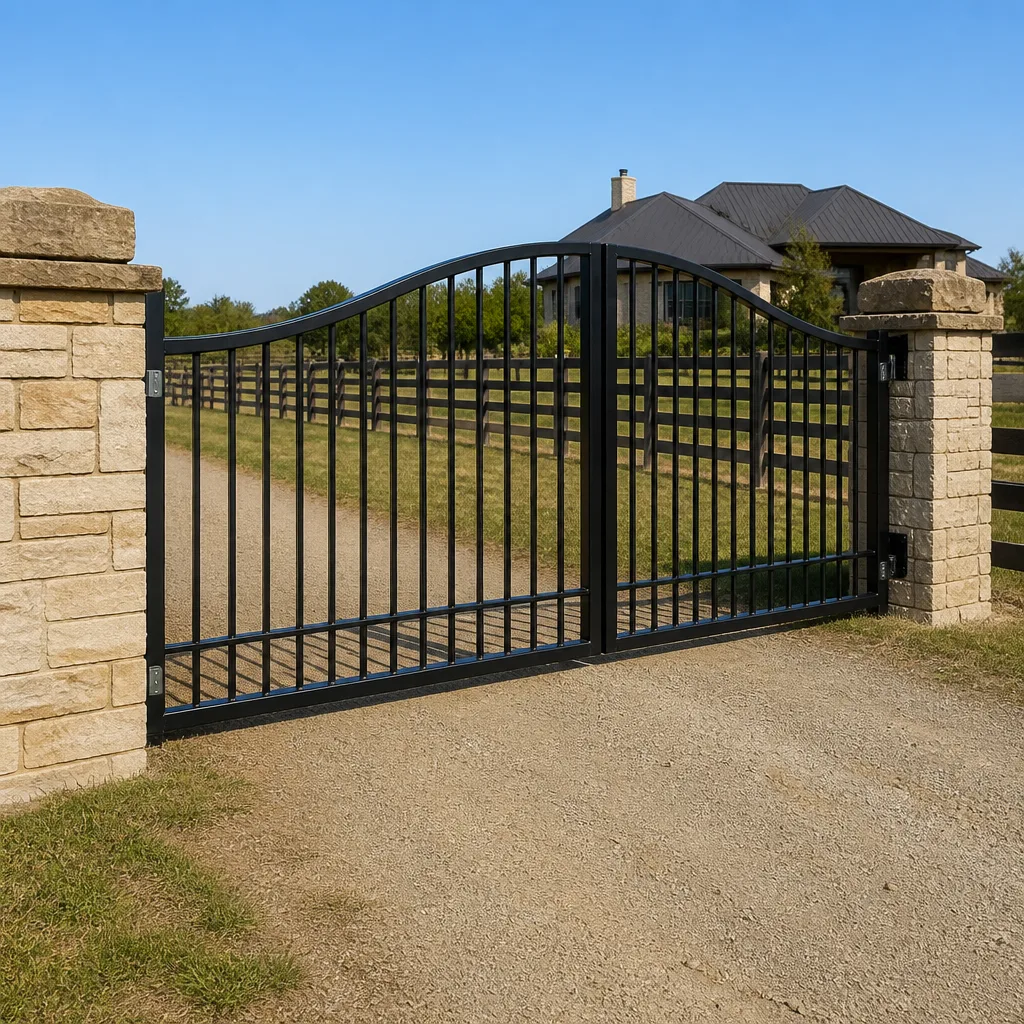
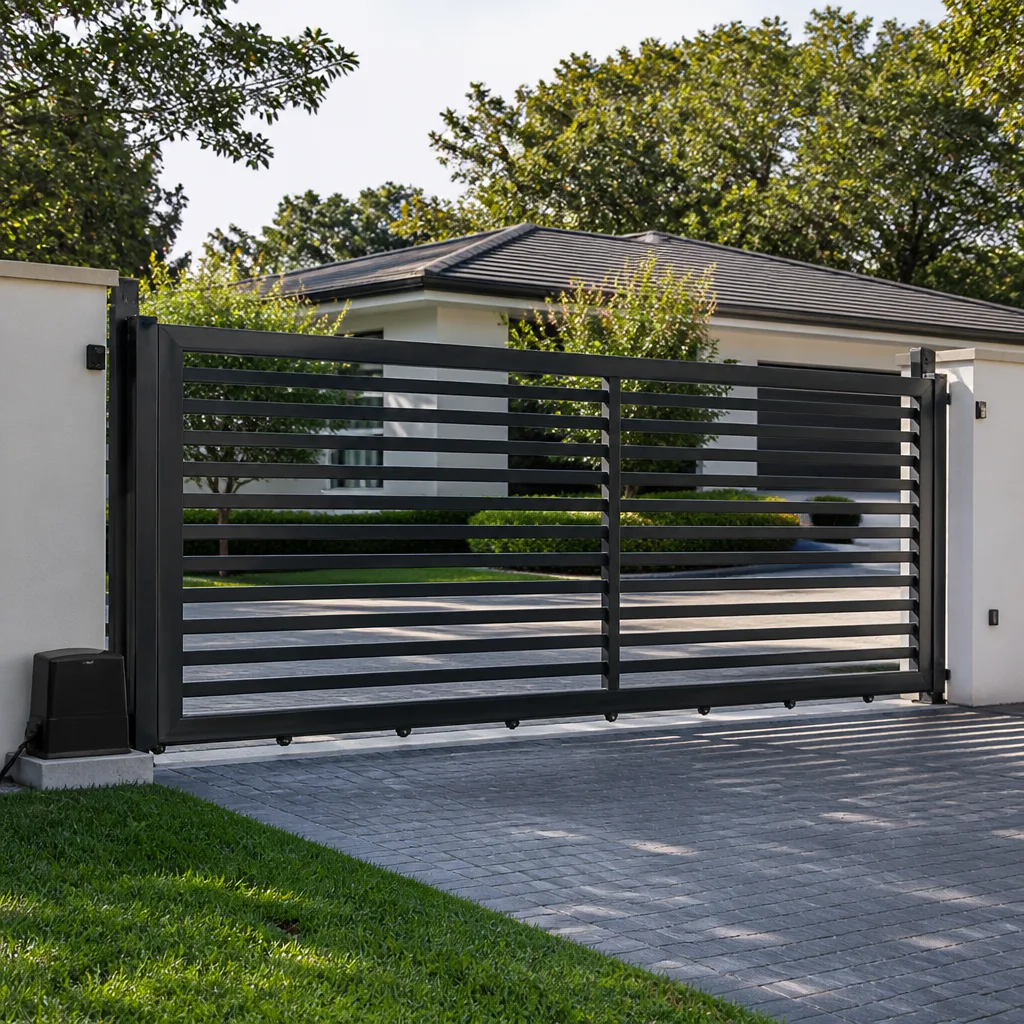
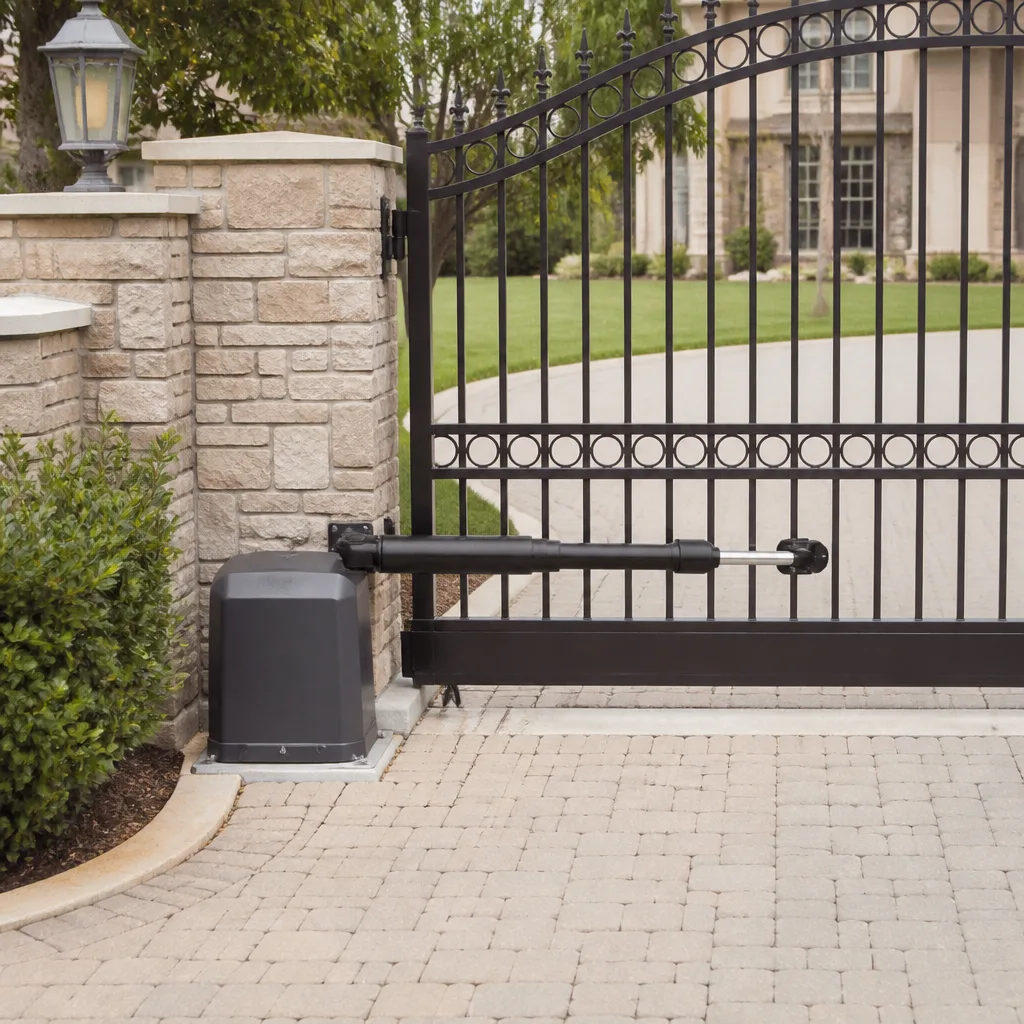
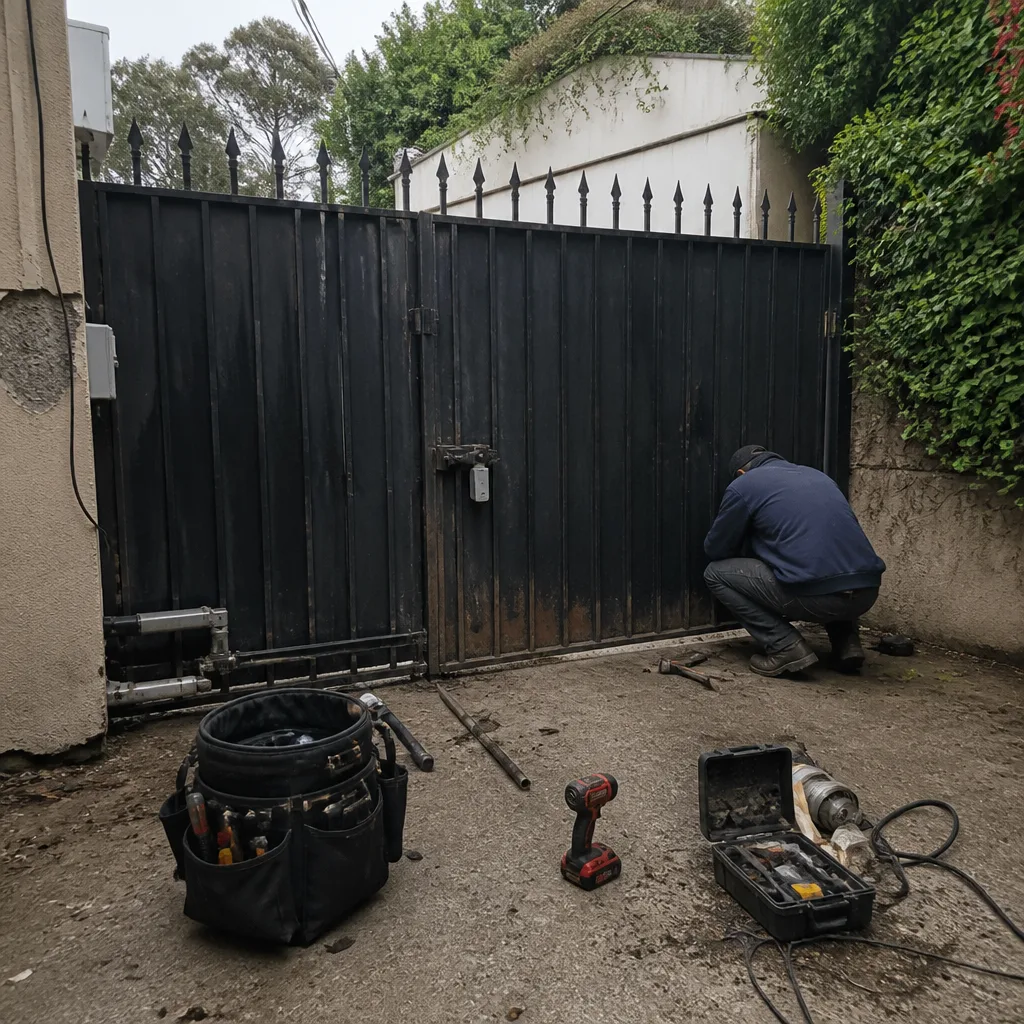 Before
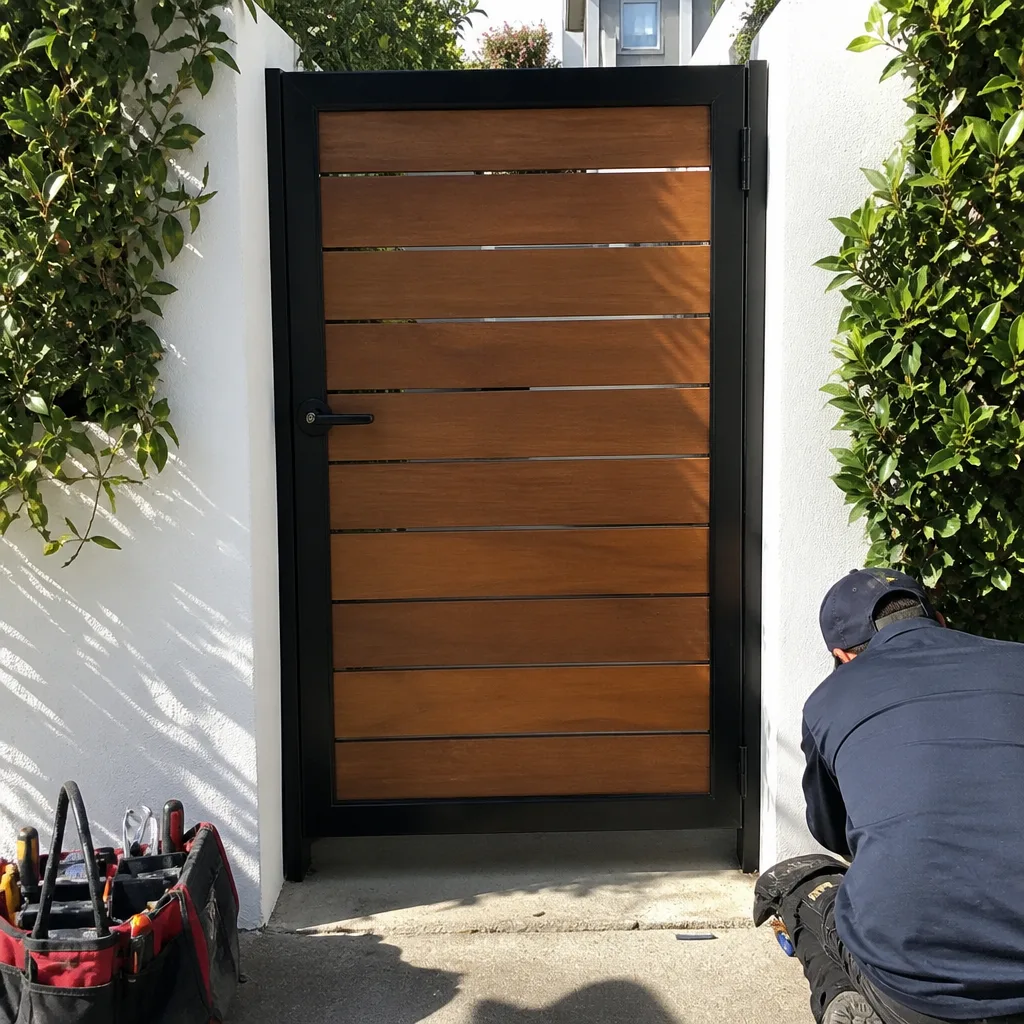 After
After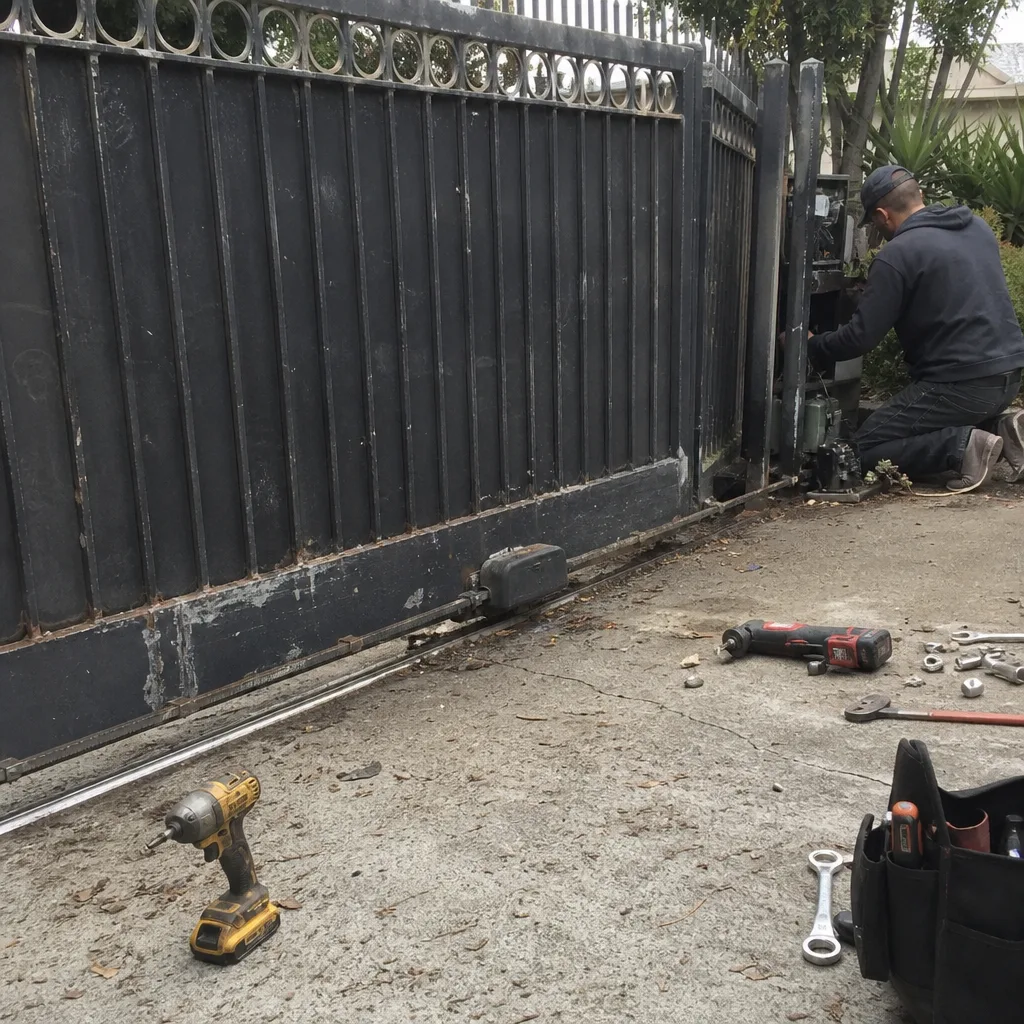 Before
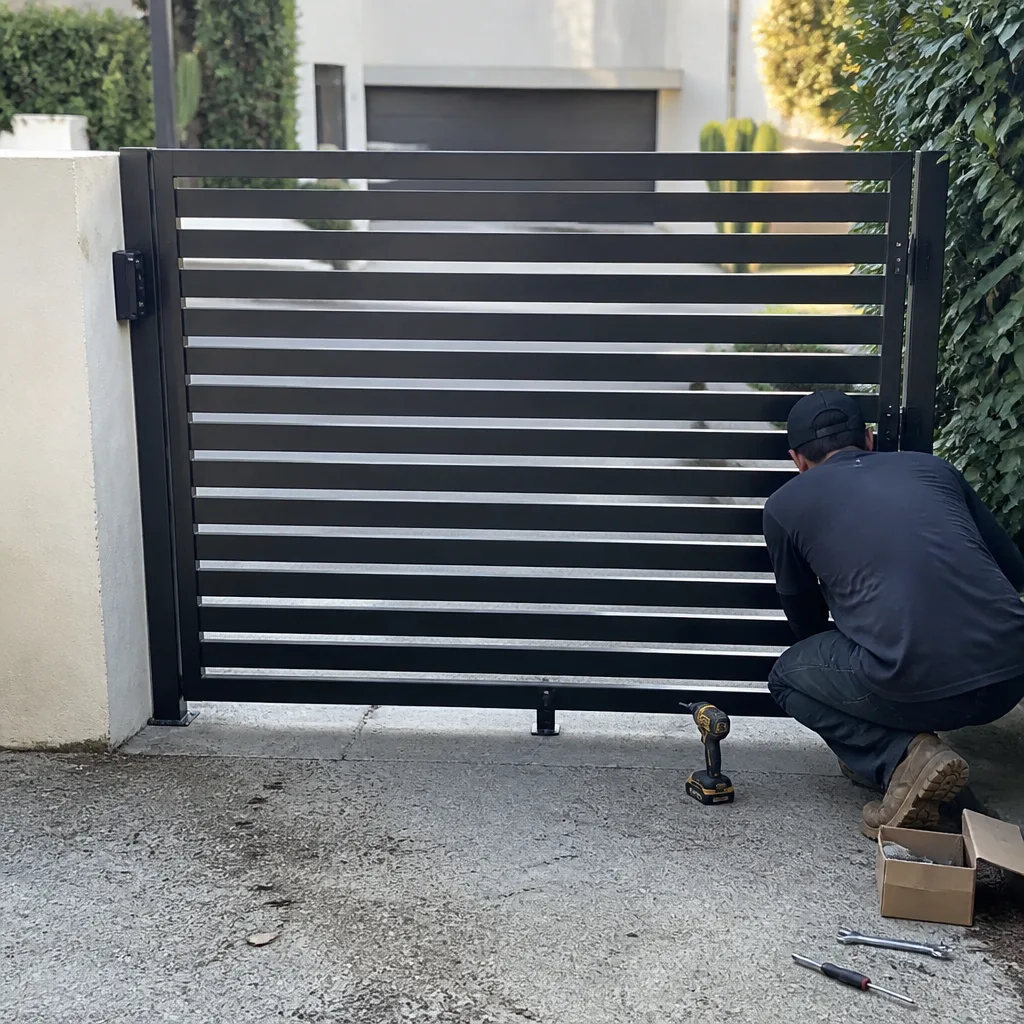 After
After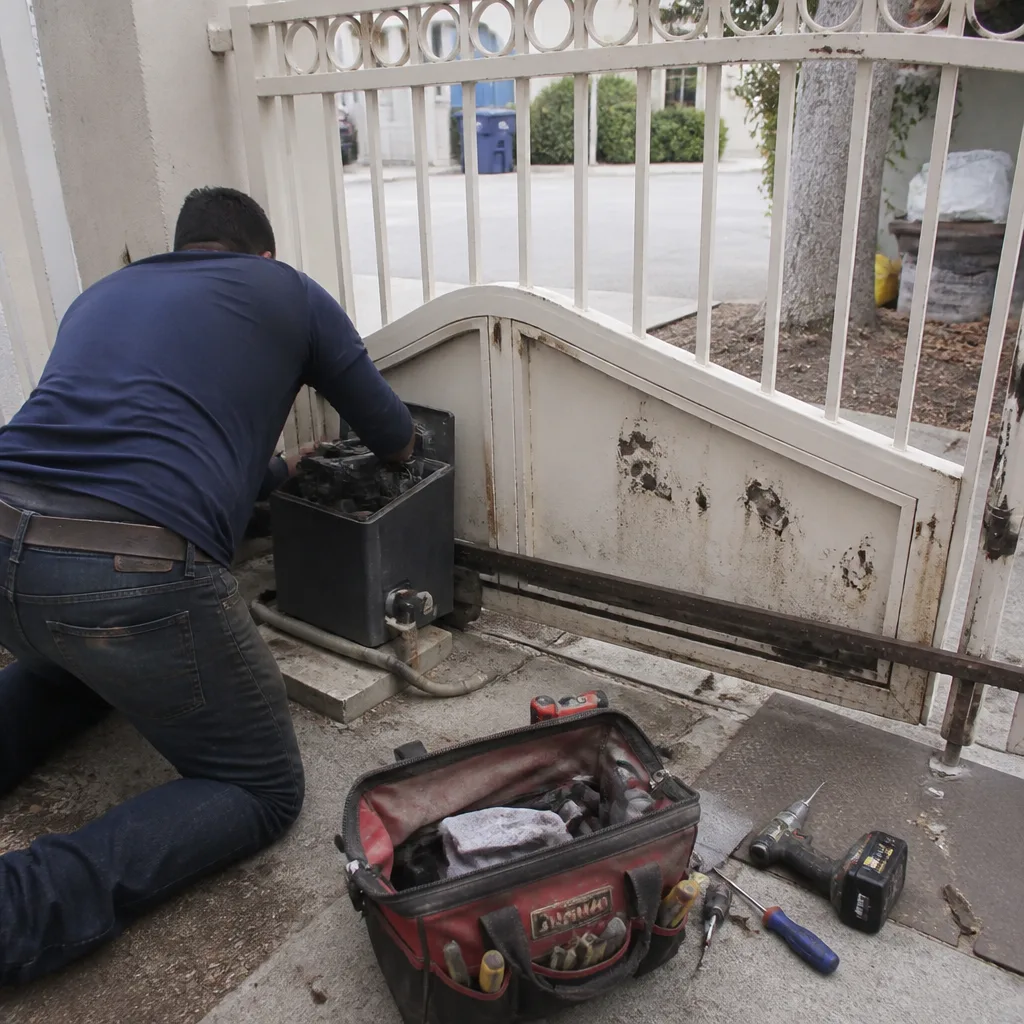 Before
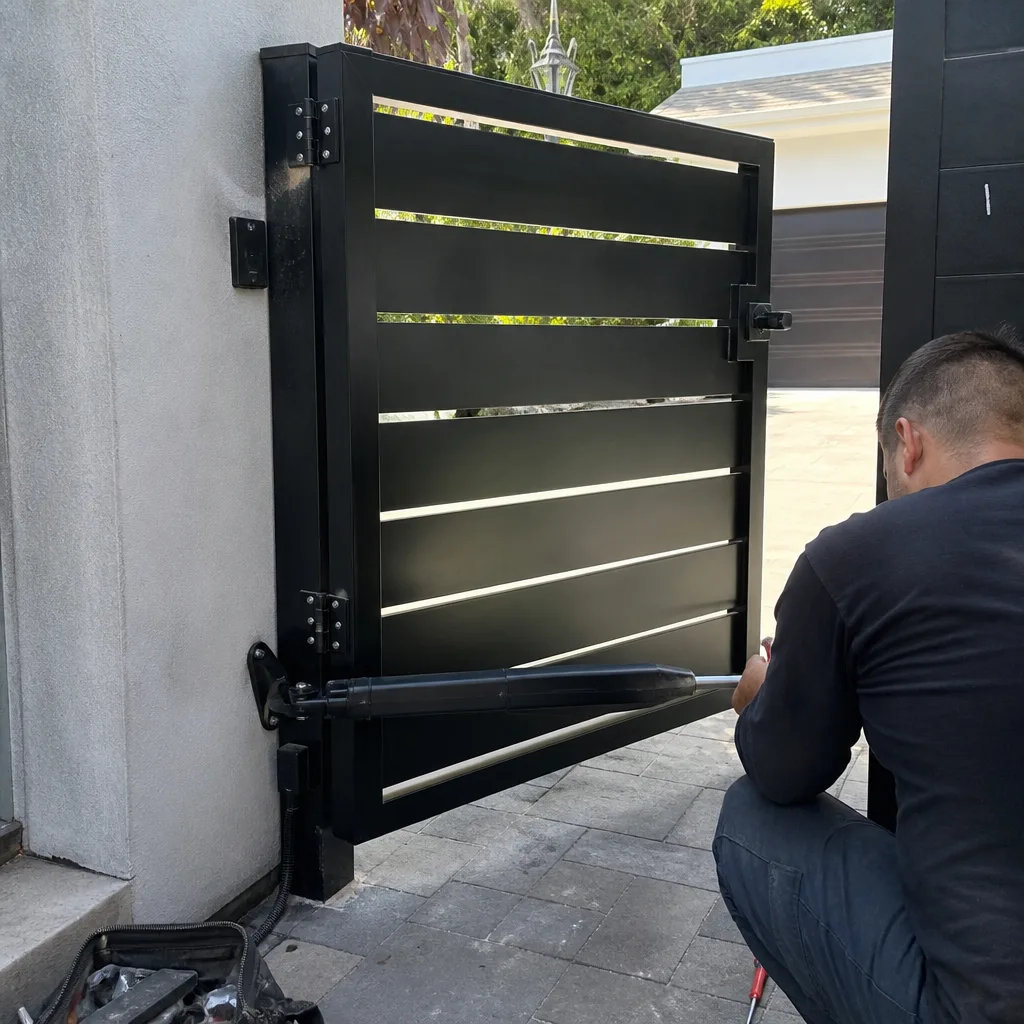 After
AfterThe Complete Guide to Gate Repair in West Hollywood
Most gate failures in West Hollywood are not the dramatic, cinematic collapses people imagine. They are quiet, gradual breakdowns: a hinge that sags a quarter inch until the gate drags; a motor that hums a little longer before it opens; a keypad that works ten times, then fails on the eleventh. The surprising part is that nearly all of these failures are preventable, and most start with the same handful of causes. This guide walks you through what actually goes wrong with driveway gates in West Hollywood, what repairs cost, how long they take, and how to know when a fix is worth making versus replacing the whole system.
Quick Answer
Gate repair in West Hollywood typically costs between $195 and $900 depending on the component, with hinge and sensor repairs at the lower end and motor or control board replacement at the higher end. Most standard repairs can be completed in one visit by a qualified gate specialist, and the work should always be protected by a written warranty. The cost of ignoring a small gate problem is almost always higher than fixing it early, because every week of friction on misaligned hardware wears down connected parts.
Table of Contents
- The Most Common Causes of Gate Failure in West Hollywood
- How Much Does Gate Repair Cost in West Hollywood?
- Gate Automation Brands We Service
- Repair or Replace: How to Decide
- Safety Sensors and Photo Eyes: The Hidden Reason Your Gate Will Not Close
- How West Hollywood’s Climate Affects Your Gate
- What You Can Safely Check Yourself (and What You Should Not)
- What to Expect When You Hire a Gate Repair Company
The Most Common Causes of Gate Failure in West Hollywood
After more than four decades of gate work, we can tell you that gate failures fall into predictable categories. Knowing which category your problem falls into will tell you a lot about what the repair will involve and roughly what it should cost. The categories below are ordered from most common to least common, based on our experience in West Hollywood and the surrounding neighborhoods.
- Hinge and roller wear. Gates are heavy. A typical steel driveway gate in West Hollywood weighs anywhere from 300 to 800 pounds. Hinges carry that weight every time the gate moves. Over years, hinge bearings wear, bushings flatten, and the gate begins to sag. Eventually the sagging pulls the latch out of alignment and the gate stops closing properly.
- Motor and gearbox fatigue. A gate opener motor does not run constantly, but every open and close cycle adds strain. Older homes in West Hollywood often have original or early-model openers that have been in service since the 1990s. Motors from that era were well built, but nothing lasts forever. When the gear oil breaks down or the armature wears, the motor starts pulling more current, running hotter, and failing intermittently.
- Sensor and photo-eye misalignment. Modern gate openers include safety sensors that stop and reverse the gate if something blocks the beam. If those sensors get bumped, misaligned, or covered in spider webs, the gate will refuse to close. This is the single most common service call we make in West Hollywood: the gate opens fine but will not close, and the cause is a dirty or misaligned photo eye.
- Control board failure. The control board is the brain of the gate opener. Power surges, moisture intrusion, and simple age can damage the board. When the board fails, the gate may stop responding to remotes and keypads entirely, or it may behave erratically: opening partway, stopping, and reversing for no obvious reason.
- Keypad and remote receiver issues. West Hollywood sees a lot of older keypads that have weathered years of sun exposure. The keypad membrane breaks down, water infiltrates, and the contacts corrode. Remote receivers can also drift off frequency or suffer antenna damage. Often the gate mechanism itself is fine; the problem is entirely in the access system.
The takeaway: if your gate is sagging, dragging, or refusing to close, do not assume the motor is dead. In roughly four out of ten service calls in West Hollywood, the motor is fine and the real problem is mechanical wear, a misaligned sensor, or a failing keypad. In our experience, homeowners who describe the symptoms accurately over the phone save themselves both time and money because the problem is often simpler than it looks.
How Much Does Gate Repair Cost in West Hollywood?
Gate repair pricing in West Hollywood varies with the component, the brand of opener, and the condition of the surrounding hardware. The table below shows realistic ranges based on our work across the city, from the flats of the Melrose District up through the hills off Doheny Drive. These are honest market ranges, not marketing numbers. Every job at Ironworks Gate Co. is quoted upfront and agreed in writing before a single bolt is turned, so the price you are quoted is the price you pay.
What drives the price? Three things. First, the brand of opener: a LiftMaster control board and a FAAC control board are not identical in cost, and some European brands like BFT order parts in smaller quantities, which affects lead time and price. Second, the condition of the surrounding hardware: replacing a hinge on a gate with good steel and a clean weld is quick; replacing a hinge on a gate where the post has shifted requires realignment before anything else. Third, access: gates set into tight West Hollywood hillside lots with limited workspace take longer to service than gates with wide concrete aprons.
We also offer a standing discount in West Hollywood: $50 off any repair over $250. For seniors and veterans, it is a permanent 5% discount on every job, every day. And if another company has already given you a written estimate, bring it to us and we will give a free second opinion, no charge for the visit.
Gate Automation Brands We Service
Gate openers are not interchangeable. A Mighty Mule opener runs on different logic than a LiftMaster, and a FAAC hydraulic operator is a different machine entirely from a BFT articulated-arm unit. When a technician works on a brand they do not know well, the repair tends to take longer, cost more, and fail sooner. This is why we train and equip for nine specific automation brands, so the correct fix is made on the first visit, whatever is on the driveway.
The brands we service most often in West Hollywood are LiftMaster, Mighty Mule, FAAC, and BFT, along with Linear, Viking, Ghost Controls, DoorKing, and Elite. Each has its own personality. LiftMaster systems are popular across West Hollywood for their availability and straightforward logic. Mighty Mule units are common on lighter-duty gates and DIY installs, and they respond well to diligent maintenance. FAAC and BFT operators, widely installed on estate properties in the Hollywood Hills, are hydraulic or electro-mechanical systems that reward exact setup and factory-correct parts.
In our experience, a gate opener that gets regular inspection and lubrication will deliver years beyond its rated life. The difference between a 15-year-old opener that still runs quietly and a 15-year-old opener that groans and stalls is almost always whether anyone has looked at it in the last five years. An $89 seasonal tune-up, done once or twice a year, is the cheapest insurance you can buy for a West Hollywood gate.
Repair or Replace: How to Decide
The repair-or-replace conversation is the most important one a homeowner can have, and the honest answer is not always replace. A well-built steel gate can last decades with proper care. We have realigned and rewired gates in West Hollywood that were hung in the 1970s, and they close like the day they were installed. But there is a point where repair becomes a false economy.
Here is the framework we use with every customer, and you can apply it yourself before anyone touches your gate.
- What is the condition of the gate itself? If the steel or iron is sound, with no structural cracks at the weld points, the gate is worth investing in. If the frame is rusted through or the welds are failing and spreading, replacement may be the only honest answer.
- What is the cost of the repair as a percentage of replacement? As a rule of thumb, if a single repair approaches 50-60% of the cost of a new system, and the gate is older than 20 years, replacement becomes worth considering. This is especially true when the opener and the access control system are both original and both failing.
- How old is the automation? Gate motors have finite lives. A 25-year-old motor that needs a gearbox and a control board is a candidate for replacement. A 12-year-old motor that needs a limit switch adjustment is a candidate for a simple repair.
- What are your future plans for the property? If this is a home you plan to keep, and you never want to think about the gate again, a complete system replacement with a written warranty is often the most economical choice over a 15-year horizon.
- What does the warranty say? Any repair worth paying for in West Hollywood comes with a written guarantee. At Ironworks Gate Co., every job is covered by our 90-Day Done Right Promise: if it is not right, we come back and make it right, every time, on every job. No paperwork, no arguing, no exceptions.
If you are on the fence, call us at (442) 255-3886 and describe what you are seeing. We will give you an honest read over the phone, and if a site visit is needed, the estimate is free and the second opinion on any written estimate is also free.
Safety Sensors and Photo Eyes: The Hidden Reason Your Gate Will Not Close
When a West Hollywood homeowner calls and says “my gate opens but will not close,” the most common cause, by a wide margin, is a problem with the safety sensor system. Gates sold in the United States are required to include entrapment protection: photo eyes that detect an obstruction and reverse the gate, and often a secondary edge sensor or current-sensing system as well. These systems are not optional, and they are not something a competent technician will bypass.
Here is what typically goes wrong, in order of frequency:
- Misalignment. A photo eye gets bumped by a car, a trash bin, or even a gardener’s blower. The transmitter and receiver fall out of alignment, and the system interprets the broken beam as an obstruction. The gate refuses to close.
- Dirt and spider webs. West Hollywood’s dry, dusty summers coat sensor lenses. Spider webs are also a persistent issue, especially in the shaded entryways of older homes in the Norma Triangle and along the base of the hills. A dirty lens is a blocked beam.
- Sun interference. Direct afternoon sun can blind a photo eye, especially on west-facing gates. This is a real problem in West Hollywood, where late-day sun angles are low and intense from roughly March through October. Quality sensors are built with sun filtering, but older units can struggle.
- Wiring failure. The low-voltage wiring that connects photo eyes to the control board can degrade over time. Rodents, moisture, and simple copper fatigue all take a toll on wire runs that are 10, 15, or 20 years old.
- Control board logic. In rare cases, the board itself stops reading the sensor input correctly. This is more common on older boards that have survived power surges.
What you can safely do: check whether anything is visibly blocking the path between the two sensor units, and gently wipe each lens with a dry cloth. Do not attempt to re-aim the sensors or open the wiring; the alignment is precise, and the wiring carries low voltage but is best left to someone who understands the circuit. If a wiped lens and a clear path do not solve the problem, the next step is a phone call. We will be there when we say, and a live person answers the phone 24 hours a day, 7 days a week.
How West Hollywood’s Climate Affects Your Gate
West Hollywood has a Mediterranean climate with one defining characteristic for gate hardware: relentless sun and dry air, punctuated by a handful of soaking rain events each winter. That pattern does specific things to metal and electronics.
Steel and iron gates in West Hollywood suffer more from UV exposure than from rust. Powder-coated finishes protect against oxidation, but sustained direct sun on south-facing and west-facing gates eventually breaks down even good coatings. Once the coating fails, the steel beneath starts to oxidize just as quickly as it would in a coastal climate. Gates on the north side of the city, in the flats around Santa Monica Boulevard, tend to hold their finishes longer than gates in the hills, where there is less shade and more direct exposure.
The bigger climate problem is thermal expansion. Gates expand and contract with temperature swings. West Hollywood’s summer heat, combined with the cool overnight air can move a gate by an eighth of an inch or more. That does not sound like much, but it is enough to shift a latch out of alignment, cause a roller to bind on a track, or pull a photo eye off its aim. West-facing gates are the worst affected because the late afternoon sun loads heat directly into the metal at the end of the hottest part of the day.
Moisture, when it does come, comes in concentrated bursts. January and February rains can dump several inches in a matter of days. Water finds its way into control boxes, keypads, and gear housings that have not been sealed properly, and corrosion starts even in a dry climate. This is why the seasonal tune-up we recommend twice a year is best timed for spring and fall: once after the rains to address moisture damage, once after the summer to address thermal movement and UV wear.
What You Can Safely Check Yourself (and What You Should Not)
There is a meaningful difference between inspecting your gate and repairing it. Inspection is careful observation; repair involves tools, voltage, and a couple of hundred pounds of moving steel. The line matters because gates are one of the few household systems where a failed repair can genuinely hurt someone. A swinging gate under motor power has enough force to break bone, and a high-tension torsion spring on a rolling gate carries stored energy that demands respect.
What to check yourself, safely:
- Look at the hinges. Are they cracked, sagging, or rusting at the weld points? Do not touch them; just look.
- Watch the gate move. Does it hesitate before starting? Does it slow at the same point on every cycle? Does it reverse before reaching fully closed? These observations help a technician diagnose the problem faster.
- Listen. A steady hum is normal. A grinding, chattering, or thumping sound is not. Make a mental note of where the sound is coming from.
- Check the photo eyes. Are the lenses clean? Are the eyes pointed roughly at each other? Is there a plant, trash bin, or parked car in the beam path?
- Test the keypad. Does every key respond? Does the backlight work? If the keypad fails intermittently, note whether it happens more in heat or after rain.
What not to do:
- Do not work under a raised gate. If you need to inspect the underside, prop the gate or disconnect it and secure it in place. Never trust the motor to hold it up.
- Do not open the control box. The low-voltage wiring inside a gate opener is not dangerous in the same way as household current, but the capacitors and the motor circuit can surprise you, and a wire pulled loose by an ungloved hand can create a short that damages the board beyond repair.
- Do not attempt spring work on a rolling gate. Torsion springs on a rolling gate are under enormous tension. A spring that lets go can move faster than you can react. This is genuinely dangerous, and no homeowner should attempt it.
- Do not force a sagging gate. If the gate is dragging on the ground or against the post, lifting and shoving it accelerates the damage and can make an inexpensive hinge repair into an expensive frame repair.
The cheapest repair in West Hollywood is the one where the homeowner spots a problem early and calls before a small issue compounds. The call is free, and so is the estimate.
What to Expect When You Hire a Gate Repair Company
Hiring a gate repair company in West Hollywood is not like hiring a plumber. The industry has few licensing requirements specific to gate work, which means you are choosing a company on reputation, warranty, and specificity of expertise rather than a state-mandated credential. That makes what you ask before you hire more important.
Here is the process you should expect from a professional company, and the questions worth asking before anyone touches your gate:
- You call, and a live person answers. Not a voicemail tree. Not a callback queue. If you call at 11 pm on a Saturday, someone picks up. We staff phones 24 hours a day, 7 days a week because gates fail outside business hours.
- You describe the problem. A good technician will listen to what you are seeing and ask targeted questions: When did it start? Does it make a sound? Does the keypad work? Is the gate sagging? These questions are diagnostic, not conversational filler.
- You get a schedule commitment. We will be there when we say, and the price is quoted and agreed before any work starts. If a dispatcher cannot commit to a concrete time window, that is a red flag.
- The technician arrives, inspects, and quotes. The quote is specific: parts, labor, and the exact work to be done. You approve it, in writing, before the first bolt is turned. No surprises on the bill.
- The work is done. Most jobs are completed in a single visit because our technicians carry parts for nine major brands and have the training to diagnose correctly the first time. Background-checked, uniformed technicians work in your home the way they would work in their own mother’s.
- The warranty is written. Every job at Ironworks Gate Co. is protected by the 90-Day Done Right Promise. If it is not right, we come back and make it right. Every time. On every job.
Worth knowing: the cheapest gate repair quote in West Hollywood is rarely the least expensive by the time the third visit rolls around. We have repaired more than a few gates that a one-truck outfit installed or serviced incorrectly, and the homeowner paid twice: once for the bad work, then again for the correct fix. This is one reason we offer a free second opinion on any written estimate. Bring us the number another company gave you, and we will tell you honestly whether it is fair, low, or padded.
Common Mistakes to Avoid
- Ignoring a sagging gate. A gate that drags on the ground will wear the hinge bushings, overload the motor, and eventually crack the frame at the weld points. In West Hollywood, where gates are often the primary visual feature of the property, a sagging gate also signals neglect to every visitor who walks past. A $185 hinge repair in year one beats a $4,000 full gate rebuild in year five.
- Bypassing safety sensors. Some handymen will offer to “fix” a gate that refuses to close by disabling the photo eyes. This is not a fix; it is a liability. The sensors are there to protect people and pets, and a gate that operates without entrapment protection is a serious safety hazard. Any professional who suggests this should be shown the door.
- Replacing the opener before checking the gate. If the gate itself is binding, a new opener will burn out prematurely trying to move it. The gate and the opener work as a system. Diagnose the mechanical condition of the gate before condemning the motor.
- Buying the cheapest keypad online. Keypads are not universal, even when the connector looks the same. A mismatched keypad can damage the control board or fail in a few months. Install a keypad that is specified for your opener brand.
- Lubricating the wrong parts. Spraying household oil on a gate track might quiet a squeak for a week, but it will collect West Hollywood dust and turn into grinding paste. Gate hardware needs specific lubricants applied to specific parts: hinge pins, roller bearings, and drive chains, never the track surface itself.
- Delaying a tune-up because the gate “still works.” Gates fail slowly and then all at once. The $89 seasonal tune-up catches wear before it becomes failure, and it is the difference between a gate that lasts 12 years and one that lasts 25.
When to Call a Professional
Call a professional when the gate is sagging, scraping, or making sounds it did not make before. Call when the opener responds intermittently, when the keypad fails on some days and works on others, or when the safety sensors keep reversing the gate for no visible reason. Call when the gate was installed more than 10 years ago and has not been inspected in the last three. And call immediately if the gate strikes the ground, reverses unpredictably, or shows any sign of failing while a child or pet is nearby. Ironworks Gate Co. offers free estimates in West Hollywood, and the phone at (442) 255-3886 is answered by a live person around the clock.
Frequently Asked Questions
Gate repair in West Hollywood typically costs between $195 and $900, depending on whether the problem is a mechanical issue like a hinge or a component failure like a control board. Sensor fixes, keypad replacements, and hinge work fall at the lower end; motor and board replacements sit at the higher end. Every quote at Ironworks Gate Co. is written and agreed before work begins, and we offer $50 off any repair over $250.
In most cases, yes. We staff phones 24 hours a day, 7 days a week, and we dispatch technicians across West Hollywood the same day for urgent repairs. Call (442) 255-3886 and tell us what you are seeing; we will give you an honest phone diagnosis and a time window, then keep it.
A quality gate opener, properly maintained, will last 10 to 15 years in West Hollywood’s climate. Inexpensive or incorrectly installed openers often fail in 5 to 8 years. The key variable is maintenance: openers that receive seasonal inspection and lubrication routinely outlast those that run untouched until they fail. We service all major brands and carry parts for nine automation lines, including LiftMaster, FAAC, BFT, and Mighty Mule.
Yes. We manage low-voltage power runs from the house to the gate, and we install and maintain safety edge sensors, photo eyes, and entrapment protection systems. If the existing safety system has been bypassed or damaged, we restore it to working order. A gate without functioning entrapment protection is not a gate we will leave behind.
It depends on the condition of the steel. A well-built gate with sound structure is absolutely worth repairing, and gates in West Hollywood regularly stay in service for decades with proper care. If the frame is cracked at the welds or rusted through, replacement may be the better investment. We will tell you honestly which path makes sense for your gate and your budget. Estimates are free, and second opinions on written estimates are always free.
A full gate installation includes site measurement, gate fabrication or ordering, post setting, hinge installation, opener and safety system installation, access control integration, and final testing. The price is quoted upfront and includes written warranty coverage. If you are considering a new gate in West Hollywood, call (442) 255-3886 for a free measure and written quote.
The Bottom Line
Your gate is a mechanical system with predictable failure points: hinges wear, sensors misalign, boards age, and motors fatigue. In West Hollywood, the sun and heat accelerate some of these failures and leave others untouched. The smartest repair strategy is observation and prevention: watch your gate, listen to it, keep the photo eyes clean, and bring a professional in for a seasonal tune-up that catches small problems before they become big ones. When repair is needed, deal with a company that quotes upfront, carries parts for your specific brand, and stands behind the work in writing. That is the square deal, and it is the only kind of work worth paying for.
Written by Victor Salinas, Owner at Ironworks Gate Co. home, serving West Hollywood since 2013.