
Last updated August 25, 2026
Free on-site gate assessment - hinges, posts, and your LiftMaster or Nice gate operator checked before anything is quoted
The assessment is free and the quote is the invoice.
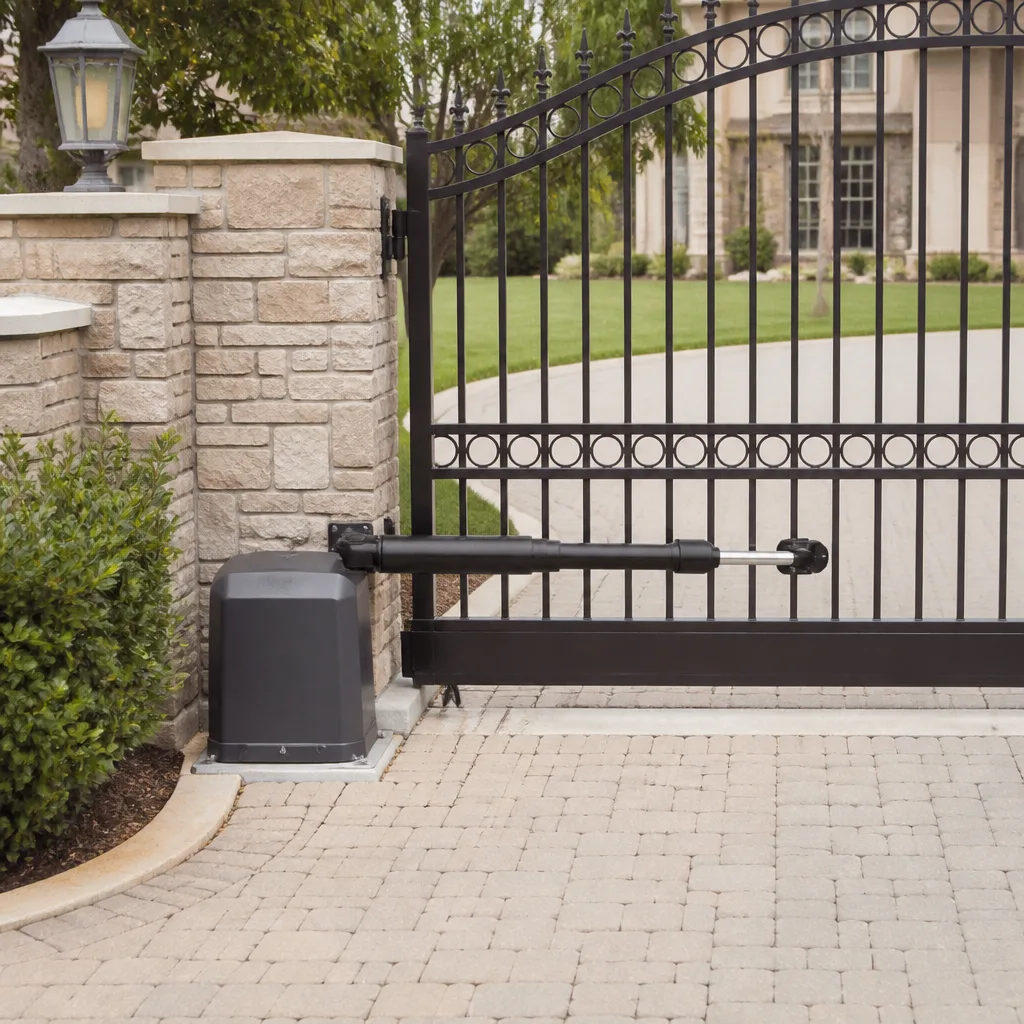
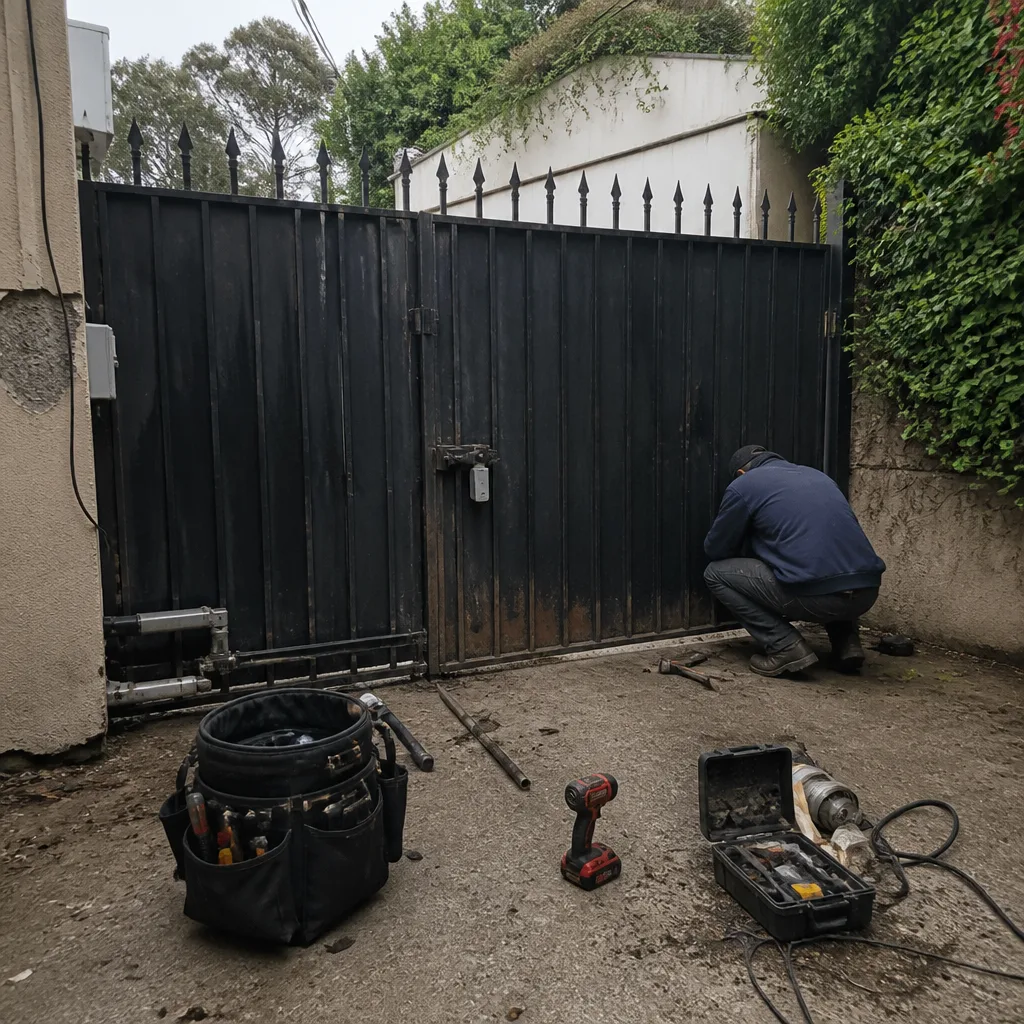 Before
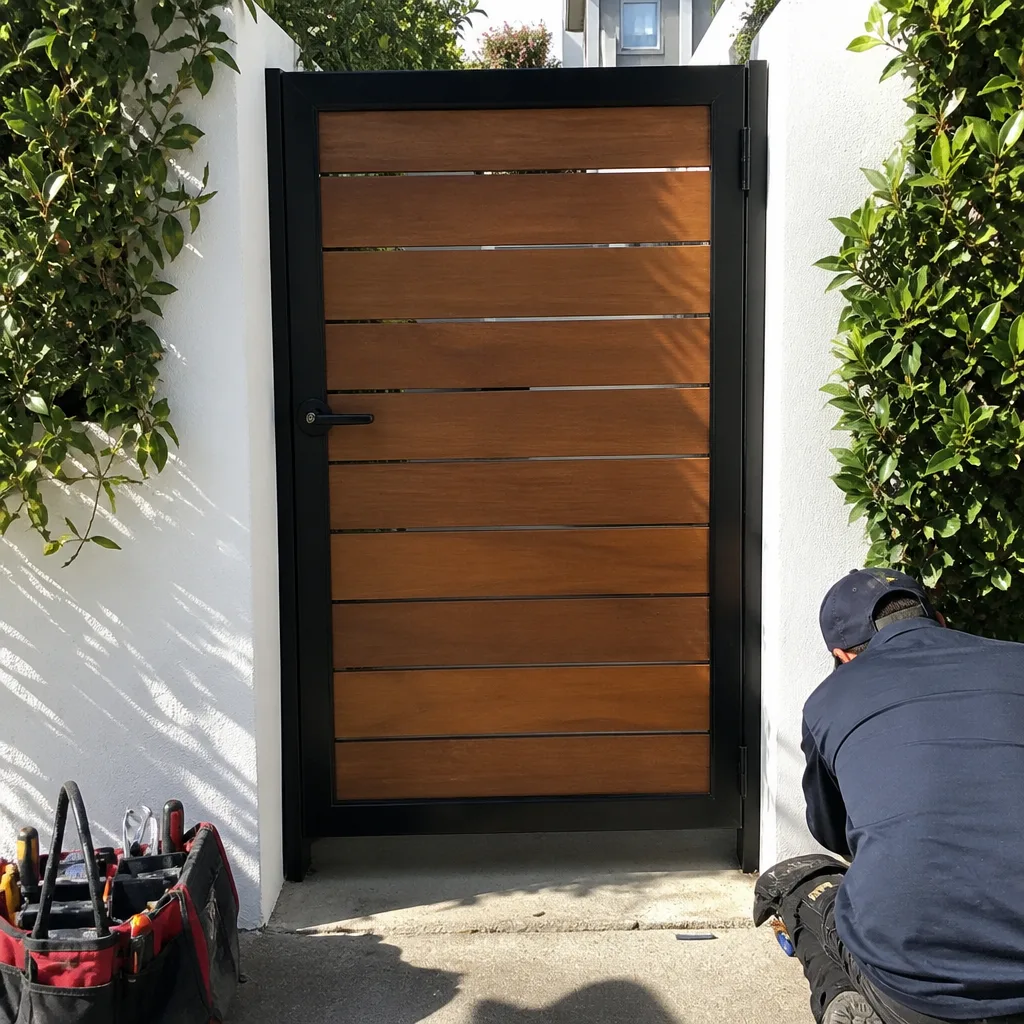 After
After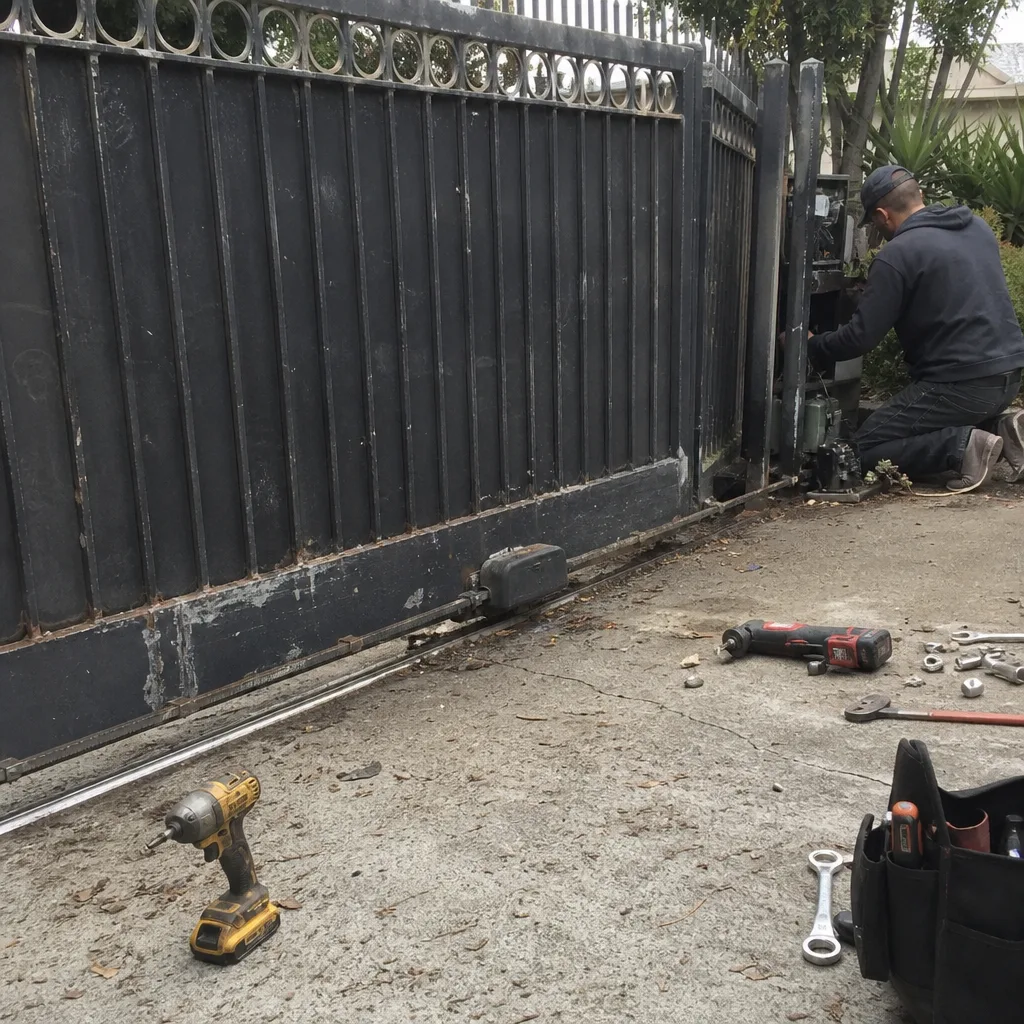 Before
 After
After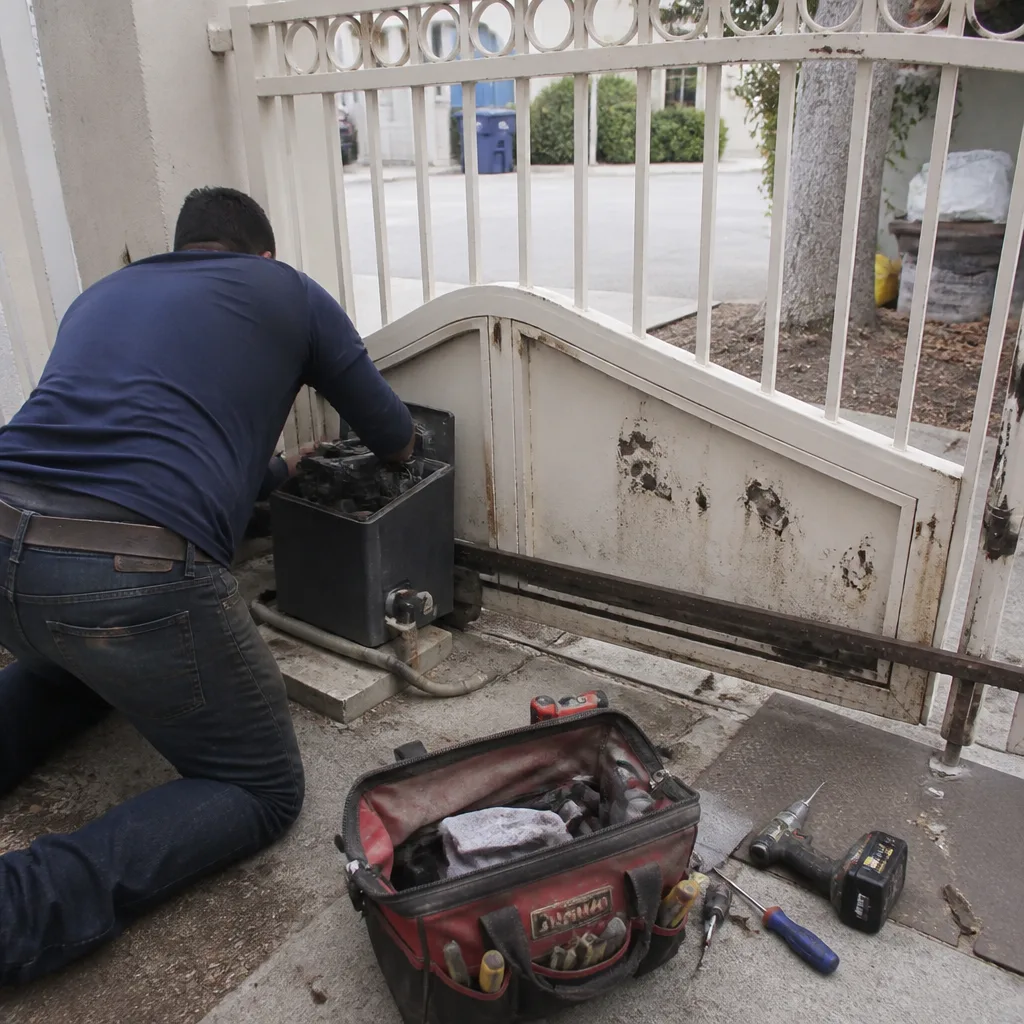 Before
 After
AfterDIY vs Professional Gate Repair: The West Hollywood Homeowner’s Decision Guide
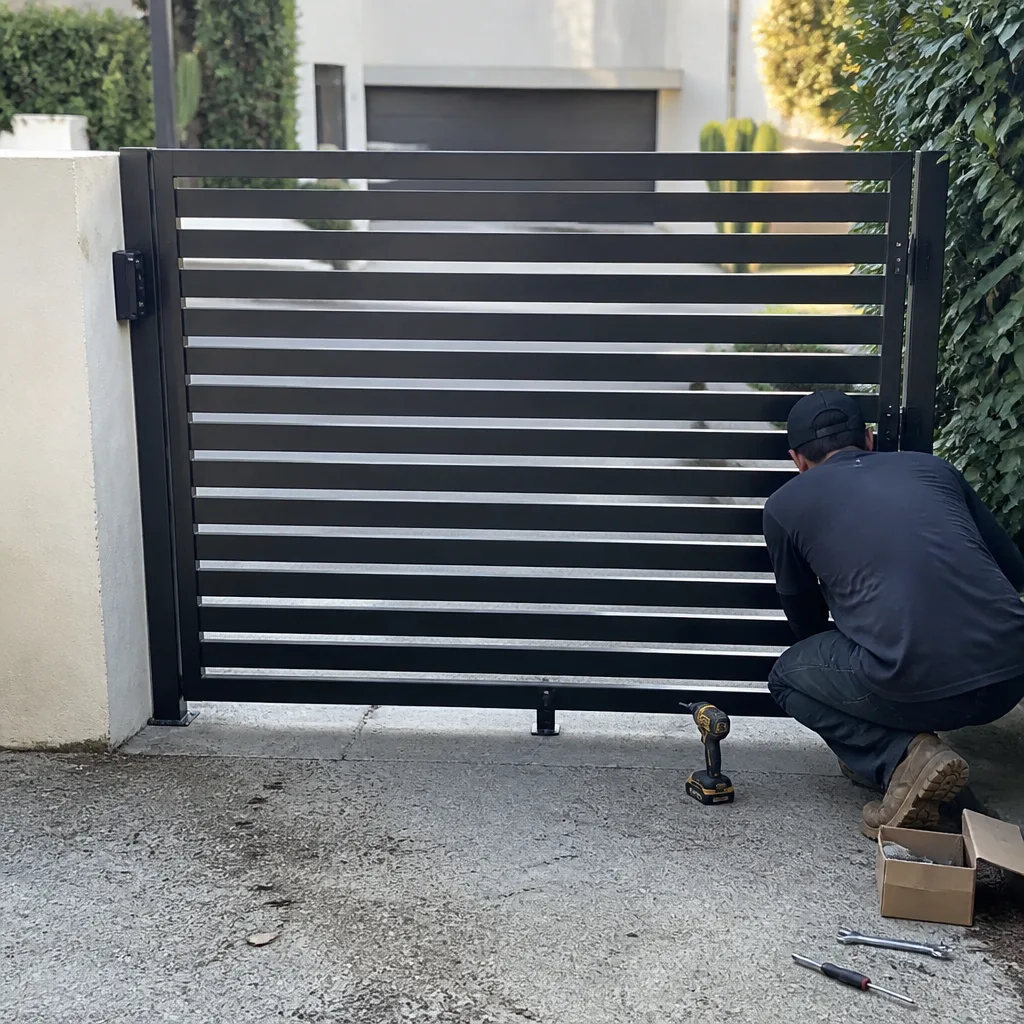
Here’s a number most West Hollywood homeowners never hear: roughly 70 percent of the gate repair calls we take at Ironworks Gate Co. start as a DIY attempt that went sideways. The homeowner watched a video, bought a part, spent a Saturday afternoon on it, and the gate worked for maybe three weeks before the same problem came back, often worse. This guide walks through what actually goes wrong with gates in West Hollywood, which repairs a capable homeowner can honestly handle, which ones call for a trained technician, and how to tell the difference before you spend money twice.
Quick Answer
Light maintenance like lubricating hinges, tightening visible bolts, cleaning photo-eye lenses, and resetting a tripped breaker is reasonable DIY territory. Anything involving torsion springs, gate motors, control boards, welding, or safety sensor alignment is professional work in West Hollywood, where a sagging gate on a sloped driveway can turn dangerous fast. A professional repair typically runs $180 to $850 depending on the component, and most jobs are completed in a single visit.
Table of Contents
- What Actually Goes Wrong With Gates in West Hollywood
- The Honest DIY List: What a Homeowner Can Safely Handle
- Leave It Alone: Repairs That Need a Trained Technician
- DIY vs Professional: The Real Cost Comparison
- What DIY Gate Repair Actually Risks
- West Hollywood-Specific Factors That Change the Math
- How a Professional Gate Repair Actually Works
- Why the Opener Brand on Your Driveway Matters
- Common Mistakes to Avoid
- When to Call a Professional
- Frequently Asked Questions
- The Bottom Line
What Actually Goes Wrong With Gates in West Hollywood
Gates in West Hollywood fail for predictable reasons, and knowing the pattern saves you from guessing. We’ve been repairing driveway and estate gates here since 1984, and the same handful of problems account for the large majority of every service call we run.
The first is the opener motor. West Hollywood’s temperature swings are not extreme, but the coastal marine layer brings consistent moisture, and that moisture works its way into motor housings over years. Capacitors dry out, gears wear, and limit switches drift. A motor that groans but doesn’t move is usually a capacitor or gear issue, not a dead motor.
The second is the hinge system. Many of the older homes north of Santa Monica Boulevard and up into the hills were built with heavy ornamental steel gates hung on hinges that were undersized from day one. After thirty or forty years, those hinges sag. The gate drags on the driveway, the opener strains, and the whole system degrades faster.
The third is the safety system. Every automatic gate in West Hollywood is required to have functioning photo eyes and, on many installations, contact edges that reverse the gate when something is in the path. These sensors get bumped, misaligned, or fouled with landscape debris. When they fail, the gate may refuse to close, or worse, close on a car or a person.
The fourth is the control board. Power surges from summer grid strain and winter storm fronts take out boards more often than people realize. A gate that stopped working after a storm is frequently a board-level issue, not a motor issue.
The Honest DIY List: What a Homeowner Can Safely Handle
We believe in telling the truth about this. There are a few gate maintenance tasks a careful homeowner in West Hollywood can handle without calling anyone, and doing them regularly extends the life of the whole system. Here is the short, honest list.
- Lubricating hinges and rollers. Twice a year, a light application of a lithium-based grease on hinge pins and a silicone spray on the opener track or chain keeps metal from grinding against metal. This is the single highest-value maintenance task on the list.
- Tightening visible bolts and fasteners. Gates shake with every open and close cycle. Once a season, check the bolts on the hinge brackets, the opener arm, and the gate frame with a socket set. Snug them down but do not crank them past hand-tight-plus-a-quarter-turn.
- Cleaning photo-eye lenses. Dust, sprinkler overspray, and spiderwebs coat the small lenses on the safety sensors. A soft cloth and a little glass cleaner usually fix a gate that reverses for no reason or refuses to close at all.
- Resetting a tripped breaker. If the gate loses power and the breaker in the main panel is tripped, flip it back and see what happens. If it trips again immediately, stop there. That indicates a short and the next call should be to a technician.
- Clearing debris from the gate track. For sliding gates, leaves, gravel, and landscape mulch collect in the track and cause jerky operation. A stiff brush clears it in ten minutes.
Notice what is not on this list: anything involving springs, cables, motors, boards, or the safety reversal system. There is a hard line between maintenance and repair, and that line is where injuries happen.
Leave It Alone: Repairs That Need a Trained Technician
Some gate components are genuinely dangerous. Others are simply too easy to break in an expensive way. Either way, these are the repairs we tell West Hollywood homeowners not to attempt themselves.
Torsion springs and tension cables. A gate spring under full tension stores an enormous amount of energy. If a cable slips or a winding bar lets go, it can cause catastrophic injury. This is not a caution, it is a warning. We have seen the aftermath of spring failures, and no repair video is worth that risk. A trained technician has the proper winding bars, cable clamps, and experience to do this safely.
Gate motor and gearbox replacement. Modern openers like LiftMaster and FAAC units are not complex machines, but they are precise ones. Misaligning a gearbox by a few degrees, over-tightening a mount, or wiring the capacitor incorrectly turns a $300 repair into an $1,800 replacement. We stock and service motors for LiftMaster, FAAC, BFT, and Mighty Mule among others, and we carry the correct parts on the truck for most replacements.
Control board diagnosis and replacement. Boards fail in ways that trick even experienced technicians. A multimeter reading that looks fine can hide a failing relay. Without the correct diagnostic sequence for the specific board revision, you will chase your tail. Misdiagnosis on a board costs real money when you buy the wrong part.
Welding and structural repair. Broken weld joints on a steel gate require an actual welder, proper surface prep, and paint matching. A homeowner with a flux-core welder from a big box store will generally produce a cold, weak joint that fails within months. West Hollywood’s salt-tinged coastal air accelerates rust at any un-painted weld.
Safety sensor alignment and replacement. California law requires automatic gates to reverse on contact and to stop and reverse when the photo eye beam is interrupted. A misaligned sensor that passes a quick test but fails under load puts you and your neighbors at risk, and it puts you at liability risk if someone is injured.
DIY vs Professional: The Real Cost Comparison
Homeowners often assume DIY saves money. Sometimes it does. Sometimes it costs double. Here is an honest comparison of typical West Hollywood gate repair costs, DIY versus professional, based on what we see weekly.
Hinge lubrication and bolt tightening. DIY cost is about $12 for a tube of lithium grease and a socket set you already own. Professional cost for this as part of an $89 Seasonal Tune-Up is modest, and a technician will catch the things you miss. Clear win for DIY if you are diligent about it.
Photo-eye cleaning. DIY cost is zero if you have a cloth. This is the first thing we walk homeowners through on the phone, and it fixes the problem roughly a third of the time. Clear win for DIY.
Hinge replacement on a sagging gate. A pair of replacement ball-bearing hinges runs $40 to $120 at retail. But replacing them on a 400-pound steel gate requires lifting the gate, supporting it safely, drilling precise holes, and often welding if the old hinge plates are rusted through. The professional job in West Hollywood typically runs $250 to $600 including parts. If you attempt this without the right jack and support stands and the gate falls, the medical bill or the gate replacement cost wipes out every penny you thought you saved. Professional is the right call.
Capacitor or gear replacement in an opener motor. A capacitor costs $15 to $40 online. A gear kit for a LiftMaster runs $50 to $100. The professional repair, including the trip, the diagnosis, the part, and the 90-Day Done Right Promise, typically runs $180 to $350. If you buy the wrong capacitor because you didn’t test the microfarad rating first, you are out the part cost and you still need the repair. Toss-up, leaning professional because we see failed DIY capacitor swaps every month.
Control board replacement. A replacement board for a FAAC or BFT opener runs $200 to $500 depending on the model. The professional installation adds $100 to $200 in labor because the board must be programmed to the specific gate and remotes. If you install it yourself and wire one terminal wrong, you might fry the new board instantly. Professional is strongly advised.
Full spring replacement. A gate spring set costs $50 to $150. This is the clearest professional-only recommendation on the entire page. The risk of serious injury is too high for the savings.
What DIY Gate Repair Actually Risks
The financial risk and the physical risk both deserve a straight answer. Here is what can honestly go wrong.
Physical injury
Torsion springs and tension cables are the obvious hazards, but a heavy gate is dangerous even without springs. A 400-pound steel gate leaning against a wall while you work on the hinge is a crushing incident waiting to happen if it slips. Gates move in ways that surprise people. We have seen fingers crushed between gate and post, lacerations from snapped cables, and one very close call with an unwinding spring that the homeowner was fortunate to walk away from.
Property damage
A gate that falls while unsupported typically damages itself and whatever is beneath it. In West Hollywood driveways, that is often an expensive car. A spring that snaps can dent a car panel or break a windshield. A miswired opener can surge the board and the motor together, turning a small repair into total system replacement.
Voided warranty
Most opener manufacturers void the motor warranty if unauthorized repairs are performed. LiftMaster, FAAC, BFT, Mighty Mule, and the rest all have language in the fine print. When we perform the repair, the manufacturer warranty stays intact, and our 90-Day Done Right Promise sits on top of it.
Compliance and liability
West Hollywood enforces California’s automatic gate safety standards, which follow UL 325. A gate that does not properly reverse on contact is a legal liability for the property owner. If a DIY repair leaves a safety sensor misaligned and a neighbor’s child is injured, the liability lands on you, not on the video you watched.
West Hollywood-Specific Factors That Change the Math
West Hollywood is not a generic suburb, and gate repair here carries a few local wrinkles that a national article will never mention.
Age of the housing stock. A large share of the single-family homes and duplexes in West Hollywood were built between the 1920s and 1960s. That means gates hung on decades-old posts, often set in concrete that has shifted. The lot on Hayworth or Harper that was flat in 1955 may now have a subtle grade change from settling, and that grade change puts constant load on hinge points. Repairs here are rarely swap-and-go. They require adjusting for the actual conditions of a specific West Hollywood property.
Driveway slopes in the hills. The streets north of Sunset, up into the hills, have real grades. A gate on a slope puts different stress on the opener than a gate on a flat lot. The motor works harder, the hinges wear faster, and the safety reversal settings need to be dialed in correctly or the gate will fault out mid-cycle. We adjust for slope on every hillside job.
Coastal moisture and salt air. West Hollywood sits close enough to the Pacific that salt-tinged air moves through the basin. Steel components that are not properly painted or sealed rust faster here than they do ten miles inland. Stainless hardware matters more in West Hollywood than it does in Sherman Oaks. We use stainless fasteners on coastal-adjacent properties as standard practice.
Permit realities. Most gate repairs in West Hollywood do not require a permit. Replacing an opener, swapping hinges, or rebuilding a control board is maintenance. But if you are widening a driveway opening, changing the gate’s swing direction, or installing a gate where none existed, the city’s permit requirements kick in. We have been through that process enough times to know what triggers review and what does not.
Property density and noise. West Hollywood lots are close together. A gate that creaks at 6 a.m. on its way out is a neighbor-relations problem as much as a mechanical problem. Professional repair includes quieting the system, which is something a DIY parts-swap rarely addresses. Your neighbors hear the difference.
How a Professional Gate Repair Actually Works
If you have never hired a gate company before, the process may feel opaque. Here is how it works when you call a West Hollywood gate specialist, step by step.
- You call, a person answers. Not a voicemail tree, not a callback queue. A live person takes your call 24 hours a day, 7 days a week. You describe the symptom: the gate won’t close, it reverses halfway, it grinds, it won’t respond to the remote.
- Phone triage. The person on the phone has heard your symptom before. They may walk you through a two-minute check of the breaker and the photo eyes, because sometimes the fix is that simple and costs you nothing.
- Technician visit. If the simple checks don’t solve it, a background-checked, uniformed technician comes to your West Hollywood property at the scheduled time. The technician inspects the gate, the hinges, the motor, the board, the sensors, and the power supply before touching anything.
- Diagnosis and upfront price. You get a specific diagnosis and a quoted price before any work begins. The price is settled before a single bolt is turned. No surprises on the bill, no “while I was in there” add-ons.
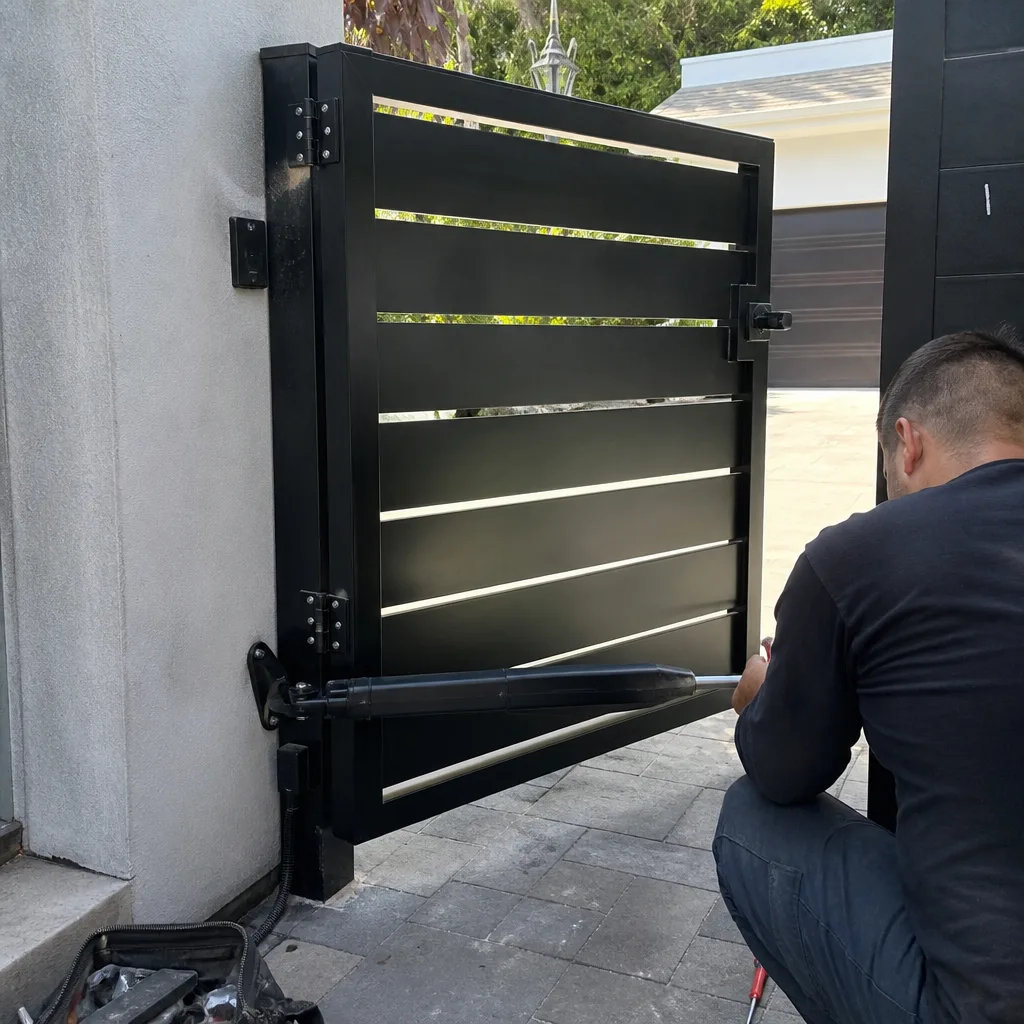
- Repair with correct parts. The technician uses the correct part for your specific opener brand and model. We carry parts on the truck for LiftMaster, FAAC, BFT, Mighty Mule, and the other major brands, so most jobs are completed in a single visit.
- Testing and safety verification. After the repair, the technician tests the full cycle, verifies the safety reversal system under load, and confirms the gate opens and closes smoothly. You see the gate run before the technician leaves.
- Written guarantee. Every completed job is covered by the 90-Day Done Right Promise, in writing. If it is not right, we come back and make it right. No paperwork, no arguing.
Why the Opener Brand on Your Driveway Matters
Not all gate openers are built the same way, and a technician who knows one brand deeply can misdiagnose another. This is the single most common reason we get called in after another company has already made a repair attempt.
LiftMaster dominates residential and light commercial installations in West Hollywood. The brand’s swing-arm and slide operators are reliable, but they have specific limit-switch logic and specific capacitor ratings. A generic diagnosis of “bad motor” on a LiftMaster is frequently wrong; the real fault is often a capacitor or a control board relay.
FAAC and BFT are common on European-style estate gates and on many of the larger properties in the hills above Sunset. These openers use hydraulic or electromechanical drives with their own programming interfaces. Getting into the installer menu requires the right procedure and the right knowledge of the specific model. Guessing your way through a FAAC board configuration can brick the board.
Mighty Mule is the most common DIY-installed opener on smaller gates, and we see units where the installation itself was the problem. The opener is fine; the mounting, wiring, or sensor placement was wrong. We service Mighty Mule units regularly and know how to separate an opener problem from an installation problem.
We are trained and equipped on nine major gate-automation brands: LiftMaster, FAAC, BFT, Linear, Viking, Ghost Controls, DoorKing, Elite, and Mighty Mule. That breadth matters because when a diagnosis is wrong, you pay for it twice. The correct fix on the first visit is worth more than any discount on the wrong fix.
Common Mistakes to Avoid
- Lubricating the wrong components. Grease on a photo-eye lens or a limit switch makes the problem worse. Lubricate hinges and chains only, never sensors or switches.
- Overtightening bolts on the opener arm. Overtightened fasteners strip threads and crack mounts. Then a $20 part replacement becomes a $400 bracket replacement.
- Buying parts before the diagnosis is confirmed. If you replace the capacitor and the real fault is the control board, you spent money and time on the wrong fix. Diagnose first, then buy.
- Ignoring a slow-responding safety reversal. A gate that is slow to reverse is a gate that will eventually injure someone. Address it the week you notice it, not the month after.
- Using a generic remote instead of the correct brand remote. Universal remotes do not program cleanly to every opener. We have seen homeowners lock themselves out of their own boards trying to force a generic remote to pair.
- Painting over rust without treating it. Paint over rust lasts about a year in West Hollywood’s air, then the rust blooms through again. Treat the metal, then prime, then paint. Or call us and we will do it correctly.
When to Call a Professional
Call a professional when the problem involves springs, cables, motors, boards, welding, or safety sensors, and call sooner rather than later. A gate that is failing is not going to fix itself, and the longer it runs in a degraded state, the more components it takes down with it. A dragging gate chews through openers. A misaligned sensor faults the board. A rusted hinge eventually drops the gate entirely.
If you live in West Hollywood and your gate is acting up, Ironworks Gate Co. offers free estimates. Call (442) 255-3886 and describe what you are seeing. We will tell you honestly whether it is a DIY fix or a service call, and we will not sell you a repair you do not need.
Frequently Asked Questions
Gate repair in West Hollywood typically costs between $180 and $850 depending on the component. A capacitor replacement runs $180 to $250, a hinge replacement $250 to $600, a control board $300 to $700, and a full motor replacement $500 to $1,200. Every job is quoted upfront before work begins, and we honor the $50 Off Any Repair Over $250 standing offer. Call (442) 255-3886 for an exact quote on your specific gate.
You can handle basic maintenance like cleaning photo-eye lenses, lubricating hinges, and resetting a tripped breaker, but opener motor and board repairs are professional work. The risk of misdiagnosis, incorrect part selection, or voiding the manufacturer warranty is high. If the simple checks do not fix it, call (442) 255-3886 and a technician will diagnose it correctly.
Most non-emergency repairs are scheduled within a few days in West Hollywood. We complete most jobs in a single visit. If your gate is stuck open and your property is unsecured, tell the live person who answers the phone and we will prioritize the call.
A full installation includes measuring and quoting the gate, posts, hinges, opener, safety sensors, and any keypad or intercom components. You get a written quote before any work starts, and the entire installation is covered by the 90-Day Done Right Promise. We handle the full scope from welding to automation wiring. Call (442) 255-3886 for a free measure and written price.
Yes. We service LiftMaster, Mighty Mule, FAAC, BFT, Linear, Viking, Ghost Controls, DoorKing, and Elite openers. We carry parts for these brands on our trucks, so most repairs are completed the same day without ordering parts and scheduling a second trip.
Every repair we complete is covered by our written 90-Day Done Right Promise. If the repair is not right, we come back and make it right, no paperwork and no arguing. The manufacturer warranty on parts remains intact because the work is performed by trained technicians.
The Bottom Line
The honest answer is that most gate repairs in West Hollywood are professional work for two reasons: the dangerous components demand trained hands, and the expensive components demand correct diagnosis. A homeowner can handle lubrication, cleaning, and simple resets, and should handle those things. Everything beyond that is a judgment call, and the judgment usually lands on calling a specialist. The gate on your West Hollywood property protects your home, your cars, and your family. When it is not working, the fix should be done right, done once, and backed in writing. That is the standard we have kept at Ironworks Gate Co. since 1984, and it is the standard we will keep for the next forty years.
Call (442) 255-3886 for a free estimate, or to ask us anything about your gate. A live person answers, 24 hours a day.
Written by Victor Salinas, Owner at Ironworks Gate Co., serving West Hollywood since 2013.