
Last updated August 25, 2026
Free on-site gate assessment - hinges, posts, and your LiftMaster or Nice gate operator checked before anything is quoted
The assessment is free and the quote is the invoice.
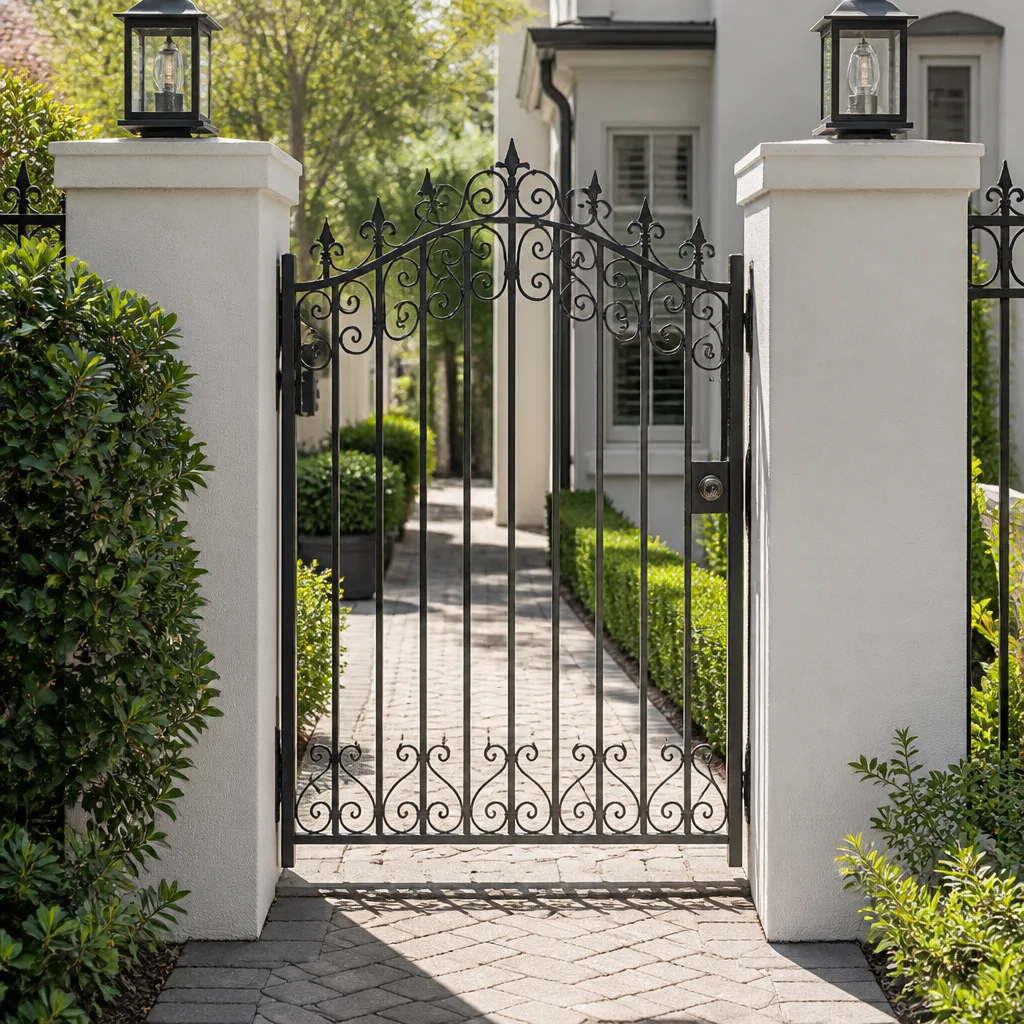
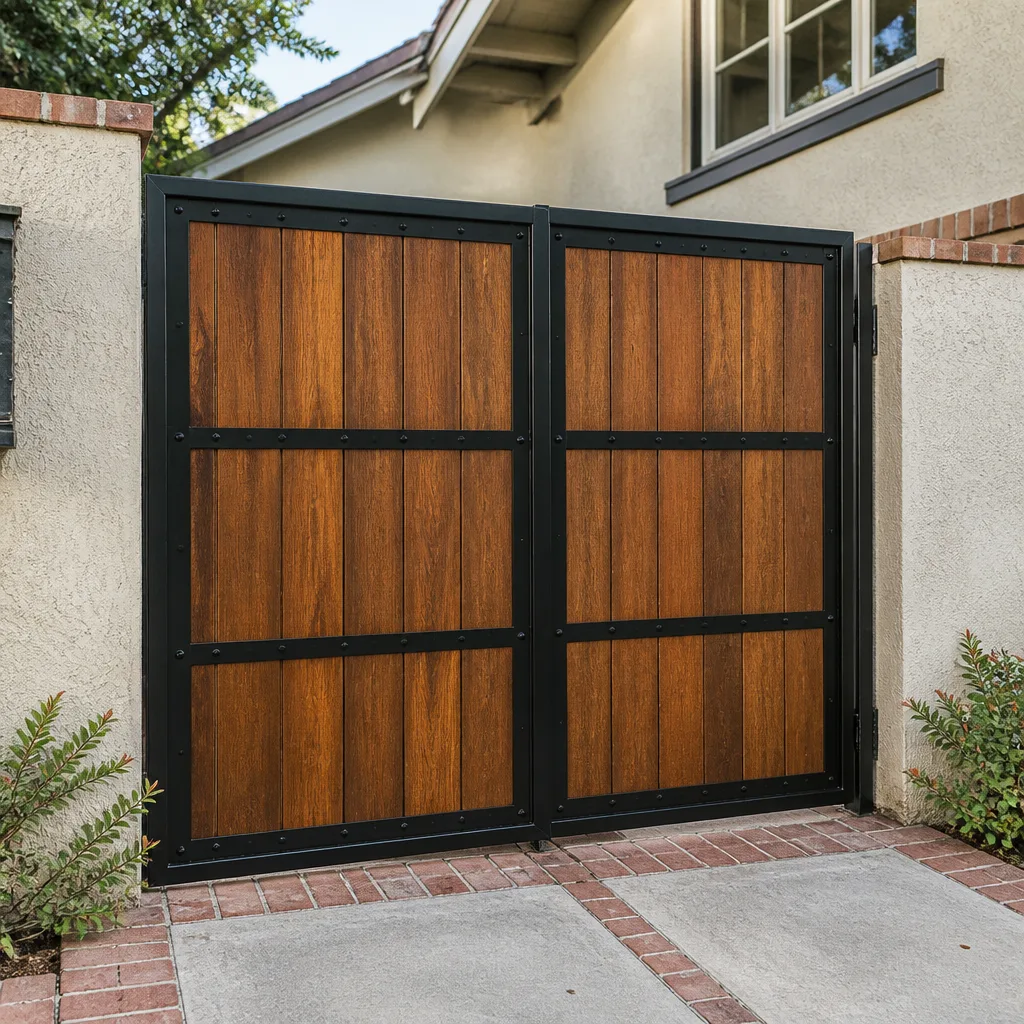
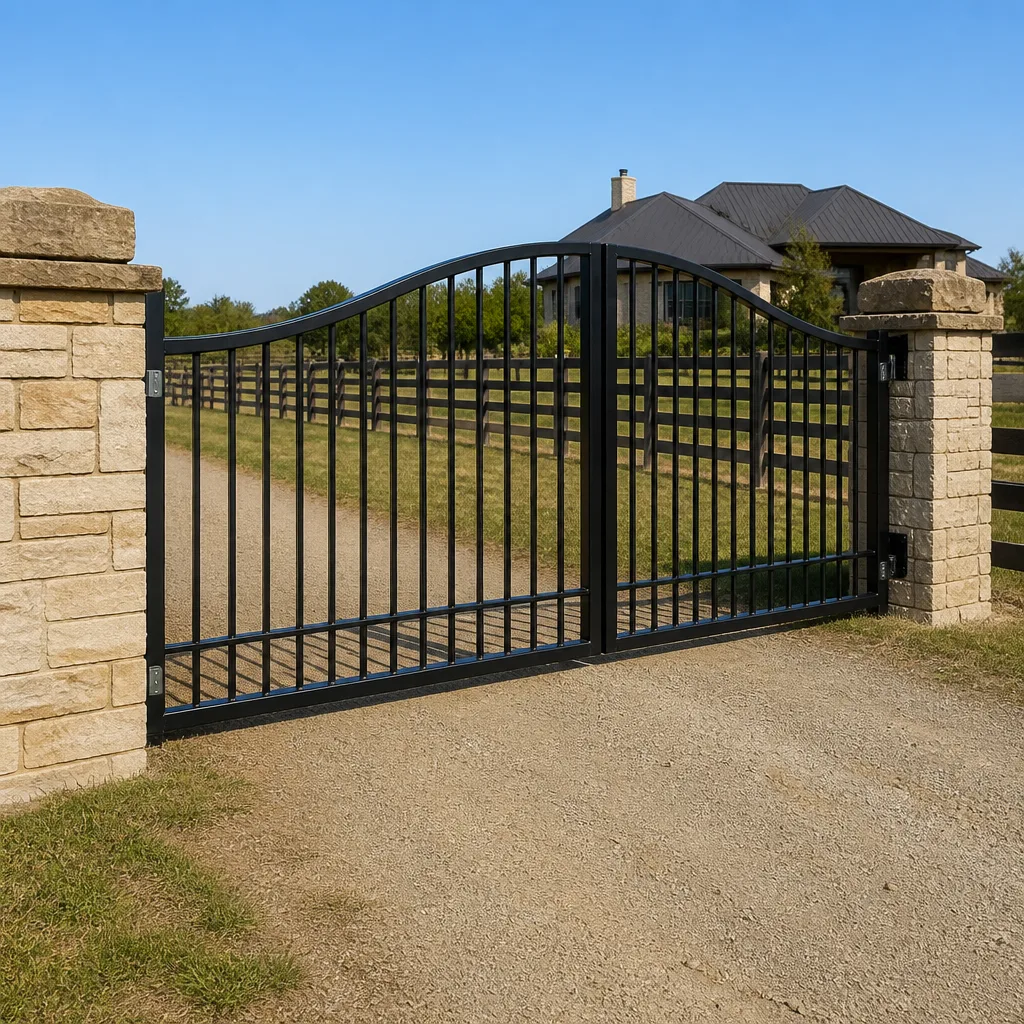
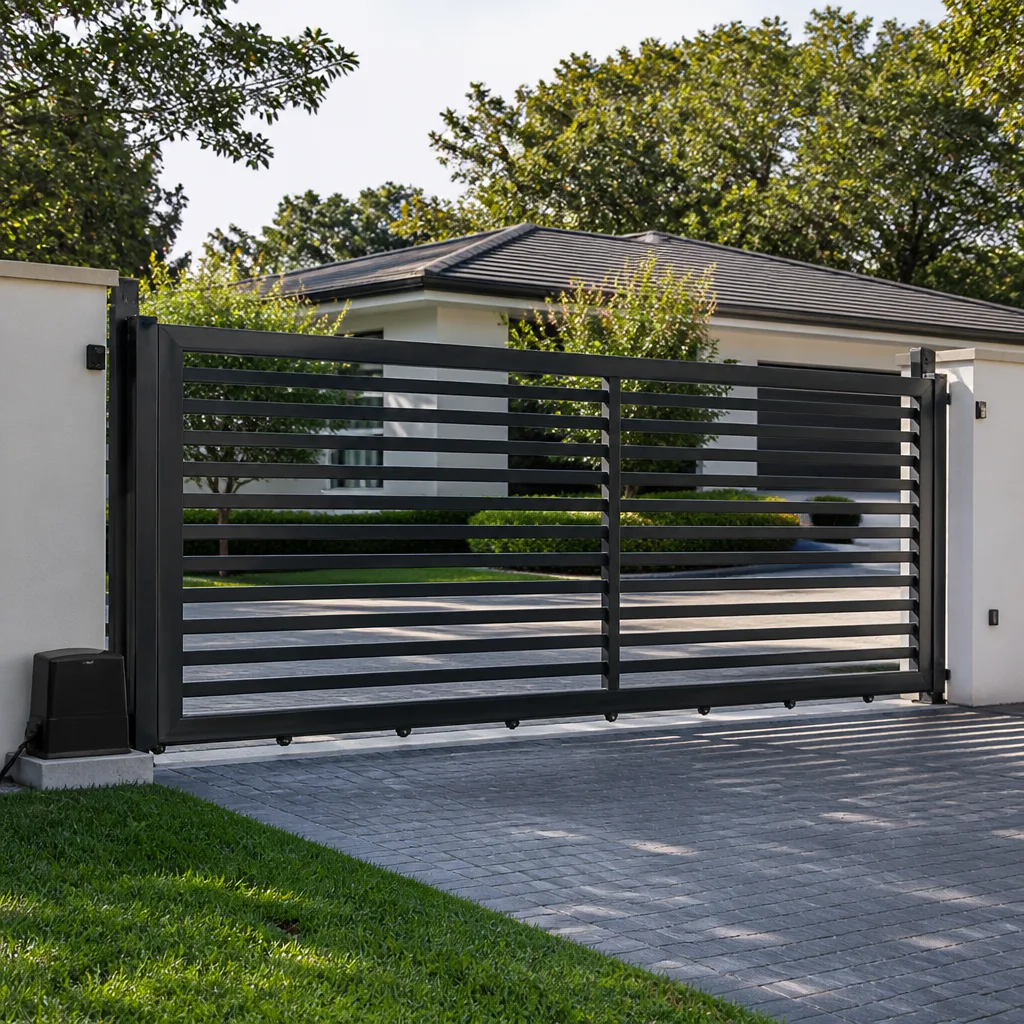
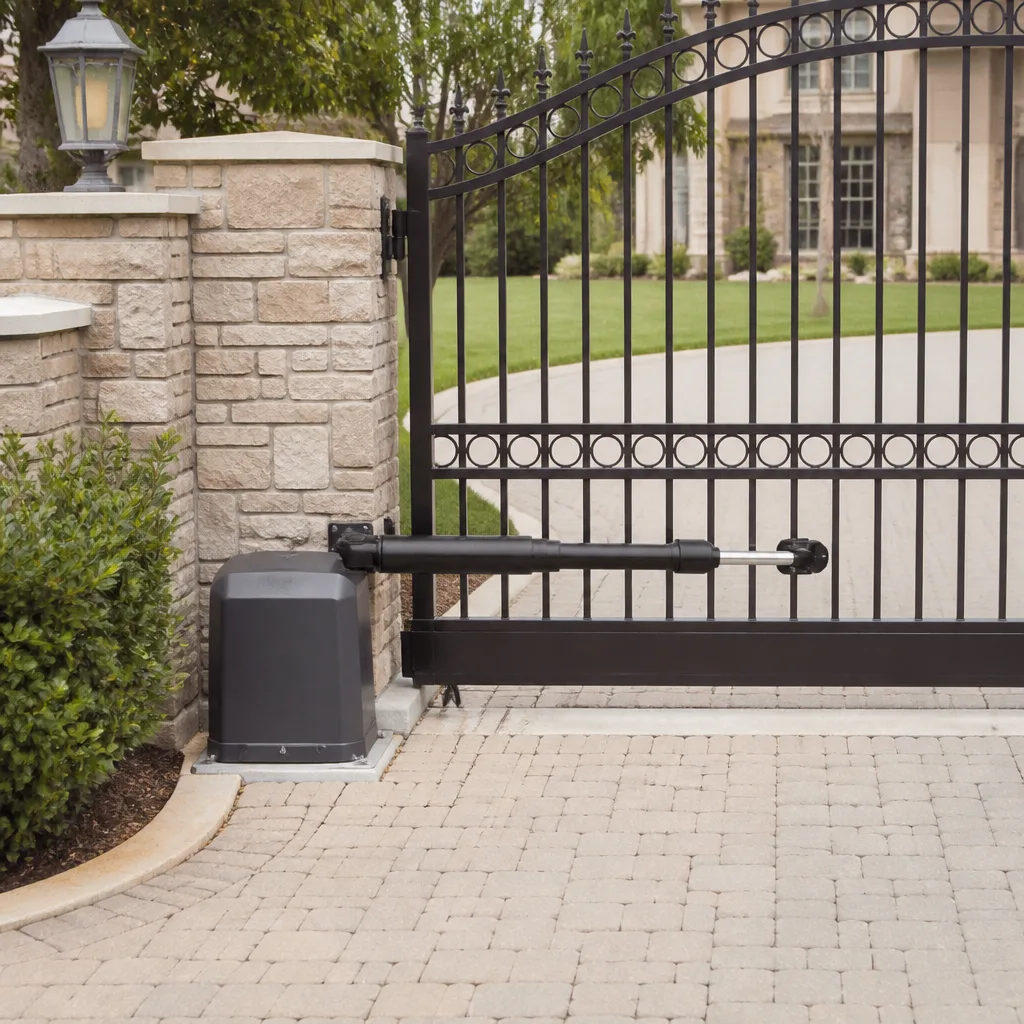
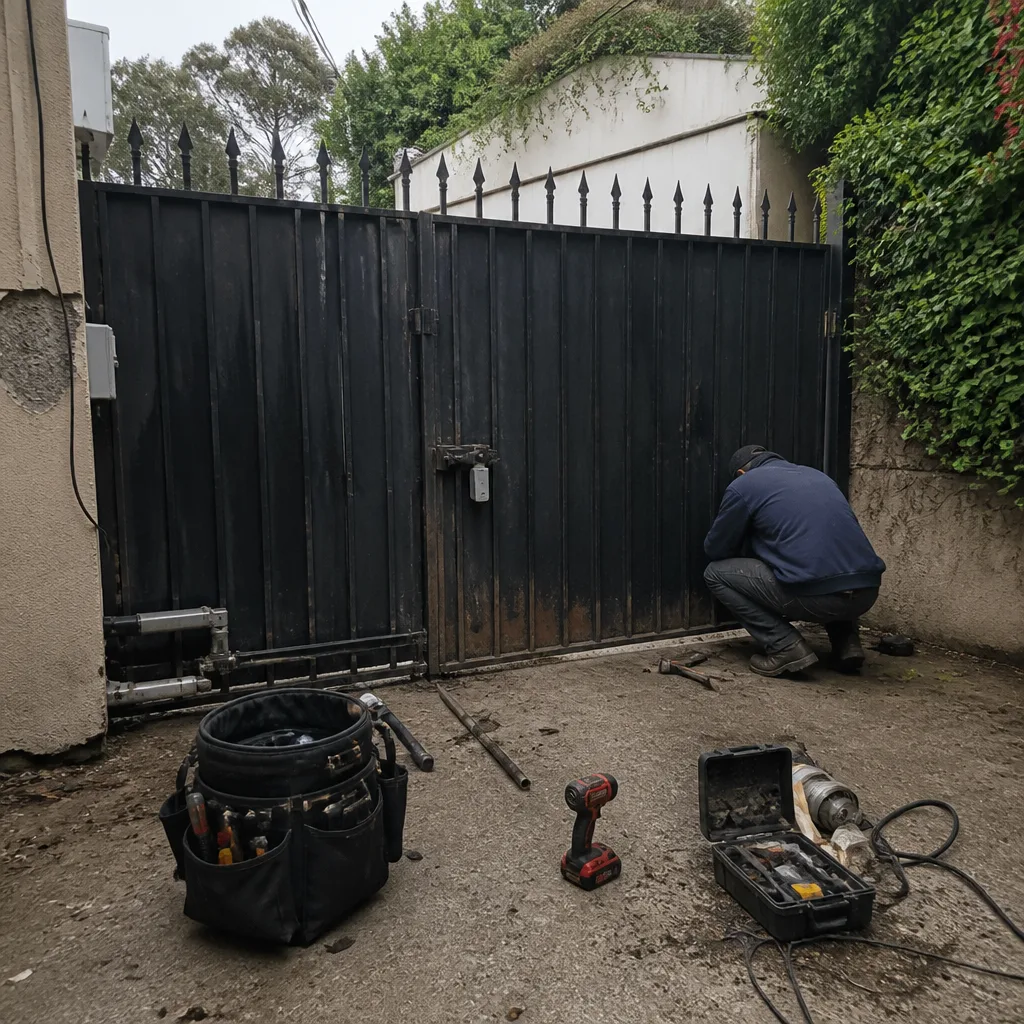 Before
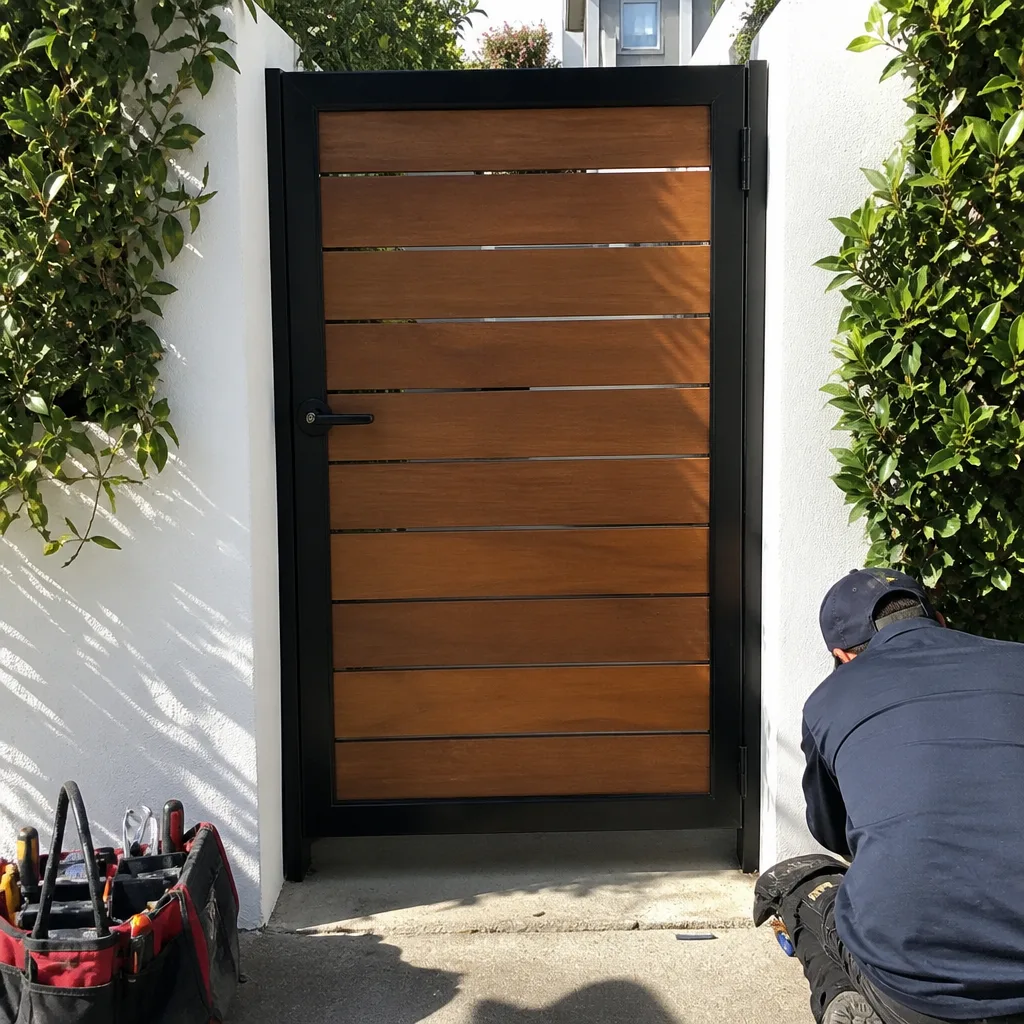 After
After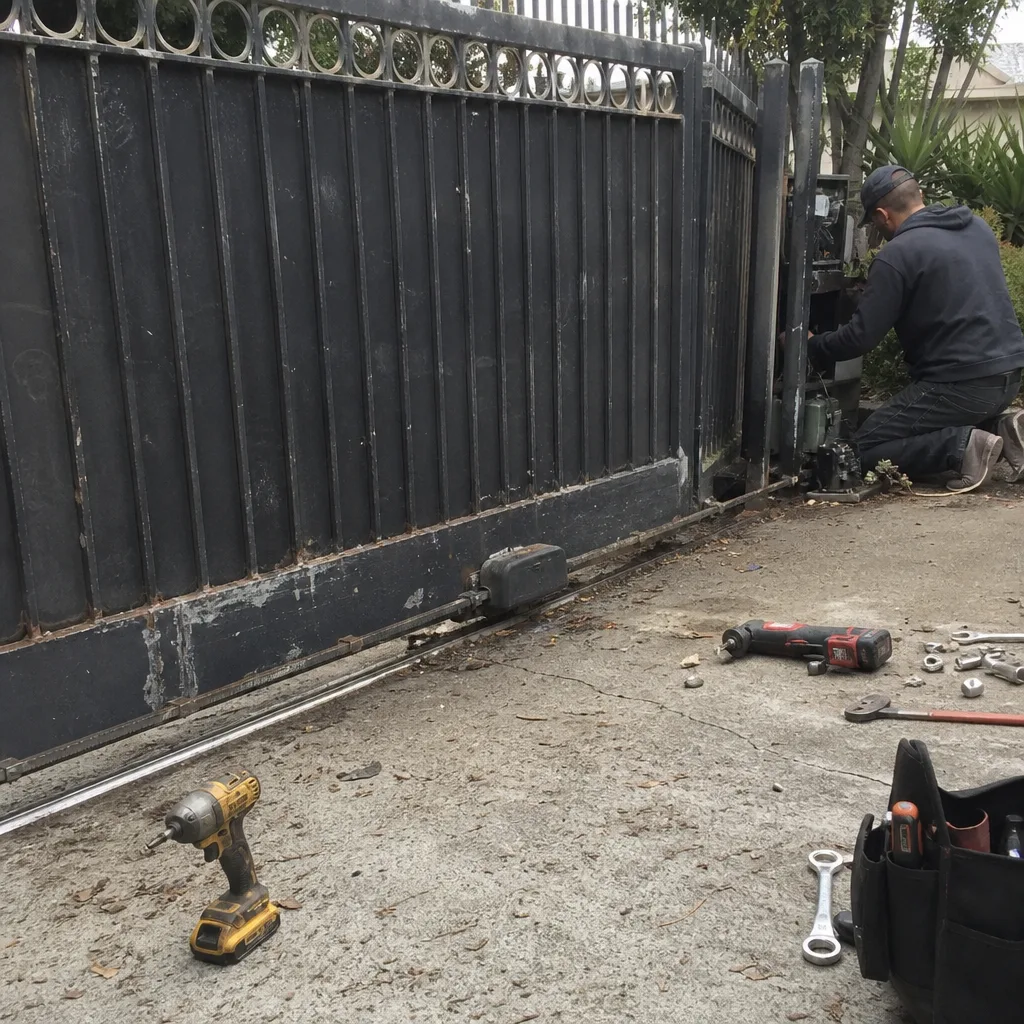 Before
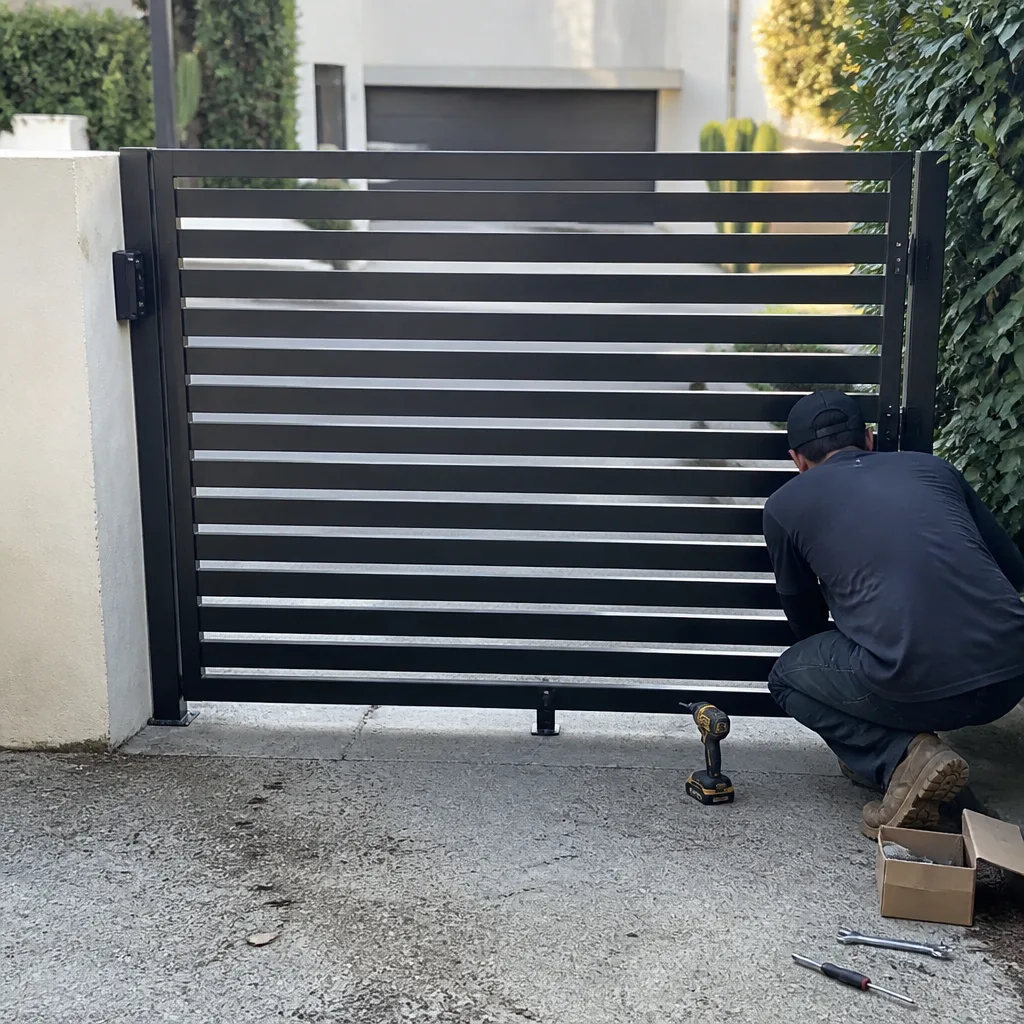 After
After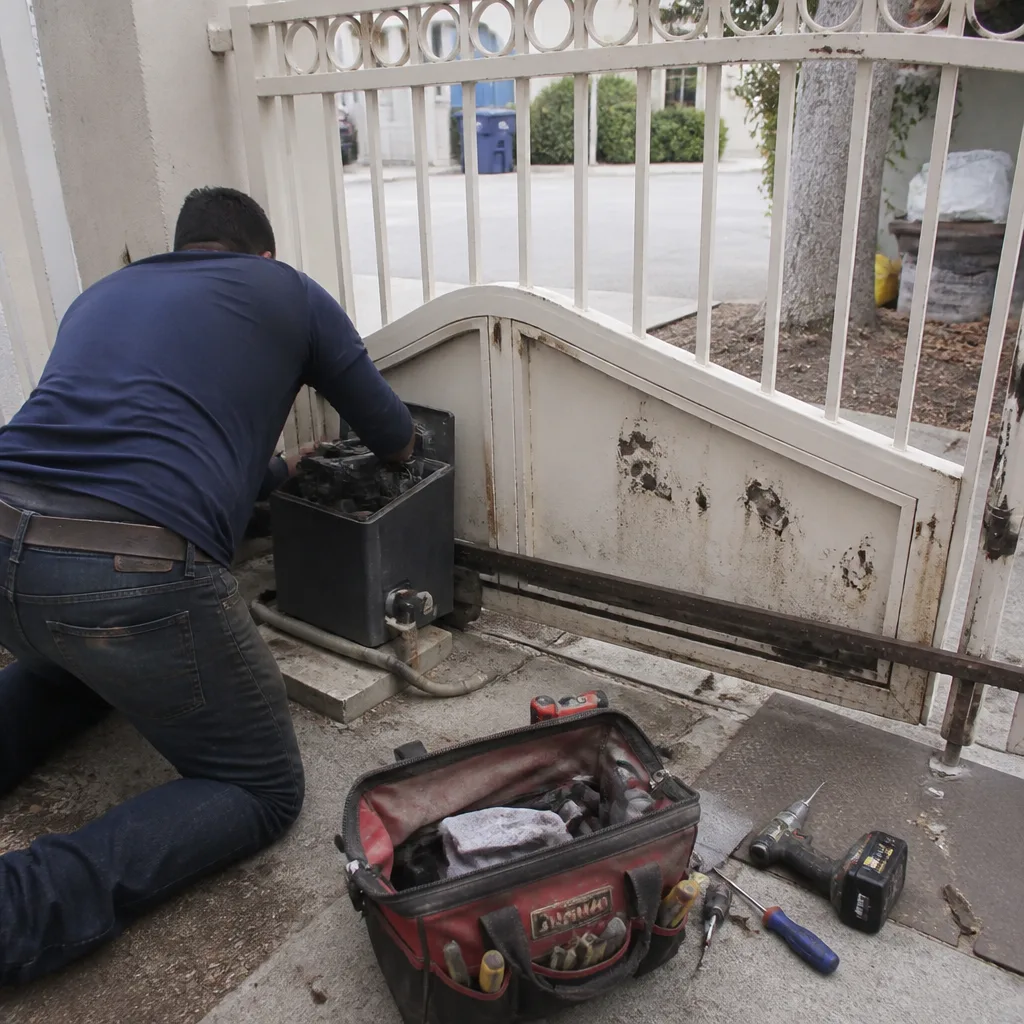 Before
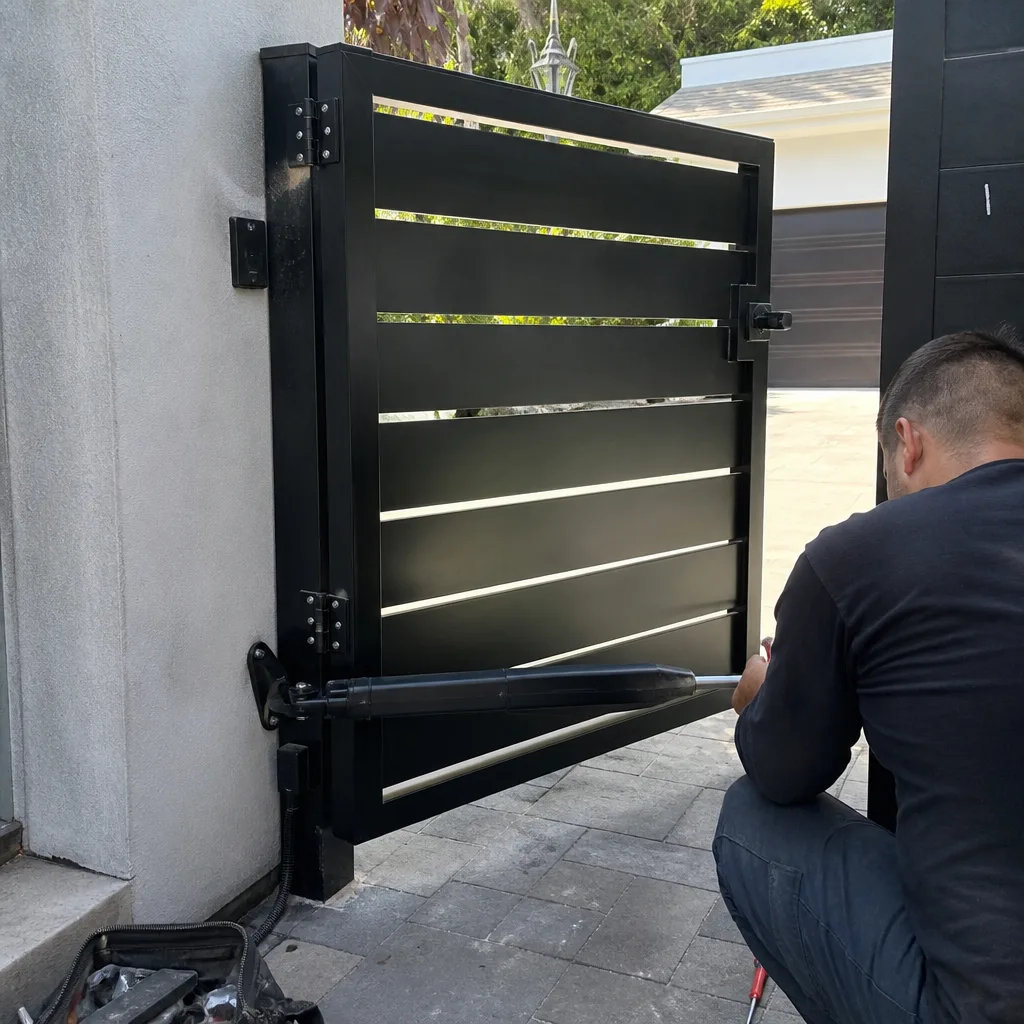 After
AfterSeasonal Gate Repair Care for West Hollywood: Year-Round Homeowner’s Guide
A driveway gate in West Hollywood endures roughly 340 days of direct sun each year, and that quiet fact does more to shape its lifespan than any other single factor. The city’s Mediterranean climate is gentle on roofs and window frames, but it is uncommonly hard on gates: UV radiation fades finishes and embrittles wiring insulation, coastal air carries enough salt to accelerate corrosion in exposed steel, and the Santa Ana winds that rake through the Hollywood Hills each autumn push cantilever and slide gates against their travel limits for days at a stretch. Most gate failures do not begin as dramatic events. They begin as small, seasonal accumulations: a bearing that dried out during a hot September, a limit switch that drifted after a windy week, a capacitor that cooked in a July heat spike. This guide explains what a West Hollywood homeowner actually needs to do, season by season, to keep a gate running like it was hung yesterday. We will walk through the specific tasks that matter in this climate, the signs that precede a breakdown, what you can safely do yourself, and when the only sensible move is a phone call.
Quick Answer
Seasonal gate care in West Hollywood means doing a light inspection about four times a year, lubricating the moving steel parts twice annually, and addressing the two conditions this climate is worst for: UV damage to exposed wiring and finish, and wind-driven misalignment in slide and cantilever gates. The work that actually extends gate life is unglamorous, takes under an hour per season, and costs almost nothing. What it saves is a four-figure repair bill that almost always arrives on a Saturday evening.
Table of Contents
- Why the West Hollywood Climate Is Harder on Gates Than You’d Think
- Spring Gate Care Checklist for West Hollywood Homeowners
- Summer Heat, UV Damage, and Gate Electronics
- Autumn Santa Ana Winds, Hardware Stress, and Limit Switches
- Winter Rain, Corrosion, and Battery Backup
- Lubrication and the Weekly Routine That Prevents 80% of Repairs
- Common Mistakes to Avoid
- When to Call a Professional
- Frequently Asked Questions
- The Bottom Line
Why the West Hollywood Climate Is Harder on Gates Than You’d Think
West Hollywood sits in a narrow band of Los Angeles County where three climate forces overlap. The first is the marine layer: overnight fog and damp air roll in from the coast and settle across the flats south of Santa Monica Boulevard, leaving a film of salt-laden moisture on exposed metal. The second is the inland heat: by mid-afternoon in summer, temperatures can climb into the high 80s and low 90s, particularly in the neighborhoods north of Melrose. The third is the wind: the same Santa Ana pattern that pushes brush fires through the canyons also drives sustained gusts against any gate that opens outward or slides laterally.
Each of these forces attacks a different part of the gate.
- Salt air corrodes the zinc plating on chain-drive rails, hinge pins, and gate brackets. We routinely see slide gates within three miles of the coast with rails rusted through after eight years, while the identical rail in inland neighborhoods of West Hollywood shows only light surface oxidation.
- UV radiation does two things: it degrades the plastic jacketing around low-voltage wire, and it works into powder-coated finishes, causing fading first and chalking second. The solar exposure is strongest on the south- and west-facing sides of any property, which is where most driveway gates in West Hollywood happen to sit.
- Wind loading translates into mechanical stress. A 14-foot cantilever gate presents a giant flat surface to a 40-mph gust. The force travels back through the gate frame into the truck rollers and the limit switch mounts, and over years it loosens fasteners, elongates bolt holes, and shifts the limit cam just enough that the gate begins to stop short or overrun by an inch or two.
None of this is alarmist. It is simply what the climate does. The useful response is not to fight it but to schedule the right small tasks at the right time of year, which is what the next four sections cover.
What Gets Overlooked
The biggest oversight we see on West Hollywood properties is not the gate itself but the run: the stretch of concrete or decomposed granite the gate travels over. Tree roots from mature ficus and magnolia trees along Fountain Avenue and in the Norma Triangle push sections of concrete upward by half an inch or more over a few growing seasons. That half inch is enough to change the gate’s travel geometry, which then causes the opener to work harder, the wheels to wear faster, and eventually the motor to trip its thermal overload. Checking the run takes thirty seconds and costs nothing.
Spring Gate Care Checklist for West Hollywood Homeowners
Spring is the season when a West Hollywood gate wakes up from the relatively mild rainy period and begins its long stretch of daily operation. It is the best time of year to do the annual deep inspection, because any problem you find now can be fixed before the summer heat puts real stress on the electronics.
- Inspect the chain or belt tension. A chain that sags more than about a half inch at its midpoint is too loose. A chain that is piano-wire tight is too tight and will wear the sprocket and motor bearing prematurely. Aim for the manufacturer’s specified deflection, and if you do not have the manual, a half inch of play is a safe general rule for most residential openers under 16 feet.
- Clean the rail and the wheels or rollers. Use a dry cloth first, then a lightly damp one. Remove all caked dust, leaf litter, and the fine gray grime that accumulates during the winter. Avoid spraying water directly into any wheel bearing or roller housing.
- Check the safety edges and photo eyes. Wipe the photo eye lenses on both sides of the gate path with a dry microfiber cloth. Test the system by closing the gate and passing your hand in front of the beam; the gate should stop or reverse immediately. If it does not, stop using the automatic mode and operate the gate manually until a technician can check the circuit.
- Inspect every visible bolt, nut, and bracket. Use a wrench, not your fingers. A bolt that feels tight by hand can still back out half a turn under vibration. Pay closest attention to the four or six bolts at the hinge post, the gate bracket to gate frame connection, and the motor mount plate.
- Look at the finish. Spring is when you will first see the fine hairline cracks in an older powder coat that will become rust blooms by autumn. Treating a small rust spot with a wire brush, primer, and touch-up paint now is a 30-minute job. Waiting until the rust has crept under the coating turns it into a weld and refinish job.
- Cycle the gate five times in a row. Watch and listen. The opening speed should be smooth and consistent, the gate should stop at exactly the same point every time, and there should be no grinding, squealing, or hesitation. Any inconsistency is a symptom, even if the gate still opens.
If you do nothing else in the spring, do the five-cycle test. It catches more developing problems than any other single procedure, and it takes four minutes.
Summer Heat, UV Damage, and Gate Electronics
Summer in West Hollywood is when the electronic components inside a gate operator pay the price for the other three seasons of the year. The damage is cumulative: a capacitor that has been slowly degrading since March finally fails during a July afternoon when the internal temperature of the operator box hits 140°F or more. The failure almost always presents the same way: the gate opens fine in the morning, hesitates or refuses to open in the heat of the afternoon, and then works again after dark.
That pattern is the classic signature of a thermal failure, not a low battery or a bad remote. If you observe it, write down the times of day it happens and the outside temperature, then call a technician. Describing the pattern accurately can save the cost of a diagnostic visit that turns up nothing because the gate is behaving during the appointment.
What the UV Actually Damages
Most homeowners think of UV damage as a cosmetic issue: the gate fades from dark bronze to a chalky lighter shade over five or six years. That is real, but it is not the expensive part. The expensive part happens to the insulated jacket around the low-voltage wire that runs between the operator, the keypad, the photo eyes, and any loop detector buried in the driveway. After enough sun exposure, that jacket becomes brittle and develops cracks. Water enters through the cracks, follows the copper strand, and eventually shorts the circuit or corrodes the connection at the terminal block.
In West Hollywood, we most often find this on gates where the wire was run along the top rail or zip-tied to the outside of the gate frame rather than routed through the frame channels. If your gate wire is exposed to direct sunlight for more than a few hours a day, inspect it in the summer by running your thumb along the jacket. If it feels rough, powdery, or shows hairline cracks, plan to have it replaced or re-routed before the winter rains arrive.
Heat and the Opener Brands We Work On
Across the nine opener brands we service, the heat failure profile is consistent. LiftMaster and FAAC operators tend to have well-sealed control boards that survive heat better than average, but their capacitors are still susceptible. Mighty Mule and BFT units run hotter in the smaller residential housings and are more likely to trip thermal protection during a heat wave. None of this means one brand is better than another in general terms. It means the easiest thing a homeowner can do to protect any opener in summer is to make sure the operator housing has airflow: clear away any ivy, bougainvillea, or stored boxes that sit within a foot of the unit, and check that the ventilation slots are not clogged with dust.
Autumn Santa Ana Winds, Hardware Stress, and Limit Switches
Between late September and December, the Santa Ana winds arrive in West Hollywood with enough regularity that the annual pattern is predictable. The winds typically build in the evening, peak between midnight and dawn, and then fade by mid-morning. A gate that operates fine during the day is being tested at night when the owner is asleep and cannot hear it groaning.
Wind damage accumulates in four specific places on a slide or cantilever gate:
- The limit switch or limit cam. Repeated wind gusts that push the gate into its closed stop and hold it there can cause the limit switch mount to bend slightly or the cam screw to back out by a fraction of a turn. The gate then stops an inch short or travels an inch too far, and over a few weeks the error grows.
- The truck roller assemblies. The rollers that carry the weight of a cantilever gate are engineered for vertical load, not lateral shove. Sustained wind introduces a lateral component that wears the roller bearings elliptically. The classic symptom is a rumbling noise that appears only when the wind is blowing during operation.
- The gate bracket where the opener arm or chain attaches. This is the single most common wind-related failure we repair in West Hollywood. The bracket takes the full force of every gust and transmits it into the gate frame. Over enough wind events, the bracket welds crack, the bolts elongate, or both.
- The receiver post and the closed stop. A gate that slams into a rigid stop during high wind eventually misaligns the stop, chips the powder coat at the contact point, or bends the post out of plumb if the post was set in a small concrete footing.
What to Do After a Big Wind Event
After any Santa Ana episode strong enough to knock over patio furniture, do a two-minute inspection. Look at the gate bracket bolts. Look at the limit switch housing for any fresh marks or shifted position. Run the gate once and confirm it stops where it always stops. If the gate has moved slightly in its closed position or the auto-close feature is taking longer to activate, write it down. A half-inch limit drift in October, left unfixed, becomes a full breakdown by the holiday season when every gate in West Hollywood is running double duty.
Winter Rain, Corrosion, and Battery Backup
The winter months in West Hollywood are not punishing by national standards, but they are wet enough to matter. The city receives between fifteen and nineteen inches of rain in a typical year, almost all of it between December and March. For a gate, the danger is not the volume of water but the consistency of dampness: morning fog, overnight dew, and light rain keep metal surfaces moist for hours rather than minutes.
The first winter priority is corrosion control. Any bare or scratched metal on the gate frame, the hinge pins, the rail, or the operator housing should be treated before the rainy season begins. A wire brushing followed by a rust-inhibiting primer and a matching touch-up paint is sufficient for most residential gates. The same principle applies to the chain on a chain-drive system: if the chain has lost its lubrication and begun to show surface rust, a light coat of chain lubricant will protect it through the winter, but do not over-lubricate. A wet chain attracts dirt and grit, and the resulting abrasive paste wears the sprocket faster than dryness ever would.
Battery Backup and Power Outages
Winter is also when power outages are most likely in West Hollywood, whether from a storm, a vehicle striking a utility pole, or routine DWP work. If your gate operator was installed with a battery backup, the battery should be tested at the start of the season. Disconnect the operator from its power source and cycle the gate three times. If the gate runs noticeably slower or the battery was installed more than three years ago, plan for replacement before the next outage. A gate with a dead backup battery becomes a manual gate during an outage, and for a homeowner who is away from the property that can mean an open driveway with no way to secure it remotely.
If your gate does not have battery backup and you live in a part of West Hollywood that has experienced outages, adding one is a straightforward modification on most of the nine brands we service, including FAAC and LiftMaster systems that were originally installed without one.
Lubrication and the Weekly Routine That Prevents 80% of Repairs
Most gate breakdowns are not the result of a single catastrophic event. They are the result of small maintenance tasks that were deferred, one season at a time, until the component that could have been saved failed. The most important of those small tasks is lubrication, and the second most important is simply looking at the gate every week.
What to Lubricate, and What to Leave Alone
The lubrication points on a sliding or cantilever gate are specific and few. Use a white lithium grease or a dry lubricant designed for gate hardware, never WD-40 as a long-term lubricant. WD-40 is a solvent and water displacer; it will quiet a squeak for a few days and then leave the surface drier than before.
- Hinge pins on swing gates: one small dab of white lithium grease per pin, twice a year.
- Roller and wheel bearings: only if the bearing type is designed to be lubricated. Sealed bearings should be replaced, not greased. Putting grease on a sealed bearing just attracts dirt to the outside of the housing.
- Chain: a light, even coat of chain lubricant, then wipe off the excess with a dry cloth. Too much is worse than too little.
- Slide rail: a very light coating of grease on the rail surface, then buff it nearly dry. The rail should feel slick, not greasy to the touch.
- Do not lubricate the nylon roller guides, the belt in a belt-drive system, or the internal gears of the opener gearbox. These components are either self-lubricating or sealed, and adding lubricant shortens their life.
The Five-Minute Weekly Walk-Around
The weekly routine is not a maintenance task; it is an observational habit. Once a week, stand by the gate while it opens and closes one full cycle and deliberately notice five things:
- Sound: any new noise, especially a grinding or rhythmic thumping that was not there last week.
- Speed: is the gate operating at its normal pace in both directions?
- Stop position: does it stop at exactly the same point, or has it drifted by half an inch?
- Clearance: is there any new debris, displaced gravel, or growth along the run?
- Finish: any new scratches, rust spots, or peeling areas?
A homeowner who does this walk-around every week will catch most problems early enough that the repair is measured in labor hours, not replacement costs. In our experience working throughout West Hollywood, the homeowners whose gates last twenty years or more are not the ones doing more maintenance. They are the ones noticing changes sooner.
Common Mistakes to Avoid
- Power-washing the gate or the operator housing. The pressure pushes water past seals and into the control board, the motor windings, and every electrical connection it can reach. In the neighborhoods of West Hollywood where detailing crews wash driveways weekly, we see water-damaged control boards at roughly three times the rate of the rest of the city.
- Using the wrong lubricant. Penetrating oils and multi-purpose sprays are not gate lubricants. They quiet the squeak temporarily, wash out the existing lubricant, and leave the surface unprotected. The right product is a lithium grease or a purpose-made chain and gate lube.
- Ignoring a slow drift in the closed position. A gate that stops half an inch farther from the stop post this month than it did last month is speaking to you. Ignored, that half inch becomes a gap wide enough for a dog, then a security concern, then a snapped limit switch.
- Waiting until the gate fails to look for a repair shop. The worst time to find a gate technician is the morning after a holiday weekend when every driveway in West Hollywood stopped opening. Having a licensed, local company’s number saved in a phone, with the model number of your opener written down, converts a five-alarm emergency into a simple phone call.
- Landscaping too close to the gate run. Hedges, ground cover, and lawn irrigation should be kept at least eighteen inches from the gate’s travel path. In West Hollywood’s compact lot sizes, that space is often sacrificed to a new planting bed, and the result is constant debris on the rail, soaking the electronics with overspray, or roots pushing the concrete.
- Adjusting the limit switches without understanding the system. Limit switch adjustment on an automatic gate is not a guess-and-check procedure. Setting the limit too far can jam the gate against its stops and destroy the gearbox. If the gate is drifting or stopping inconsistently, the correct move is a service call to the Ironworks Gate Co. home team, not a screwdriver and optimism.
When to Call a Professional
Some gate issues are safe and sensible to diagnose yourself. Others should never be touched by anyone other than a trained technician. Call a professional when the gate shows any of these signs: the opener motor runs but the gate does not move, which usually indicates a broken drive component; the gate reverses unexpectedly or refuses to close on a clear path, which points to a failing safety circuit rather than an actual obstruction; the gate has come off its rail or is binding hard against the ground, because the weight of a 400-pound steel gate makes improvised solutions dangerous; or there is any visible cracking at a weld joint or bracket, especially on cantilever systems where the bracket carries the entire load. These are not weekend projects. They are jobs for someone who does this work every day and carries the right parts on the truck.
Ironworks Gate Co. offers free estimates in West Hollywood. Call (442) 255-3886, describe what the gate is doing, and a live person will answer. No voicemail tree, no callback queue, and no charge for the conversation.
Frequently Asked Questions
A seasonal tune-up in West Hollywood typically costs around $89 with our standing seasonal offer, which covers chain or belt tension adjustment, limit switch check, safety edge and photo eye testing, lubrication of all appropriate points, and a written condition report on the opener and hardware. The same visit applied to a broken gate costs whatever the repair cost is, which is why it is cheaper to maintain on schedule than to repair on demand. Call (442) 255-3886 for an exact quote, and the price will be settled before any work begins.
Twice a year is sufficient for most residential gates in West Hollywood: once in March or April before the summer heat arrives, and once in September or October before the Santa Ana winds and winter rain. Homes within walking distance of the coast should lean toward two service visits at a minimum, since the salt air accelerates corrosion on exposed parts.
Yes, with two caveats. The visual inspection, cleaning, and lubrication steps are all homeowner-appropriate. What is not appropriate for a homeowner is opening the operator housing, adjusting limit switches, or tensioning a high-tension spring on a swing gate. A torsion spring under load carries enough stored energy to cause serious injury if it lets go. Leave spring work, any internal operator work, and any electrical diagnosis to a trained technician.
Heat-related failures are one of the most common patterns across every brand we service, including LiftMaster, FAAC, BFT, and Mighty Mule. When a capacitor or control board component degrades, it often works at night and in the morning but fails when the operator box heats up in the afternoon sun. This is a repairable component failure, not something you have to live with. Describing the exact times of day it fails helps a technician diagnose it faster.
Usually yes, and the reason is the frame. A well-built steel gate frame from the 1990s is often more rigid and more repairable than a lighter modern frame made of thinner-wall tubing. If the frame is sound, the hinge posts are plumb, and the run is level, replacing the opener, brackets, rollers, and wiring is much less expensive than a full new gate installation and leaves you with a gate that will outlast another quarter century. The decision comes down to the condition of the steel, which a quick inspection can settle.
Our standing Free Second Opinion applies to any written estimate from any company. Bring us the estimate, and we will tell you honestly whether the recommended work is necessary, overpriced, or incomplete. There is no charge for the review and no obligation to hire us. Call (442) 255-3886 and say you would like a second opinion, and we will set a time.
The Bottom Line
A West Hollywood gate does not need constant attention. It needs the right attention, at the right times, in small doses. Twice a year, do the real maintenance: inspection, lubrication, tension check, and the five-cycle test. Once a week, do the observational walk-around that takes five minutes and catches problems while they are still cheap to fix. Treat the climate for what it is: sun that cooks the wiring, salt air that rusts the steel, and wind that works every fastener loose by degrees. None of it is urgent, until suddenly it is. The company that makes a 40-year-old gate close like the day it was hung is the one that does the small things on schedule, not the one that shows up only for the dramatic rescue.
Ironworks Gate Co. serves West Hollywood and surrounding areas with gate repair, installation, automation, access control, parts, and welding, backed by the 90-Day Done Right Promise and priced before the first bolt is turned. Call (442) 255-3886 or reach out through the Ironworks Gate Co. home page for a free estimate on any gate service.
Written by Victor Salinas, Owner at Ironworks Gate Co., serving West Hollywood since 2013.